


Overlooked Details: What Causes Zinc Coating Peeling On Galvanized Wire?
Release time:
2026-06-26
Most buyers only care about rust resistance of galvanized wire, ignoring a fatal defect: zinc coating peeling and powder shedding.
Most buyers only care about rust resistance of galvanized wire, ignoring a fatal defect: zinc coating peeling and powder shedding. Once the protective zinc layer falls off during bending, weaving or outdoor service, the steel core rusts rapidly. Zinc peeling is not a single quality fault, but a superposition of defects in substrate pretreatment, galvanizing technology, post-processing and service environment. This article breaks down 9 easily ignored root causes and distinguishes peeling differences between electro-galvanized wire and heavy hot-dipped galvanized wire.
1. Fundamental Root Cause: Missing Continuous Zinc-Iron Alloy Transition Layer
Coating adhesion depends entirely on the alloy bonding layer between steel core and zinc film.
- Ordinary electro-galvanized wire (prone to peeling): Zinc deposits physically without metallurgical reaction, no transition layer. Slight twisting, friction or temperature shrinkage will strip the whole zinc layer.
- Inferior simplified hot-dipped wire: Insufficient zinc dipping time leads to discontinuous brittle alloy layer, coating cracks and sheds after bending.
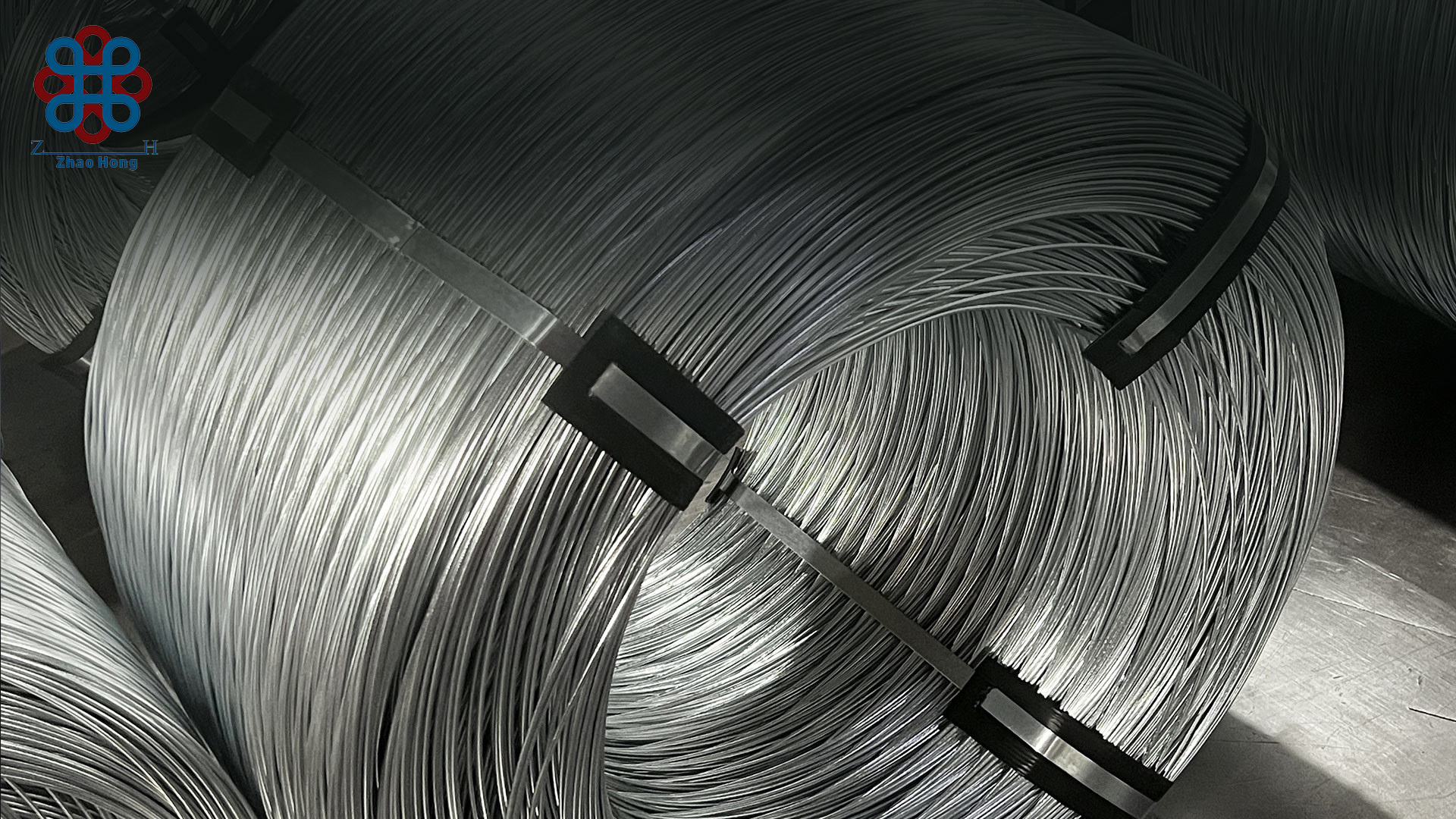
- Qualified 300-350g/㎡ high-zinc wire: Fully immersed in 450℃ molten zinc to form integrated zinc-iron alloy via metallurgical reaction, resisting peeling under repeated binding and twisting.
2. Incomplete Substrate Pretreatment Creates Isolation Barriers
Defective degreasing, pickling or flux treatment cuts off zinc-steel bonding, the top reason for peeling in small factories:
- Residual oil and oxide scale block zinc adhesion, forming "fake coating" that falls off easily;
- Over-pickling generates loose carbon ash between steel and zinc, causing powder peeling under minor force;
- Failed flux agent or insufficient drying creates internal hollow bubbles inside coating, leading to delamination under temperature change.
3. Uncontrolled Galvanizing Process Creates Brittle Coating
- Abnormal zinc liquid temperature: Over-high temperature forms overly thick brittle alloy phase that cracks after bending; too low temperature results in uneven thin coating with weak adhesion.
- Unbalanced coating thickness: Ultra-thin coating wears out fast; oversize zinc lumps produce internal stress and crack automatically under temperature fluctuation.
- Rapid cold quenching after galvanizing: Huge shrinkage stress separates zinc film from steel substrate, triggering hollow peeling. Premium high-zinc wire adopts slow gradient cooling to eliminate internal stress.
4. Inferior Raw Steel Substrate With Inherent Defects
- Recycled mixed steel with high carbon & silicon triggers brittle coarse alloy crystal, coating turns to powder under slight touch.
- Wire without low-temperature annealing retains massive internal stress, continuous deformation tears zinc coating into cracks and flakes.
5. External Mechanical Damage Accelerates Zinc Peeling
- Violent repeated bending exceeds coating deformation limit, expanding tiny cracks into large peeling areas;
- Excessive wire diameter tolerance (>0.05mm) causes continuous scraping by automatic weaving machine rollers and wears through zinc layer;
- Hard impact and cutting create tearing notches that expand coating shedding gradually.
6. Improper Storage & Corrosive Environments Induce Delamination
- Damp warehouse or rain exposure produces white rust that swells and lifts up outer zinc film;
- Chloride salt fog in coastal areas and ammonia sulfide in farms erode bonding interface year by year;
- Extreme day-night temperature circulation expands microcracks in coating and leads to large-area peeling for outdoor wire used in gardens and photovoltaic projects.
7. Omitted Passivation Post-treatment Loses Protective Buffer Film
Qualified high-zinc wire adopts chromate passivation to form a compact buffer film reducing friction and moisture penetration. Cheap ordinary wire skips passivation, exposing bare zinc that sheds powder easily.
8. Inherent Defect Of Electro-galvanized Wire, Unsuitable For Bending Processing
Bright electro-galvanized wire only has 5–30μm thin physically attached coating, only fit for static indoor fixing. It will inevitably peel if bent, woven or placed outdoors for long term.
9. Simple Field Test To Judge Anti-peeling Performance
Fold the wire tightly for 3 times and unfold:
- Low-quality wire: Massive zinc powder falls off with visible coating cracks;
- Standard hot-dipped high-zinc wire: Intact coating without zinc debris or fractures.
Conclusion
Zinc peeling stems from four core factors: discontinuous zinc-iron alloy layer, defective pretreatment, internal processing stress and external mechanical/environmental erosion. Thin electro-galvanized wire can only serve short-term static indoor use. For binding, weaving, coastal, garden and long-term outdoor projects, choose 300-350g/㎡ standardized hot-dipped galvanized wire with complete alloy bonding and passivation treatment to eliminate zinc peeling fundamentally and extend anti-rust service life.

Keywords:
More information

Contact
Phone/WhatsApp:
E-mail:
Address:
Huangtai Industrial Park, Xiaozhan Town,
Jinnan District, Tianjin, 300353, China
Follow us

Inquiry