


Selection Tips For Galvanized Wire Dedicated To Landscape Gardening
Release time:
2026-06-25
Landscape gardening wire is different from temporary construction binding wire. It is used to support saplings, flower trellises and bonsai shaping, while requiring outdoor corrosion resistance, landscape aesthetics and flexible ductility.
Landscape gardening wire is different from temporary construction binding wire. It is used to support saplings, flower trellises and bonsai shaping, while requiring outdoor corrosion resistance, landscape aesthetics and flexible ductility. Many gardeners buy ordinary galvanized wire casually, only to face cracked and rusted wire within 1-2 years. Rust stains contaminate green plants and ruin landscape appearance. Professional high-zinc galvanized wire is customized for outdoor greening, with many hidden professional purchasing knowledge, fully explained below.
1. Prioritize Anti-corrosion Performance: High Zinc Coating Is Mandatory For Open-air Gardens
Gardening materials stay exposed outdoors all year round, constantly corroded by rain, dew, soil moisture and salt fog in coastal gardens. Ordinary wire with 40-200g/㎡ thin coating has obvious drawbacks:
- It rusts rapidly, and rust rain leaves yellow-brown hard-to-clean stains on plant leaves, stone pavement and anticorrosive wood.
- Broken rusty wire causes collapse of trellises and shaped saplings, leading to extra labor cost for reshaping.
Standard long-term landscaping choice: 300-350g/㎡ thick high-zinc galvanized wire, passed 72-hour salt spray test. The dense zinc coating prevents red rust for 8–10 years without polluting plants and landscape materials. For coastal parks, waterside courtyards and wetlands, customized thicker zinc coating is recommended to resist dual corrosion of moisture and salt.
2. Ductility Matching: Balanced Hardness For Easy Plant Shaping
The core function of gardening wire is bonsai wiring, vine traction, hedge and trellis fixing, so toughness is the top selection index.
- Brittle low-grade wire cracks when twisted around branches, exposing bare steel core that rusts quickly.
- Over-stiff wire is hard to bend manually and scratches bark, triggering tree wound rot.
- Special annealed gardening wire adopts low-temperature constant annealing with balanced hardness. It can be twisted repeatedly by hand, fits tree trunks without rebound and no crack after repeated shaping.
Simple test method: Twist the wire tightly around branches for several times; qualified wire stays intact without fracture.
3. Smooth Surface Finish For Better Landscape Aesthetics
Landscaping is ornamental project, and rough wire will damage the whole visual effect:
- Ordinary bulk wire carries burrs and zinc lumps with uneven batch color, looking cheap when exposed on trellises.
- Refined gardening wire goes through passivation and leveling treatment with uniform matte smooth surface, no sharp protrusions. It avoids scratches for garden workers and keeps neat exposed weaving effect matching rockery, wood and green plants.
For high-end courtyard and scenic spot landscapes, uniform bright-surface wire can be selected for delicate visual effects.
4. Precise Diameter Selection For Different Gardening Scenarios
Wire thickness should be selected according to plants and structures instead of blindly choosing thick wire:
- Small bonsai, succulent shaping, vine traction: 0.7mm–1.2mm thin wire, lightweight without covering plants.
- Rose trellis, hedge shaping, small flower arches: 1.2mm–1.8mm medium wire with moderate supporting force.
- Large sapling fixation, courtyard corridor and fruit tree support: 2.0mm–3.0mm thick wire with high tensile strength against strong wind.
Professional standard: wire diameter tolerance within ±0.02mm ensures uniform stress without local deformation and breakage.
5. Resist Temperature Fluctuation & Soil Humidity With Adhesive Alloy Coating
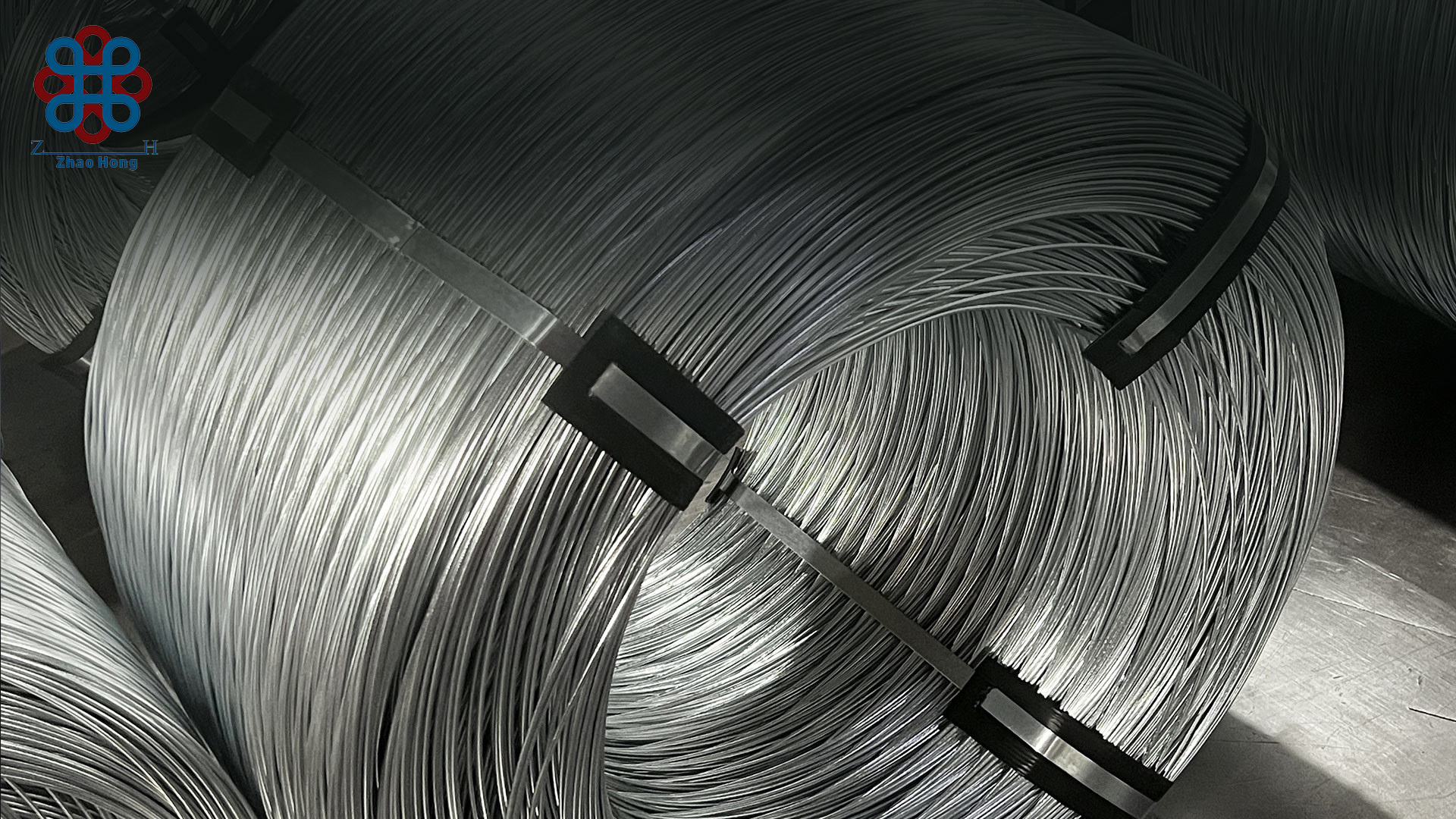
Gardens face huge temperature difference day and night, with scorching heat in summer and frost in winter. Electro-galvanized wire peels heavily under thermal expansion and contraction. Hot-dip high-zinc gardening wire forms integrated zinc-iron alloy layer, so coating never cracks or sheds under long-term temperature cycles. For wire buried near flower beds and damp soil, thick zinc layer blocks humic acid in soil to slow corrosion.
6. Lower Long-term Maintenance Cost
Many landscape teams pick cheap ordinary wire to cut initial budget, yet face annual wire replacement:
- Rusty wire wound on trunks penetrates bark and hinders plant growth.
- Annual reshaping and rebinding consume massive garden labor hours.
- Broken wire leads to collapsed arches and plants, damaging landscape integrity.
Though high-zinc gardening wire costs slightly more upfront, it requires almost no replacement for years, greatly saving long-term labor and material cost, ideal for municipal parks and high-end villas.
Three Common Purchasing Misconceptions
- Brighter equals better: Shiny electroplated wire has ultra-thin coating and rusts within half a year outdoors; matte hot-dip high-zinc wire fits long-term open-air use.
- Thicker wire lasts longer: Over-thick wire is stiff and unsuitable for small bonsai wiring, select thickness as required.
- Universal wire for indoor & outdoor: Indoor ordinary wire cannot be used for open gardens, as moisture corrodes thin coating rapidly.
Conclusion
When purchasing galvanized wire for landscape gardening, unit price and thickness should not be the only reference. Focus on five core standards: 300-350g/㎡ anti-rust zinc coating, annealed flexible ductility for shaping, smooth burr-free surface, ±0.02mm precise diameter and alloy coating resisting temperature & soil corrosion.
Ordinary wire works for small private yards and temporary flower beds. Municipal parks, waterfront/villa landscapes and permanent plant shaping projects need dedicated high-zinc gardening galvanized wire, balancing landscape beauty, plant protection and long-term maintenance cost.

Keywords:
More information


Contact
Phone/WhatsApp:
E-mail:
Address:
Huangtai Industrial Park, Xiaozhan Town,
Jinnan District, Tianjin, 300353, China
Follow us

Inquiry