


How to Identify Premium Galvanized Steel Wire
Release time:
2026-05-14
High-quality wire can be identified and verified through a series of objective checks. Here are the key indicators you should look for:
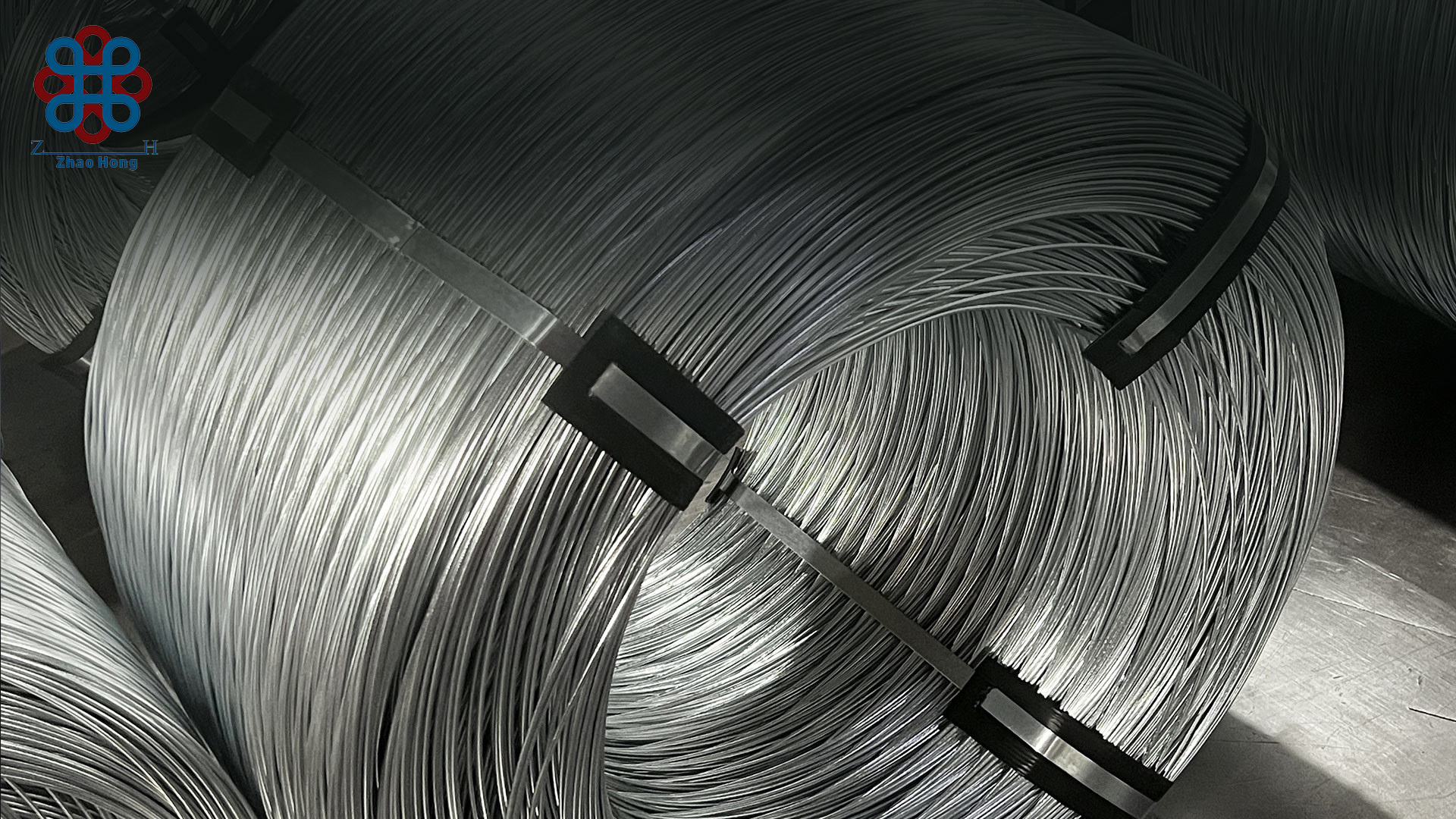
For high-quality galvanized steel wire, you need to look beyond the initial shine and focus on three critical, measurable indicators: coating quality (thickness, uniformity, and adhesion), mechanical properties (tensile strength and ductility), and dimensional accuracy (diameter tolerance). A reputable supplier will also provide verifiable quality documentation.
📊 Key Quality Indicators: A Practical Guide
High-quality wire can be identified and verified through a series of objective checks. Here are the key indicators you should look for:
| Quality Indicator | Why It's Crucial | Red Flags (Poor Quality) | How to Verify |
|---|---|---|---|
| Coating Uniformity | A uniform coating ensures even, long-lasting corrosion protection across the entire wire surface. A non-uniform coating creates weak spots where rust can start and spread quickly. | Uneven color, dull patches, zinc nodules/spikes, exposed iron spots (uncoated base metal) | Visual inspection; a bright, consistent silver-white or silver-gray color is a good sign |
| Coating Thickness | Directly related to the wire's lifespan. A thicker zinc layer provides a larger sacrificial reservoir, significantly extending its rust protection, especially outdoors-. | Very thin or uneven thickness; the wire will rust quickly. | Use a magnetic thickness gauge for a precise measurement. Thickness varies by standard and application; for example, hot-dipped coatings are often 50-100μm, while electro-galvanized coatings are much thinner (3-20μm). |
| Coating Adhesion | The zinc layer must be metallurgically bonded and resilient. If it flakes or peels when bent, the bare steel is exposed, leading to immediate localized corrosion. | Coating cracks, peels, or falls off when the wire is bent or twisted. | Simple home test: Wrap the wire tightly around a mandrel (or a rod 2-3x its diameter) and check for flaking. Professional methods include scratch or bending tests-. |
| Tensile Strength | Determines the wire's ability to handle load and tension. Using the wrong temper can lead to construction difficulties or functional failure. | Wire is too stiff for tying (causing hand injuries) or too soft for fencing (sagging, losing protection). | Check supplier documentation. Specifications often categorize wire as soft, medium, or hard temper per ASTM A641-. |
| Diameter Tolerance | Essential for structural integrity and cost control. A small deviation can significantly impact rigidity and the actual weight (and cost) of the wire you receive. | Inconsistent thickness along the coil; the actual diameter is much smaller than the nominal size, leading to material shortage or project failure. | Use a micrometer to measure the diameter at multiple points along the wire and across different coils. A high-quality tolerance is typically within ±0.03mm. |
| Supplier Quality | A reliable manufacturer with good internal processes is the most consistent guarantee of product quality. | No quality system in place; unwilling to provide product documentation or test certificates. | Look for ISO 9001:2015 certification (quality management)- and check if they comply with standards like ASTM A641 or ISO 1461. |
🛠️ Key Tests to Verify Quality
The table above lists a few simple verification methods. Here are the most common laboratory tests used to certify quality:
-
Salt Spray Test : Evaluates coating corrosion resistance by exposing the wire to a highly corrosive saline mist.
-
Preece Test (Copper Sulfate Test) : A chemical test for hot-dip coatings, involving repeated immersion in a copper sulfate solution to ensure the zinc layer's uniformity and freedom from defects-.
-
Wrap Test : Verifies coating adhesion by wrapping the wire around a mandrel of a specified diameter and checking if the coating flakes or cracks.
✅ How to Check Before Buying
-
Request Documentation: Always ask for Mill Test Certificates (MTCs) that provide batch-level verification of tensile strength, elongation, and zinc coating weight. Also, review the supplier's published specification sheet for wire diameter, tensile strength, elongation %, and coating weight.
-
Check Certifications and Compliance: Prefer suppliers with ISO 9001:2015 (quality management) and compliance with standards like ASTM A641 (the key standard for zinc-coated carbon steel wire)-. Request third-party lab reports (e.g., from SGS or Bureau Veritas) for product validation.
-
Product Markings: Some wires may have markings or codes that refer to the applicable standards.
-
Ask the Right Questions:
-
Zinc Coating: What is the zinc coating weight in g/m²? Is it hot-dipped or electro-galvanized?-
-
Mechanical: What are the tensile strength and elongation values?
-
Dimensions: What is the guaranteed diameter tolerance?
-
Procurement: Can you provide a pre-shipment sample for testing? What are your payment terms and quality dispute resolution processes?
-
Common Questions
-
Does galvanized wire rust? Yes, eventually. It sacrifices the zinc coating to protect the steel. Once the zinc is depleted, the steel will rust. However, high-quality coatings provide long-lasting protection, often for decades.
-
What is the difference between hot-dipped and electro-galvanized? Hot-dipped wire has a thick, durable coating for outdoor, harsh environments, while electro-galvanized has a thin, smooth coating for indoor or light-duty use.
-
What does "gauge" mean in galvanized wire? It's a non-metric unit of diameter. A higher gauge number means a thinner wire. Always confirm the actual diameter in mm, as gauge standards can vary.
-
Is thicker zinc coating always better? Generally, yes for outdoor corrosion resistance. However, for precision applications where a smooth, exact finish is needed, the thinner, more uniform coating of electro-galvanized wire may be preferred
If you have a specific application in mind, feel free to share it. I can help you interpret what these quality indicators mean for your particular project.

Keywords:
More information


Contact
Phone/WhatsApp:
E-mail:
Address:
Huangtai Industrial Park, Xiaozhan Town,
Jinnan District, Tianjin, 300353, China
Follow us

Inquiry