


Zinc Coating: The Secret of Galvanized Wire
Release time:
2026-05-09
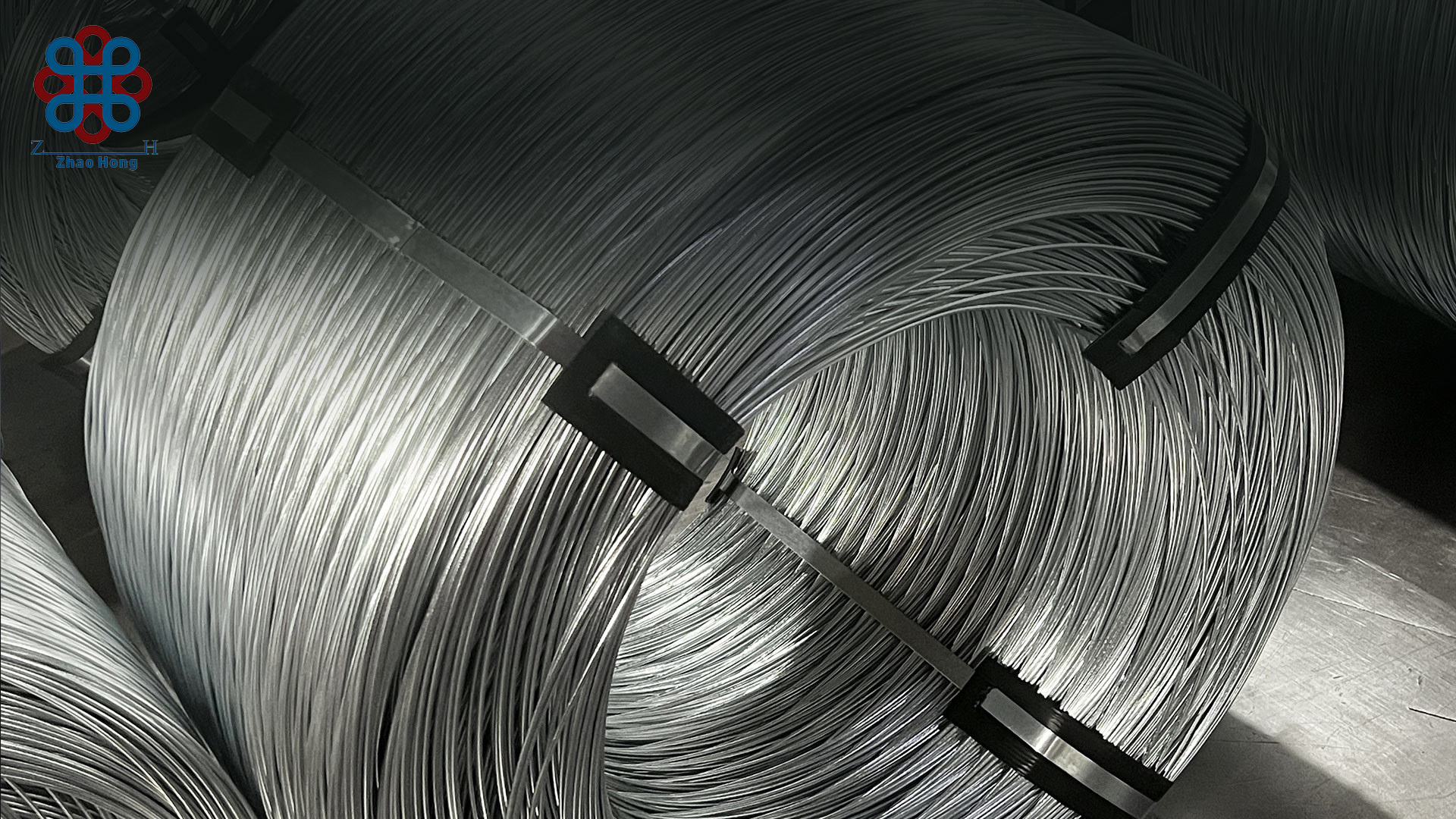
"Zinc coating" isn't just a paint job; it's an electrochemical marriage. The secret of galvanized wire lies not in a single property, but in a strategic combination of metallurgy, chemistry, and physics. Here is the real "secret" behind galvanized wire, broken down into three layers.
"Zinc coating" isn't just a paint job; it's an electrochemical marriage. The secret of galvanized wire lies not in a single property, but in a strategic combination of metallurgy, chemistry, and physics.
Here is the real "secret" behind galvanized wire, broken down into three layers.
The First Secret: Sacrificial Protection
Unlike paint, which just covers rust, zinc actively prevents it. Zinc is more reactive (less noble) than steel. If the wire gets scratched down to the bare steel, the zinc doesn't just sit there—it sacrifices itself.
How it works: The zinc acts as a anode and the steel as a cathode. Moisture creates an electrical circuit, and the zinc corrodes instead of the steel. This is called galvanic protection. Paint can't do this.
The Result: Even if 90% of the coating is gone, the last 10% will still protect the exposed steel.
The Second Secret: The Metallurgical Bond (Hot-Dip)
For the strongest protection, wire is hot-dip galvanized. The secret here is that the zinc doesn't just stick to the surface; it alloys with it.
Fluxing: The steel wire is cleaned to bare metal.
Immersion: The wire is dipped into molten zinc (approx. 830°F / 443°C).
The Reaction: The iron in the steel and the zinc form a series of intermetallic alloy layers (Gamma, Delta, Zeta layers). These are not separate coatings; they are literally a new material welded to the wire.
The "Secret" Hidden Layer: On top of the pure zinc coating is a microscopic layer of zinc oxide, which, when exposed to air and rain, transforms into a tightly adherent film of zinc carbonate (basic zinc carbonate). This patina is dense, hard, and insoluble. It heals small scratches and seals the metal from further corrosion.
The Third Secret: Electro-Galvanizing for Precision
Not all galvanized wire is the same. For applications needing a smooth, precisely controlled thickness (like wire mesh for screens or baskets), manufacturers use electro-galvanizing.
The Secret: An electric current is passed through a zinc-sulfate bath. The zinc ions are attracted to the negatively charged steel wire, plating it atom by atom.
The Trade-Off: This produces a beautiful, shiny, smooth finish, but the coating is much thinner (often 1/10th the thickness of hot-dip). It corrodes faster but is better for interior or light-use applications where smoothness and formability are key.
The Ultimate Secret: Why Galvanizing Fails
The real test of knowledge is knowing its limits. Galvanizing fails under two conditions:
Acids & Alkalis: Zinc is amphoteric—it dissolves readily in strong acids (like hydrochloric) or strong bases (like sodium hydroxide). Never use galvanized wire with cement, fresh mortar, or acidic wood (like oak).
High Heat (Over 480°F / 250°C): At these temperatures, the zinc-iron alloy layers grow rapidly and become brittle, causing the coating to flake off.
Summary Table: The Two "Secrets" Compared
| Feature | Hot-Dip Galvanized | Electro-Galvanized |
|---|---|---|
| The "Secret" | Metallurgical alloy bond | Precise, electric-plated layer |
| Appearance | Dull gray, rough, spangles | Bright, shiny, smooth |
| Thickness | Thick (1.0–3.5 mils) | Thin (0.1–0.5 mils) |
| Corrosion Life | Decades (30-50+ years typical) | 1-5 years |
| Best Use | Fencing, chain link, agriculture | Crafts, tie wire, mesh screens |
The final secret? The best galvanized wire isn't the shiniest. It's the one with the correct, uniform coating weight (measured in oz per sq ft). A rough, gray, matte finish almost always outlasts a bright, mirror-like finish. That dull look means the zinc has already formed its protective carbonate patina and is ready to work.

Keywords:
More information


Contact
Phone/WhatsApp:
E-mail:
Address:
Huangtai Industrial Park, Xiaozhan Town,
Jinnan District, Tianjin, 300353, China
Follow us

Inquiry