


How to Choose High Quality Galvanized Wire
Release time:
2026-05-11
Choosing high-quality galvanized wire involves looking beyond the surface shine. Here’s a guide to help you select the right wire with confidence.
Choosing high-quality galvanized wire involves looking beyond the surface shine. Here’s a guide to help you select the right wire with confidence.
Your choice depends on balancing the level of corrosion protection you need against your budget and the wire's mechanical demands.
⚖️ Step 1: Understanding Galvanization Methods
The type of galvanization is the most crucial factor. Here’s a direct comparison to help you decide:
| Feature | Hot-Dip Galvanized (HDG) Wire | Electro-Galvanized Wire |
|---|---|---|
| Process | Steel is dipped in molten zinc, forming a thick, metallurgically bonded layer. | Zinc is deposited on the steel using an electric current, creating a thin, even layer. |
| Corrosion Resistance | Superior / Excellent. The thick, durable coating provides long-lasting protection against the elements. | Good, but primarily for indoor or short-term outdoor use. It will rust much faster in harsh weather. |
| Appearance | Dull gray with a slightly rough, spangled surface. It is not shiny. | Bright, smooth, and aesthetically pleasing, similar to a shiny new nail. |
| Durability & Lifespan | Very High. Can last for several decades, making it ideal for permanent outdoor fixtures. | Moderate. Best for interior applications like electronics or crafting where it won't be exposed to moisture. |
| Weldability & Forming | The thick zinc layer can produce harmful fumes when welded. Not generally recommended for welding-. | Excellent. Its uniform coating makes it perfect for applications requiring spot welding, precise forming, and painting-. |
| Cost | More expensive due to the complex process and greater zinc consumption. | More affordable, making it a budget-friendly choice for less demanding uses. |
🔍 Step 2: Verifying the Coating Quality
Once you've chosen a type, you need to verify the coating's quality.
-
Zinc Coating Weight (g/m²): This is the most important specification to check. It measures the amount of zinc per square meter of wire surface. A higher number means significantly better corrosion protection. For demanding outdoor projects, always look for an ≥ 80 g/m² coating weight.
-
Zinc Coating Uniformity: A high-quality wire has a continuous, consistent coating without any bare spots, gaps, or unevenness. Even a small pinhole in the zinc can become a starting point for rust.
-
Zinc Coating Adhesion: The zinc layer must be tightly bonded to the steel so it won't peel, flake, or crack when the wire is bent during installation. This is a hallmark of quality hot-dip galvanizing.
🛠️ Step 3: Evaluating Mechanical Properties
These properties ensure the wire will be strong enough and easy enough to work with for your specific task.
-
Tensile Strength: This is the force needed to pull the wire apart.
-
Hard wire: High tensile strength, resists bending. Ideal for fencing and straight structural applications that must stay rigid.
-
Soft wire: Lower tensile strength, easily bendable. Essential for tying rebar or making wire mesh, where it needs to be twisted and knotted.
-
-
Diameter (Gauge): The wire's thickness directly relates to its strength. In the gauge system, lower numbers mean thicker wire. Check the supplier's tolerance; a high-quality wire will have a very small tolerance (e.g., ±0.03 mm), ensuring consistency.
✅ Step 4: Practical Quality Checks & Supplier Evaluation
Whether you're a DIYer or running a business, these steps help mitigate risk.
-
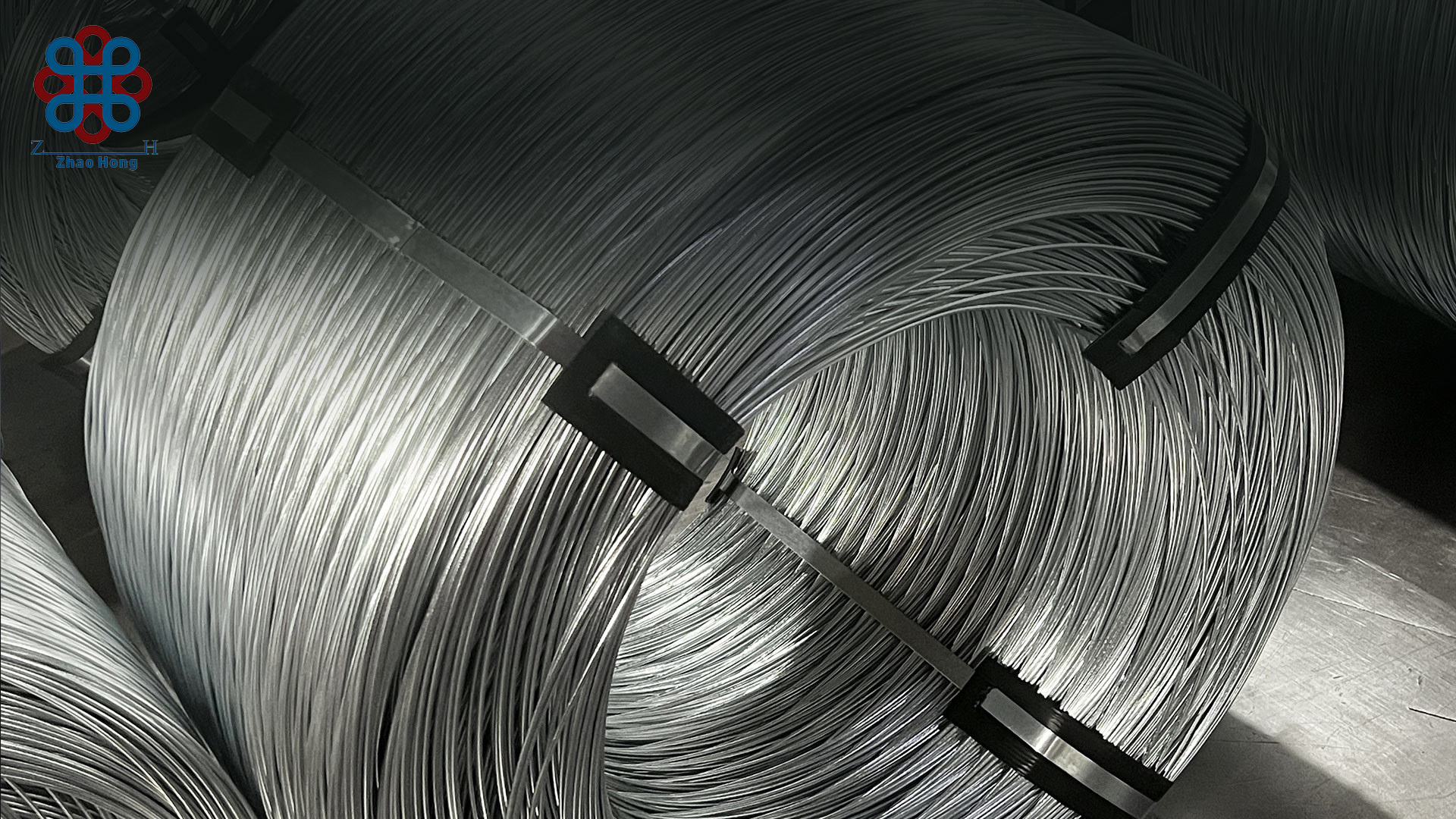
Visual Inspection: High-quality wire has a smooth, uniform surface, free from cracks, severe scratches, rust, or areas of exposed steel. Don't be fooled by simply a "shiny" finish, as that can be misleading.
-
Standard Compliance & Certifications: Request documentation! Suppliers should provide Mill Test Certificates (MTCs) and third-party inspection reports. Look for compliance with recognized standards like:
-
ISO 9001: For a structured quality management system.
-
ASTM A641: A key international specification for zinc-coated (galvanized) steel wire.
-
-
Simple On-Site Tests (For B2B/DIY):
-
Bend Test: Take a length of wire and bend it tightly back on itself. The zinc layer should not crack, flake, or peel off where it was bent.
-
Weight Test: A wire that feels "heavier" than a similar length from another supplier often indicates a thicker, more robust zinc coating.
-
-
Supplier Reliability (For B2B):
-
For professional or large-scale sourcing, choosing a direct manufacturer often provides better quality control and value than a trading company.
-
Many high-quality hot-dip galvanized wires, especially for construction and fencing, are manufactured in China's major industrial hubs like Hebei and Shandong provinces, where entire supply chains are integrated for efficiency and cost-effectiveness.
-
For critical applications, consider a three-stage verification process: Pre-Production (request MTCs), In-Transit (consider independent inspection), and Post-Delivery (conduct random sampling for your own tests).
-
📋 Step 5: Matching the Wire to Your Application
Choosing the right wire starts with clearly defining your project's needs. Here are some common applications with guidance:
| Application | Recommended Type |
|---|---|
| Outdoor Fencing (Chain-link, agricultural) | Hot-dip galvanized (HDG) with high zinc coating weight0†�40†L4 |
| Rebar Tying (Concrete construction) | Soft, flexible galvanized binding wire (often HDG for durability) |
| Wire Mesh Manufacturing | Can use both, but HDG is preferred for outdoor mesh- |
| Indoor Hardware & Crafts | Electro-galvanized wire is sufficient and more cost-effective |
| Marine / High-Humidity Environments | HDG with the highest possible zinc coating, or a zinc-aluminum alloy (Zn-Al) for maximum life- |
| Electronics & Precision Work | Electro-galvanized for its smooth, precise coating and formability |
💡 5 Final Pro Tips Before Buying
-
Don't judge by shine alone: A brilliant, shiny surface usually indicates electro-galvanized wire, which offers much less rust protection than the duller, rougher-looking hot-dip wire.
-
Match steel to your project: In addition to coating, the base steel quality varies. High-quality wire is often made from low-carbon steel like Q195 or Q235 for excellent ductility and consistent strength-.
-
Factor in total cost: A slightly higher upfront cost for HDG wire is almost always an investment, saving you from expensive, frequent replacements that come with lower-quality alternatives.
-
Store it properly: Even the best wire will corrode prematurely if stored incorrectly. Keep it in a dry, covered area and keep it away from direct contact with concrete, damp soil, or any materials that can retain moisture.
-
Work Safely: Always wear gloves when handling cut wire, as its ends can be very sharp.
Choosing the right galvanized wire is a process of balancing cost, protection, and strength. If you share some details about your specific project—such as the application (e.g., fencing, crafts), whether it's for indoor or outdoor use, and your budget—I can help you narrow down the options even further.\

More information


Contact
Phone/WhatsApp:
E-mail:
Address:
Huangtai Industrial Park, Xiaozhan Town,
Jinnan District, Tianjin, 300353, China
Follow us

Inquiry