


Galvanized Wire Diameter Tolerance ±0.02mm: How Tiny Deviations Impact Overall Construction
Release time:
2026-06-18
Many buyers consider a 0.02mm diameter difference negligible as it can barely be seen by naked eyes.
Many buyers consider a 0.02mm diameter difference negligible as it can barely be seen by naked eyes. However, in mass projects such as steel bar binding, wire mesh weaving and automatic processing, this tiny tolerance gap triggers a chain of problems including frequent wire breakage, machine jamming, material waste, extra labor and unqualified finished products. This article compares low-precision ordinary wire and ±0.02mm high-precision high-zinc wire, explaining the full construction impacts caused by subtle dimensional differences.
1. Automatic Weaving Machines: Frequent Jamming & Breakage Reduce Output
Wire mesh factories rely heavily on numerically controlled looms calibrated to standard wire size.
- Ordinary wire with tolerance over 0.05mm features uneven thickness. Thin sections snap under tension while thick segments get stuck in feeding rollers, triggering repeated machine alarms and shutdowns. Operators spend extra time clearing jams and rethreading wires, cutting effective production capacity by over 30%.
- High-precision wire with ±0.02mm tolerance maintains uniform thickness across the whole coil, matching rollers and molds perfectly. Smooth continuous wire feeding minimizes downtime and breakage, supporting long unattended operation and higher daily output.
2. Manual Steel Bar Binding: Uneven Tension Slows Construction
For construction workers binding reinforced concrete frames, unstable wire thickness changes binding resistance drastically. Thinner segments snap easily during twisting and require re-binding; thicker wire is stiff and harder to bend by hand, lowering binding speed. Over large-scale building projects, inconsistent wire sizes extend construction schedules and raise labor costs. Wire controlled within ±0.02mm delivers consistent thickness and flexibility for steady, efficient binding with fewer reworks.
3. Lower Finished Product Pass Rate & Mass Material Waste
Wire Mesh & Breeding Fence
Thin sections have insufficient tensile strength and crack under minor tension during storage and transport; oversize segments create uneven bumpy mesh surfaces that fail project and export inspection, leading to large amounts of scrapped materials.
Decorative Hardware & Crafts
Uneven wire diameters distort woven textures and ruin appearance consistency, resulting in high return rates for premium orders. Uniform ±0.02mm wire produces flat, neat mesh that passes inspection at the first time, cutting scrap waste by over 60% and saving raw material expenses.
4. Unbalanced Tensile Strength Creates Hidden Safety Hazards
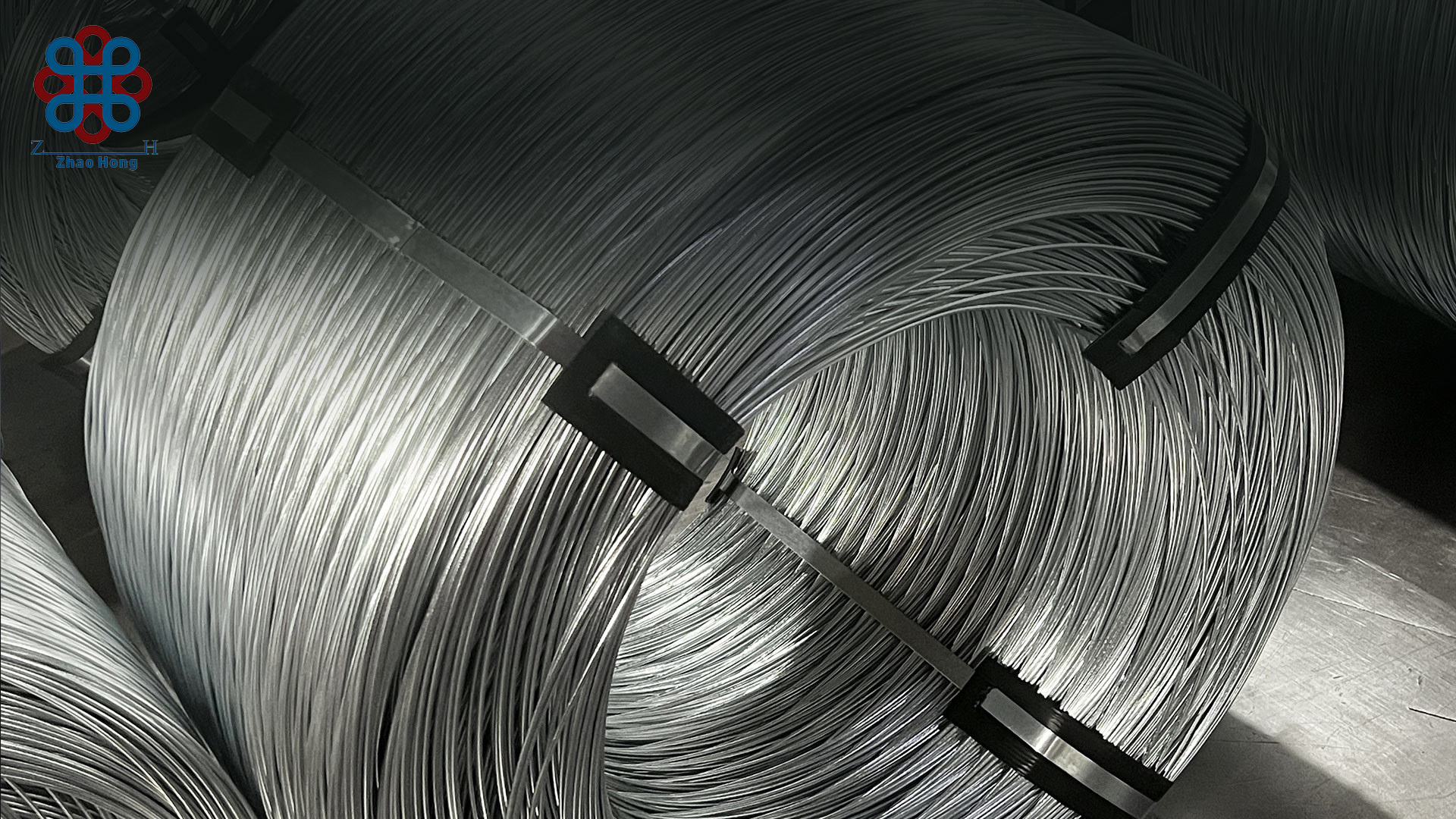
Galvanized wire functions as fixing and protective material, with diameter directly determining load resistance. Wire with unstable thickness has weak thin segments prone to snapping under wind vibration and long-term load in coastal fences, slope protection and aquaculture nets, damaging the whole protective structure and bringing safety risks. High-precision wire features stable tensile strength throughout every coil, balancing load distribution and long-term structural durability.
5. Mismatched Matching Fittings Raise Auxiliary Costs
Clips, sleeves and fasteners are molded to standard wire diameters: Oversize wire cannot pass through clip holes and requires extra modification or new fittings; undersize wire slips loose due to insufficient clamping force. Both cases lead to extra auxiliary material purchasing and labor costs. ±0.02mm standardized wire fits standard fasteners perfectly without modification or waste.
6. Failed Project Inspection Delays Payment Collection
Municipal, bridge and construction supervisors conduct random diameter sampling. If wire tolerance exceeds standards, the whole batch will be rejected and removed from construction sites, causing construction suspension, extra freight for return and re-delivery, and delayed project payment. Wire stably controlled at ±0.02mm passes all sampling inspections in one go without replacement delays.
Conclusion
The tiny ±0.02mm diameter tolerance is far from an insignificant parameter. It directly affects equipment output, labor efficiency, scrap loss, product qualification rate, structural safety and project inspection progress. Loose tolerance is acceptable only for small temporary manual work. For automatic mesh production, large construction projects, export hardware and long-term outdoor protection, choose galvanized wire with ±0.02mm strict diameter tolerance. Minor dimensional precision cuts overall construction costs and delivers stable long-term project quality.

Keywords:
More information


Contact
Phone/WhatsApp:
E-mail:
Address:
Huangtai Industrial Park, Xiaozhan Town,
Jinnan District, Tianjin, 300353, China
Follow us

Inquiry