


How Experts Choose Galvanized Wire — Key Factors You Must Check
Release time:
2026-06-17
Most buyers only focus on price and surface brightness when purchasing galvanized wire, and place orders blindly.
Most buyers only focus on price and surface brightness when purchasing galvanized wire, and place orders blindly. After putting into construction or outdoor use, they encounter rust, wire breakage, zinc peeling and unstable batch quality frequently. Professional purchasers never judge by appearance only; they focus on six core standards to tell low-grade wire apart from premium high-zinc galvanized wire and avoid most hidden risks.
1. Check Zinc Coating Weight First — Core Standard For Anti-rust Lifespan
Amateurs care about surface gloss, while experts prioritize zinc coating weight. Cheap ordinary galvanized wire only has 40-200g/㎡ thin coating with invisible pinholes, which will rust severely within one year outdoors. Qualified high zinc galvanized wire reaches stable 300-350g/㎡ compact coating, blocking moisture and salt fog effectively and passing the 72-hour salt spray test, serving 8-10 years in coastal and open-air areas. Always ask suppliers for official coating test data; verbal promises of good rust resistance are unreliable.
2. Test Coating Adhesion — No Zinc Peeling After Bending
Thick coating means nothing if it cracks and falls off easily after bending. Simple test: Fold and twist the wire repeatedly. Low-quality wire sheds large zinc flakes and exposes the steel core after twisting, leading to rapid corrosion. Premium high zinc wire adopts hot-dip alloy technology, tightly combining zinc layer with steel substrate. No peeling or cracks occur after repeated bending, protecting the wire during binding work.
3. Verify Wire Diameter Tolerance — Tiny Deviations Affect Construction Efficiency
For mass engineering and automatic mesh weaving, dimensional precision determines waste rate and construction schedule. Low-end production lines have loose tolerance control, causing frequent wire jamming and breakage on weaving machines, increasing waste and delaying progress. Experts choose wire with tolerance within ±0.02mm, even thickness all over the roll, compatible with continuous automatic production and cutting labor & material costs.
4. Inspect Substrate & Annealing Toughness — Avoid Brittle Wire That Breaks Easily
The quality of galvanized wire lies in the inner steel rod. Wire made of recycled impure steel is brittle and snaps under slight tension, and broken sections quickly rust. Professionals test toughness by pulling and bending repeatedly. Wire treated with low-temperature constant annealing balances hardness and flexibility, resisting deformation and cracking during binding, weaving and fencing applications.
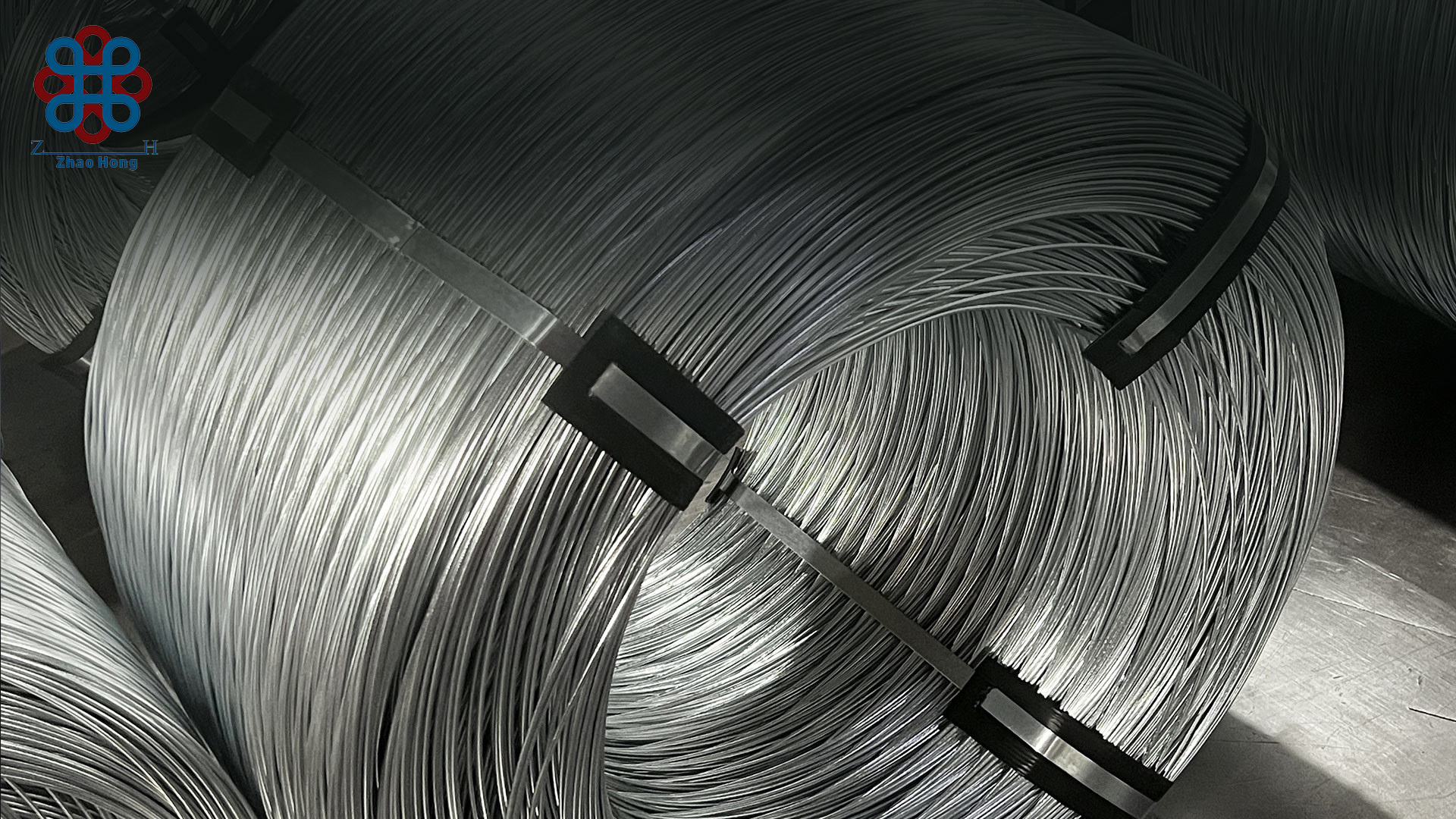
5. Observe Surface Finish — Burrs & Zinc Lumps Are Defects
Workmanship gap can be identified with naked eyes: Inferior wire has sharp burrs and uneven zinc lumps, plus obvious color difference between batches. It scratches workers and degrades finished hardware products. High zinc wire with complete post-treatment has smooth, uniform surface without protrusions, meeting appearance inspection standards for engineering and export orders.
6. Confirm Batch Consistency & Test Reports To Avoid Mass Quality Failure
Small order tests cannot expose hidden defects; large engineering projects suffer most from unstable batch quality. Small manufacturers’ ordinary galvanized wire varies widely in coating thickness and hardness due to unstable raw materials and plating liquid, causing premature rust and failing project inspection. Standardized high zinc galvanized wire comes with material certificates and salt spray test reports for every batch, maintaining consistent performance for long-term bulk supply.
Expert Purchasing Conclusion
Ordinary galvanized wire works for short-term indoor temporary projects with tight budgets. For outdoor, coastal, long-term engineering, automatic processing and export business, always confirm four key indicators: 300-350g/㎡ zinc coating, 72-hour salt spray certification, ±0.02mm diameter tolerance and high-adhesion coating. Calculated by full-life cost instead of unit price, high zinc galvanized wire is the top pick for industry insiders, cutting maintenance, replacement and rework expenses to save total costs in the long run.

Keywords:
More information


Contact
Phone/WhatsApp:
E-mail:
Address:
Huangtai Industrial Park, Xiaozhan Town,
Jinnan District, Tianjin, 300353, China
Follow us

Inquiry