


Why is galvanized wire ideal for fencing and farming?
Release time:
2026-05-27
Galvanized wire is widely considered ideal for fencing and farming due to the following key reasons:
Galvanized wire is widely considered ideal for fencing and farming due to the following key reasons:
-
Excellent corrosion resistance
The zinc coating protects the steel core from moisture, animal waste, fertilizers, and soil chemicals – common corrosive elements on farms. This prevents rust and significantly extends the wire’s lifespan outdoors. -
Long-term durability with low maintenance
Hot-dip galvanized wire, in particular, can last 20–50 years in agricultural environments without needing painting or regular upkeep, reducing replacement costs and labor. -
High tensile strength
Steel wire provides the strength needed to contain livestock (cattle, horses, sheep) or support crops (vines, trellises). Galvanizing does not weaken the steel; it adds a protective layer. -
Cost-effectiveness
Compared to stainless steel or other coated wires (e.g., PVC), galvanized wire offers excellent value – moderate upfront cost with long service life, ideal for large-scale fencing projects. -
Weather and UV resistance
Farm fencing is exposed to sun, rain, snow, and temperature swings. The zinc layer withstands UV degradation and thermal expansion without becoming brittle or cracking. -
Flexibility and ease of installation
Galvanized wire is available in various gauges and can be bent, twisted, or stretched without flaking (especially “after-galvanized” or “wire-drawn” types). Farmers can easily repair fences on site using basic tools. -
Safe for animals
The smooth zinc coating reduces sharp edges and burrs, lowering the risk of injury to livestock. It also does not leach toxic substances under normal conditions. -
Versatility across farming applications
Beyond fencing, it’s used for hay bale ties, trellising (e.g., tomatoes, hops), animal cages, netting, and temporary enclosures – one material serves many purposes.
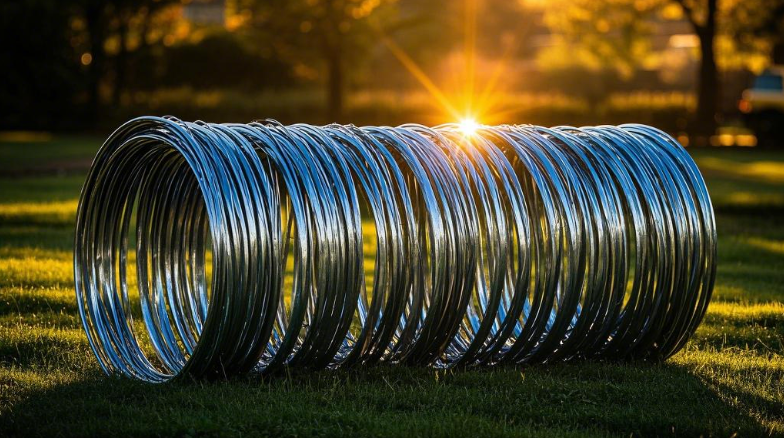
In short, galvanized wire strikes an optimal balance between strength, longevity, corrosion protection, and affordability – all critical factors for the demanding, open-air conditions of farms and ranches.

Keywords:
More information
Contact
Phone/WhatsApp:
E-mail:
Address:
Huangtai Industrial Park, Xiaozhan Town,
Jinnan District, Tianjin, 300353, China
Follow us

Inquiry