


Do You Really Know Galvanized Wire?
Release time:
2026-05-22
At first glance, galvanized wire and ordinary iron wire look similar – both are thin, bendable metal strands. But put them side by side in a humid environment for a few weeks, and the difference becomes dramatic. One remains bright and intact; the other quickly turns into a brittle, reddish-brown mess.
At first glance, galvanized wire and ordinary iron wire look similar – both are thin, bendable metal strands. But put them side by side in a humid environment for a few weeks, and the difference becomes dramatic. One remains bright and intact; the other quickly turns into a brittle, reddish-brown mess.
So what exactly sets galvanized wire apart? If you think it’s just “wire with a shiny coating,” you’re only scratching the surface. Understanding its real value can save you from frequent replacements, structural failures, and unnecessary costs.
The Core Difference: A Protective Zinc Armor
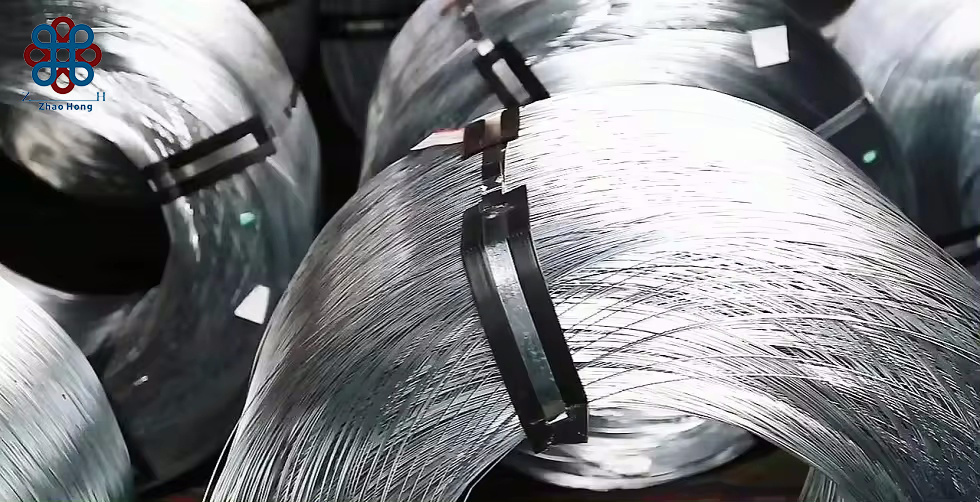
Galvanized wire starts as ordinary iron (or steel) wire. The key transformation happens during galvanization – a process that applies a layer of zinc to the surface, either by electroplating (zinc plating) or hot-dip galvanizing.
This zinc layer is not just for looks. Zinc is more reactive than iron. When exposed to air and moisture, it oxidizes before the underlying iron does. This is called sacrificial protection – the zinc willingly corrodes to save the iron. Additionally, zinc forms a dense, insoluble patina that further seals the surface from oxygen and water. Ordinary iron wire has no such defense; it begins rusting as soon as humidity strikes.
Head‑to‑Head Comparison
| Property | Galvanized Wire | Ordinary Iron Wire |
|---|---|---|
| Corrosion resistance | Excellent. Survives years outdoors. | Very poor. Rusts rapidly in damp conditions. |
| Appearance | Bright silver‑white, smooth and shiny | Dark grey or black, dull, often with mill scale |
| Service life (outdoor) | 10–30 years (hot‑dip); 1–5 years (electro‑plated) | A few weeks to months |
| Mechanical strength | Slightly improved (or unchanged if well processed) | Baseline strength |
| Cost | Higher (due to processing) | Low |
Why “Galvanized” Is Not a Single Standard
Many people don’t realize there are two common types of galvanized wire, and they behave very differently:
-
Hot‑dip galvanized wire – The wire is dipped into molten zinc. The coating is thick (typically 40–100 µm) and forms a metallurgical bond with the steel. This is the heavy‑duty choice for fencing, overhead cables, coastal structures, and agricultural cages. It can last 15–30 years outdoors, even in harsh environments.
-
Electro‑galvanized wire (zinc‑plated wire) – Zinc is deposited using an electric current. The coating is thin (5–15 µm) and smoother, but much less durable. It is suitable for indoor applications like crafts, binding in dry warehouses, or temporary fixtures. Outdoors, it may start rusting in under a year.
If you see a product labeled just “galvanized wire,” always check whether it is hot‑dipped or electro‑galvanized. The performance gap is enormous.
When Should You Choose Galvanized Wire?
Choose galvanized wire (preferably hot‑dipped) when:
-
The wire will be exposed to weather, rain, or soil.
-
It will be used in high humidity (bathrooms, greenhouses, basements).
-
It must resist corrosive agents (salt air near the ocean, chemicals in a factory).
-
You want a long‑lasting solution without frequent replacement.
-
Appearance matters – the bright finish is more attractive for visible craft or architectural ties.
Ordinary iron wire is only acceptable when:
-
The application is strictly indoor and dry.
-
The structure is temporary or short‑lived (e.g., a one‑season garden trellis).
-
Budget is extremely limited, and you accept rust as inevitable.
A Real‑World Example
Imagine two farmers building chicken coops. Farmer A uses ordinary iron wire for the mesh and ties. Within one rainy season, the wire rusts through, the mesh sags, and predators break in. Farmer B spends a little more on hot‑dip galvanized wire. Ten years later, the galvanized wire is still holding strong, with only a dull grey patina – no red rust. Which one saved money in the long run?
The Bottom Line
Galvanized wire is not overhyped – it is genuinely a different material class thanks to its sacrificial zinc coating. The small upfront premium pays off in years of reliable, rust‑free service. Next time you reach for a roll of wire, ask yourself: Do I want to do this job once, or fix it every spring?
If you truly know galvanized wire, you know it’s not just “wire that doesn’t rust.” It is an engineered solution for durability. Choose wisely, and your projects will stand the test of time.

Keywords:
More information


Contact
Phone/WhatsApp:
E-mail:
Address:
Huangtai Industrial Park, Xiaozhan Town,
Jinnan District, Tianjin, 300353, China
Follow us

Inquiry