


Galvanized Wire: A Complete Beginner’s Guide
Release time:
2026-05-07
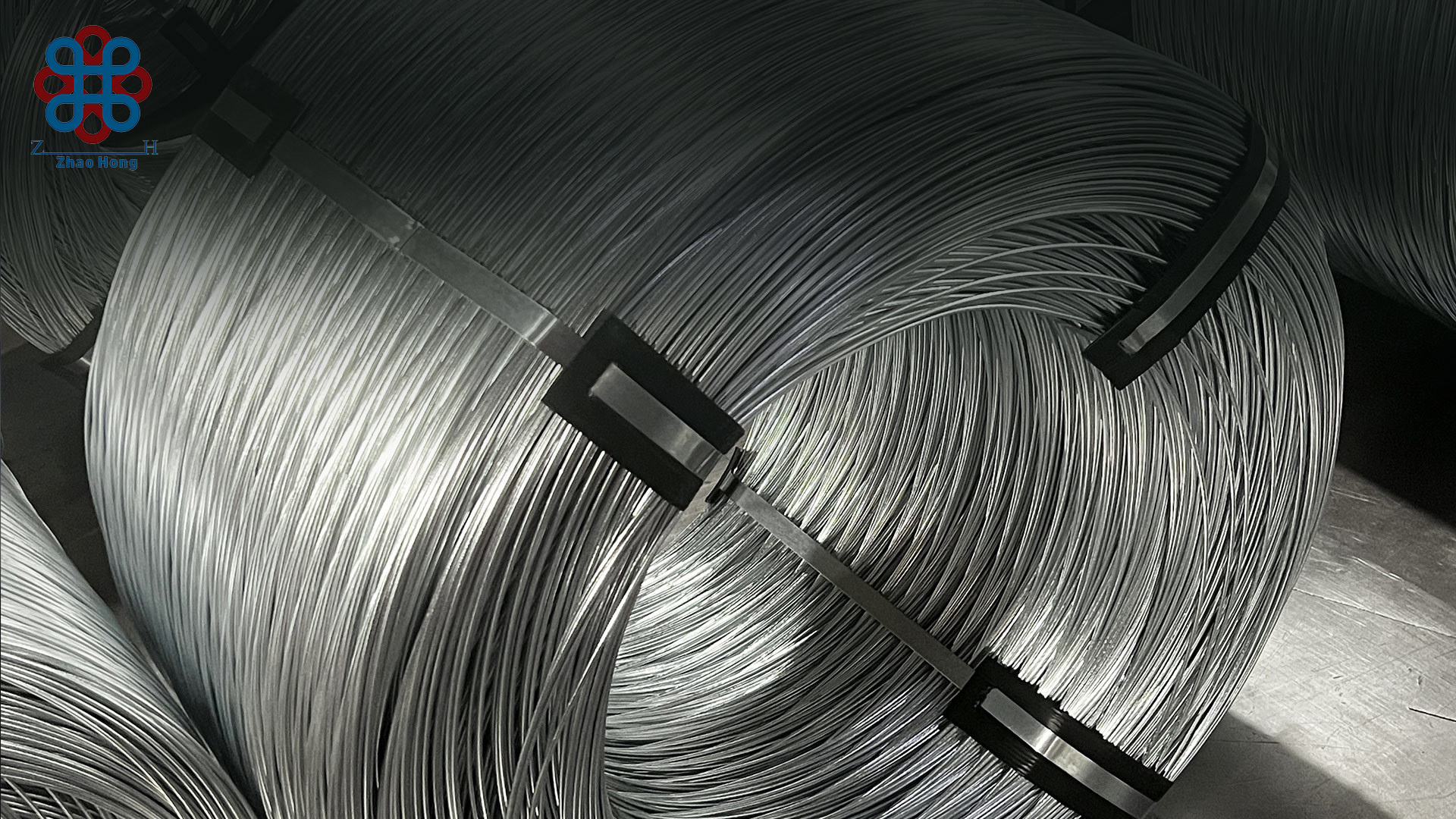
Galvanized wire is ordinary steel wire coated with a layer of zinc. The zinc acts as a sacrificial barrier – it corrodes first, protecting the steel underneath and greatly extending the wire’s service life.
Galvanized Wire: A Complete Beginner’s Guide
Galvanized wire is ordinary steel wire coated with a layer of zinc. The zinc acts as a sacrificial barrier – it corrodes first, protecting the steel underneath and greatly extending the wire’s service life.
1. Main Types of Galvanized Wire
The key difference between types is how thick the zinc coating is. This determines performance, cost, and suitable applications.
| Feature | Hot-Dip Galvanized (HDG) Wire | Electro-Galvanized Wire (Cold Galvanized) |
|---|---|---|
| Coating thickness | Very thick: 45–300+ µm | Thin: 3–15 µm |
| Appearance | Dull matte silver-grey, sometimes with visible “spangles” | Bright, shiny silver-white or slightly bluish |
| Corrosion resistance | Excellent – decades outdoors | Moderate – may rust in months outdoors |
| Typical use | Highway barriers, power transmission towers, marine/chemical environments | Indoor crafts, binding wire, product packaging, low-cost temporary use |
| Relative cost | Higher | Lower |
Additionally, galvanized wire can be further classified by mechanical treatment:
Annealed galvanized wire – Soft and very flexible, ideal for hand twisting and tying.
High-tensile galvanized wire – Much stronger, used for fencing, concrete reinforcement, and bridge cables.
2. How to Tell Quality Galvanized Wire from Poor-Quality Wire
For a beginner, simple physical checks are very effective. Here’s what to do:
Visual inspection
Good quality – Even color (silver-grey or bright white), smooth surface, no rust spots, no bare steel showing.
Poor quality – Dull, uneven color, yellow or black stains, rough bumps (zinc lumps), or obvious missing coating.
Bend test
Take a piece of wire and bend it back and forth 180° several times.
Good – The zinc may show fine cracks but does not peel or flake off.
Poor – The coating flakes off in large pieces, exposing black steel.
Scratch test
Scrape the surface firmly with a knife edge or a key.
Good – Only a faint scratch mark; the coating stays in place.
Poor – White zinc powder comes off easily, or the coating peels away.
Weight / thickness feel
For the same wire diameter, a good hot-dip galvanized wire feels noticeably heavier because of the thicker zinc layer. If a wire looks “shiny cheap” and feels too light, it likely has a very thin coating.
Professional checks (for serious buyers)
Magnetic thickness gauge – Measures zinc coating thickness (key quality indicator).
Copper sulfate test – Checks coating uniformity.
Salt spray test – Accelerated corrosion test; good HDG wire can last hundreds of hours.
Always ask for a third-party test report (CMA / CNAS accredited) if purchasing in bulk.
3. Common Applications
Construction & infrastructure – Concrete reinforcing mesh, highway guardrails, bridge cables, power transmission line earth wires, gabion baskets.
Agriculture – Vineyard trellises, animal fencing, hay bale ties, tree tying.
Daily life & crafts – Binding wire for rebar, floral/artistic wire, tie wires for packaging.
Industrial – Wire ropes, armoring for cables, mesh for screens and filters.
4. How to Choose the Right Galvanized Wire – A Quick Decision Guide
Ask yourself three questions:
Will it be used outdoors or in a humid environment?
→ Yes? Choose hot-dip galvanized wire.
→ No (indoor / very dry)? Electro-galvanized may be enough.
How long does it need to last without rust?
→ >5 years outdoors → HDG required.
→ Weeks or months → electro-galvanized can work.
Do you need it soft or strong?
→ Easy hand bending → annealed galvanized wire.
→ High strength to hold tension → high-tensile wire.
Always check the wire gauge (SWG or BWG system) and specify the exact diameter you need.
5. Avoiding Common Beginner Mistakes
Mistake 1: Buying “galvanized wire” without specifying hot-dip or electro.
Fix: Always ask: “Is this hot-dip or electro-galvanized?”
Mistake 2: Assuming all shiny wire has good rust protection.
Fix: Shiny usually means thin coating – great for indoors, poor outdoors.
Mistake 3: Forgetting to test a sample.
Fix: For any large order, request a 1-meter sample and do the bend/scratch tests.
Mistake 4: Matching price only.
Fix: If a price is surprisingly low, the coating is almost certainly too thin or the steel is poor grade.
6. Future Trends
Green galvanizing – New processes reduce acid waste and energy use.
Ultra-thick coatings – For extreme environments (e.g., offshore wind farms).
Alloy coatings – Zinc-aluminum (Zn-Al) wire offers even longer life than pure zinc.
Bottom line for a beginner:
For outdoors, choose hot-dip galvanized wire and do a simple bend test before buying large quantities. For indoor decorations or short-term tying, electro-galvanized wire is cheaper and looks brighter.
Let me know if you’d like a printable checklist or a one‑page specification table for reference!

Keywords:
More information


Contact
Phone/WhatsApp:
E-mail:
Address:
Huangtai Industrial Park, Xiaozhan Town,
Jinnan District, Tianjin, 300353, China
Follow us

Inquiry