


PVC Coated Wire and PE Coated Wire Process Difference and Price Comparison
Release time:
2024-12-12
Process Difference Raw Material Characteristics: PVC: PVC is a thermoplastic resin formed by the polymerization of vinyl chloride monomer. It is usually in the form of white or light yellow powder, and its particles are relatively hard. To improve its flexibility and other properties, additives such as plasticizers need to be added.
Process Difference
- Raw Material Characteristics:
- PVC: PVC is a thermoplastic resin formed by the polymerization of vinyl chloride monomer. It is usually in the form of white or light yellow powder, and its particles are relatively hard. To improve its flexibility and other properties, additives such as plasticizers need to be added.
- PE: PE is a thermoplastic resin obtained by the polymerization of ethylene. It has a certain rubbery texture, is relatively light in weight, non-toxic, and has good chemical stability. The flexibility of PE-coated wire is relatively better.
- Coating Process:
- PVC Coated Wire: Commonly used methods include extrusion and fluidized bed coating. In the extrusion method, a plastic extruder is used to melt PVC plastic and extrude it onto the wire surface through a die. The wire passes through the die hole, and the plastic is evenly coated on the surface, and then solidified and wound up. In the fluidized bed coating method, powdered PVC is added to a fluidized bed tank, and compressed air is introduced to make the plastic particles in a boiling suspension state. The preheated wire passes through the tank, and the plastic adheres to the wire surface, followed by plasticizing, leveling, cooling, and solidifying.
- PE Coated Wire: Usually, methods such as hot melt or adhesive bonding are used to attach the PE coating to the substrate surface. For example, in the production of PE-coated pipes, the PE plastic is heated and melted by an extruder and then evenly coated on the pipe surface, followed by cooling and shaping to form the coating layer. In the production of small products like coated wire, a similar hot melt coating process is also adopted.
- Temperature Control:
- PVC Coating: The processing temperature is relatively low, generally around 160℃-200℃. If the temperature is too high, PVC may decompose, affecting the coating quality.
- PE Coating: The processing temperature is relatively high, usually between 200℃-300℃ because PE has a higher melting point and requires a higher temperature to be fully melted for better coating results.
- Coating Performance:
- PVC Coating: It has relatively high hardness, good wear resistance, and scratch resistance. It also has strong resistance to chemical corrosion and can resist the erosion of certain acids, alkalis, and salts. However, its flexibility decreases at low temperatures.
- PE Coating: It has better flexibility, impact resistance, and excellent insulation performance. It remains in good physical condition even at low temperatures and is not prone to brittle fracture.
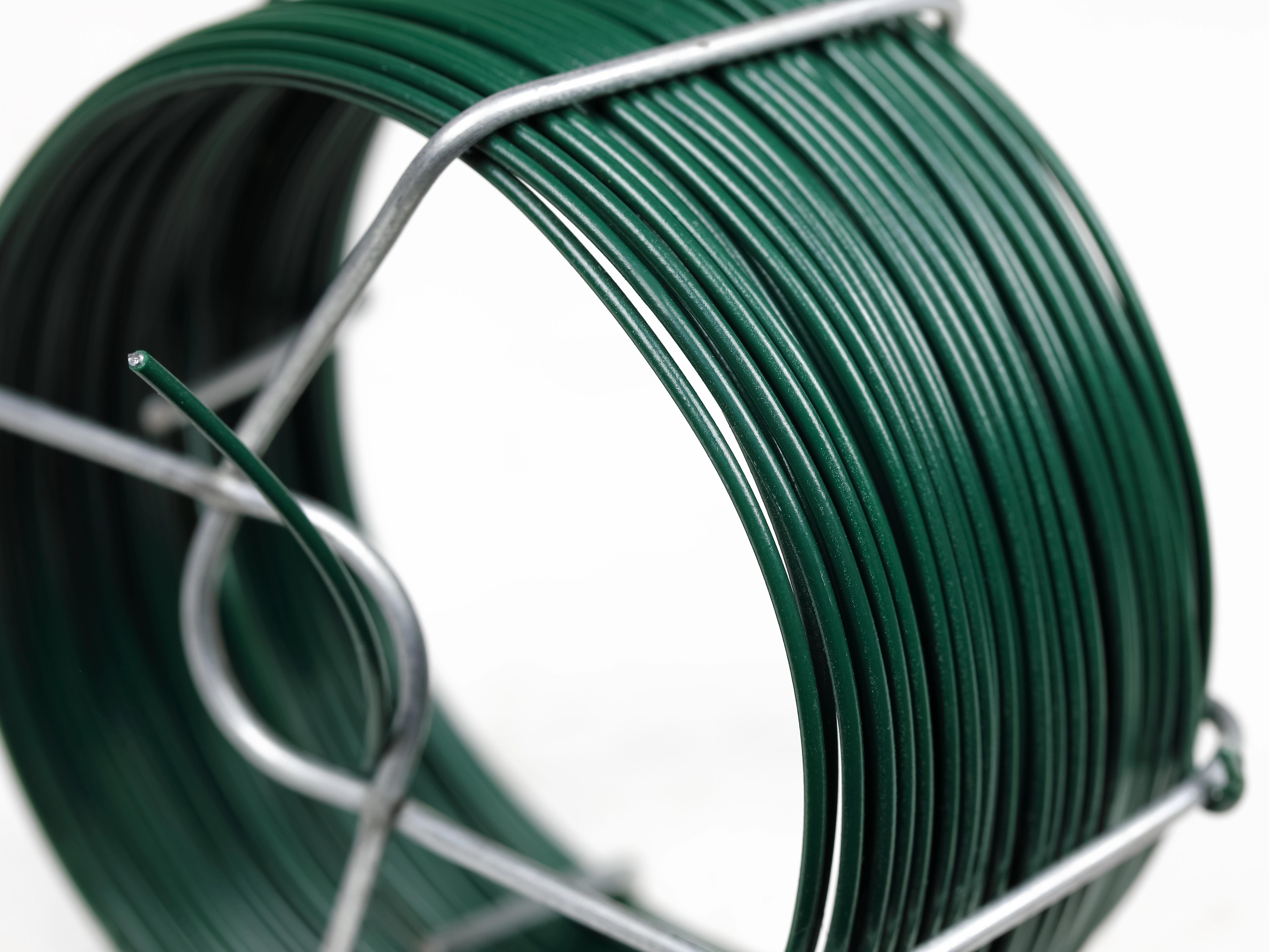
Both PVC coated wire and PE coated wire have their own characteristics and can be used for building protective meshes, and the following is a detailed analysis:
PVC Coated Wire
- Advantages:
- Excellent corrosion resistance: The PVC coating provides strong protection against various corrosive substances, such as rainwater, humid air, acids, and alkalis, which are common in construction sites. This significantly extends the service life of the protective mesh. For example, in coastal construction projects or those near chemical plants, PVC coated wire meshes can maintain good performance for a long time.
- Rich color options: It can be customized into a variety of colors, like green, blue, yellow, etc. This not only enhances the aesthetic appeal of the building protective mesh but also serves as a warning in some cases. For instance, green PVC coated wire meshes can blend well with the surrounding environment in urban construction sites, while yellow or red ones can be used in dangerous areas to remind people of potential hazards.
- High hardness and wear resistance: The relatively high hardness of the PVC coating endows the wire with good wear resistance and scratch resistance. During construction, the protective mesh may be subject to collisions and frictions from various objects. PVC coated wire can better maintain the integrity of its surface, preventing coating peeling, abrasion, and other issues, thus ensuring consistent protection.
- Lower cost: The price of PVC resin is generally lower than that of PE resin, and the production process of PVC coated wire is relatively mature, resulting in lower manufacturing costs. In large-scale construction projects, using PVC coated wire meshes can effectively control costs while ensuring protection effects.
- Disadvantages: The flexibility of PVC coated wire decreases at low temperatures, making it more prone to becoming brittle and hard, and thus more likely to break.
PE Coated Wire
- Advantages:
- Superior flexibility and impact resistance: PE material has inherent flexibility, and the resulting coated wire can maintain good elasticity and toughness even in low-temperature environments, without being prone to brittle fracture. This is highly beneficial for building protective meshes, especially in cold regions or when the mesh is frequently subjected to impacts and vibrations. PE coated wire can better adapt to environmental changes and maintain its protective function.
- Good insulation performance: PE has excellent electrical insulation properties. In construction sites near substations or high-voltage lines, using PE coated wire meshes can effectively prevent electrical accidents caused by conductive metal wires, enhancing overall safety2.
- Better environmental protection: PE is relatively environmentally friendly, being non-toxic and odorless, which has less harm to humans and the environment. In line with the concept of modern green building, using environmentally friendly protective mesh materials during construction is also conducive to protecting the health of construction workers and the surrounding environment.
- Disadvantages: The price of PE resin is relatively high, which may increase the manufacturing cost of the building protective mesh. Additionally, its surface hardness is relatively low, with poorer wear resistance and scratch resistance compared to PVC coated wire. Therefore, additional protection measures may be required in areas prone to wear.

Additional Resources
- Welded Wire Mesh Panels for Fences or Building
- A complete ban on plastics could cause even more
- Metal Mesh: Types, Materials, Patterns, Benefits
- Wire Mesh Stainless Steel Wire Mesh, Architectural
More information


Contact
Phone/WhatsApp:
E-mail:
Address:
Huangtai Industrial Park, Xiaozhan Town,
Jinnan District, Tianjin, 300353, China
Follow us

Inquiry