


The Difference Process Specifications of Cold-Drawn Straight Galvanized Wire and Cold-Drawn Annealed Wire
Release time:
2024-12-09
Cold-Drawn Straight Galvanized Wire: Usually requires relatively high-quality raw materials. The surface quality of the steel wire needs to be better to ensure good adhesion of the zinc layer during galvanization.
The following is the detailed difference in process specifications between cold-drawn straight galvanized wire and cold-drawn annealed wire:
Raw Materials
- Cold-Drawn Straight Galvanized Wire: Usually requires relatively high-quality raw materials. The surface quality of the steel wire needs to be better to ensure good adhesion of the zinc layer during galvanization. Generally, low-carbon steel wire rods are used, and the chemical composition and impurity content of the raw materials need to meet certain standards to ensure the performance of the final product, such as strength, ductility, and corrosion resistance1.
- Cold-Drawn Annealed Wire: The requirements for raw materials are relatively less strict. It also mainly uses low-carbon steel wire rods, but some materials with slightly lower surface quality or slightly different chemical compositions can still be used to produce cold-drawn annealed wires that meet the requirements for some ordinary applications1.
Cold Drawing Process
- Cold-Drawn Straight Galvanized Wire: The cold drawing process is to pass the wire rod through a die with a diameter smaller than its own diameter at room temperature, so that the wire rod undergoes plastic deformation to obtain the required diameter and mechanical properties. This process may be repeated multiple times to gradually reduce the diameter of the wire until the desired size is reached. In the process of cold drawing, in order to reduce friction and prevent surface damage, appropriate lubricants are usually used12.
- Cold-Drawn Annealed Wire: Similar to cold-drawn straight galvanized wire, it also undergoes a cold drawing process to reduce the diameter of the wire rod. However, compared with cold-drawn straight galvanized wire, its cold drawing times or reduction ratio may be different according to different product requirements. Generally speaking, for some applications that require higher flexibility, the degree of cold drawing may be relatively small to retain a certain degree of plasticity12.
Annealing Process
- Cold-Drawn Straight Galvanized Wire: Usually, there is no annealing treatment after cold drawing. Because the subsequent galvanization process can play a certain role in improving the plasticity and toughness of the wire to a certain extent, and at the same time can improve the corrosion resistance of the wire. However, in some special cases, if the wire has higher requirements for plasticity and toughness, appropriate annealing treatment may also be carried out before galvanization46.
- Cold-Drawn Annealed Wire: Annealing is a key process for cold-drawn annealed wire. After cold drawing, the wire is heated to a certain temperature range (usually above the recrystallization temperature of the metal), kept at a constant temperature for a period of time, and then slowly cooled. This process can eliminate the internal stress generated during cold drawing, improve the plasticity and toughness of the wire, and make the wire softer and more suitable for applications requiring good flexibility, such as binding wires1.
Galvanizing Process
- Cold-Drawn Straight Galvanized Wire: Galvanizing is an important process to distinguish it from cold-drawn annealed wire. There are mainly two galvanizing methods: hot-dip galvanizing and electro-galvanizing. Hot-dip galvanizing is to immerse the cold-drawn wire in a molten zinc bath, so that a layer of zinc-iron alloy is formed on the surface of the wire, which has good corrosion resistance. Electro-galvanizing is to use electrolysis to deposit a layer of zinc on the surface of the wire in an electrolyte solution containing zinc ions, which has a relatively smooth and uniform zinc layer, but the corrosion resistance may be slightly worse than that of hot-dip galvanizing4.
- Cold-Drawn Annealed Wire: Generally, there is no galvanizing treatment, so its surface is in a natural state of the metal, without the protection of the zinc layer, and the corrosion resistance is relatively poor. However, due to its good flexibility and plasticity, it is still widely used in some fields where corrosion resistance is not highly required1.
Product Specifications
- Cold-Drawn Straight Galvanized Wire: The diameter specifications of cold-drawn straight galvanized wire are generally between 0.5mm and 6.0mm. Different diameter wires have different uses and mechanical properties. The thinner the diameter, the higher the production difficulty and the relatively higher the unit price. In addition to the diameter, the thickness of the zinc layer is also an important specification parameter. The thicker the zinc layer, the better the corrosion resistance, but the higher the production cost4.
- Cold-Drawn Annealed Wire: The diameter specifications are also approximately between 0.5mm and 6.0mm, similar to cold-drawn straight galvanized wire. However, in some special application scenarios, it may also use thinner or thicker specifications. Generally, the price difference of different diameter cold-drawn annealed wires is relatively small compared with that of cold-drawn straight galvanized wires .
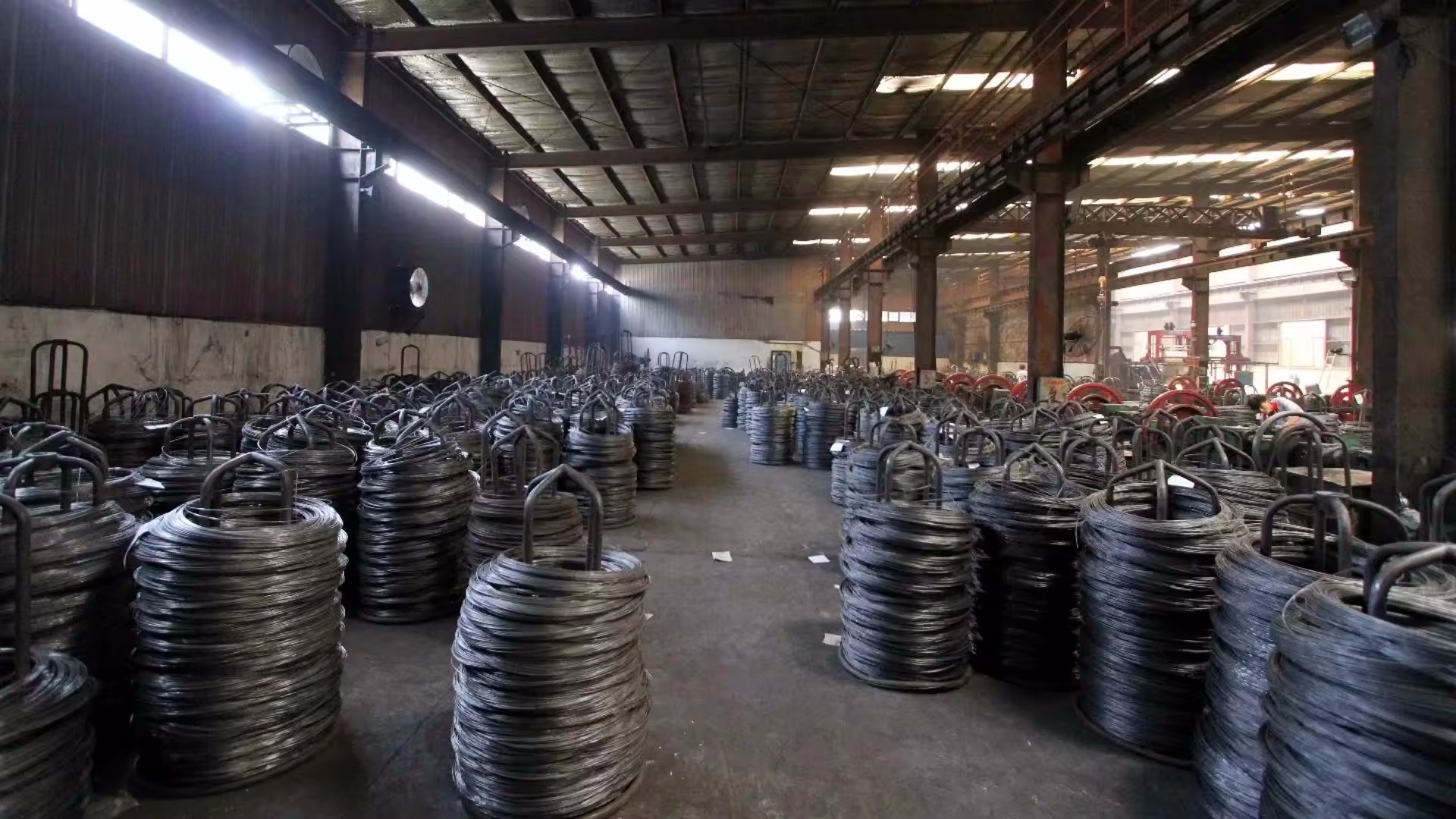
The following is an analysis of the price difference between cold-drawn straight galvanized wire and cold-drawn annealed wire:
Raw Material Cost
- Cold-Drawn Straight Galvanized Wire: Usually requires better quality raw materials with more stringent requirements on surface quality and chemical composition to ensure the adhesion and corrosion resistance of the zinc layer, which may lead to relatively higher raw material costs1.
- Cold-Drawn Annealed Wire: Has relatively looser requirements for raw materials, and some materials with slightly lower surface quality or different chemical compositions can also be used, so the raw material cost is generally lower.
Process Complexity
- Cold-Drawn Straight Galvanized Wire: In addition to the cold drawing process, it also needs to go through galvanizing treatment, such as hot-dip galvanizing or electro-galvanizing. These galvanizing processes increase production complexity and cost. Hot-dip galvanizing requires heating the wire to a high temperature and immersing it in molten zinc, while electro-galvanizing requires the use of electrolytic equipment and chemical reagents1.
- Cold-Drawn Annealed Wire: The main process is cold drawing followed by annealing. Although annealing also incurs certain costs, such as energy consumption for heating and time cost, it is generally less complex and costly compared to the galvanizing process of cold-drawn straight galvanized wire.
Product Performance and Application
- Cold-Drawn Straight Galvanized Wire: Thanks to the zinc layer, it has excellent corrosion resistance and is suitable for applications where anti-corrosion is required, such as outdoor structures, wire mesh, and guardrails. In some cases where high corrosion resistance is demanded, thicker zinc layers may be required, further increasing the cost but also resulting in a relatively higher price17.
- Cold-Drawn Annealed Wire: After annealing, it has better plasticity and toughness, making it suitable for applications requiring flexibility, such as binding wires in construction. However, due to the lack of a zinc layer, its corrosion resistance is poor, limiting its application range to some extent and resulting in a relatively lower price.
Market Supply and Demand
- Cold-Drawn Straight Galvanized Wire: In some industries with high demand for corrosion-resistant wire products, such as construction, infrastructure, and wire mesh manufacturing, the demand for cold-drawn straight galvanized wire is relatively stable. If the market supply cannot meet the demand in a certain period, the price may rise.
- Cold-Drawn Annealed Wire: The market demand is relatively concentrated in some fields that require binding wires or have low requirements for corrosion resistance, such as the building materials market for simple binding and tying. If the market supply exceeds demand, the price may be relatively stable or even decline.
Price Range Examples
- Generally speaking, the price of cold-drawn annealed wire is relatively low. For example, the price of common cold-drawn annealed wire on the market is about 3,500 yuan/ton to 4,500 yuan/ton349.
- The price of cold-drawn straight galvanized wire is relatively high. Thin cold-drawn straight galvanized wire with a diameter of about 1mm to 2mm may be sold at a price of about 5,000 yuan/ton to 7,000 yuan/ton, while thicker wire with a diameter of about 4mm to 6mm may be priced at about 4,000 yuan/ton to 6,000 yuan/ton. The price may also vary significantly depending on factors such as the thickness of the zinc layer and brand.

Additional Resources
-
Cold Drawn Galvanized Iron Wire/iron Rod 5mm Diameter
-
What is Galvanized Iron Wire Cold Drawm Steel Wire
-
Spring Wire Oil Tempered, Cold Drawn
- SAE1006 Cold Drawn Wire - Cold Drawing Wire
More information


Contact
Phone/WhatsApp:
E-mail:
Address:
Huangtai Industrial Park, Xiaozhan Town,
Jinnan District, Tianjin, 300353, China
Follow us

Inquiry