


Stone Cage Mesh Specifications: Galvanized Wire Processing Details
Release time:
2024-11-27
The mesh aperture of stone - cage nets is usually hexagonal, which provides good stability. The common size of the mesh aperture (measured from the opposite side distance) ranges from about 60mm to 200mm. For example, a smaller mesh aperture of 60 - 80mm is suitable for retaining smaller - grained stones and preventing them from leaking through the mesh. It is often used in some landscape projects that require small - grained filling materials for the stone - cage nets or in projects to prevent the loss of fine - grained soil.
-
Mesh Aperture Specifications
-
The mesh aperture of stone - cage nets is usually hexagonal, which provides good stability. The common size of the mesh aperture (measured from the opposite side distance) ranges from about 60mm to 200mm. For example, a smaller mesh aperture of 60 - 80mm is suitable for retaining smaller - grained stones and preventing them from leaking through the mesh. It is often used in some landscape projects that require small - grained filling materials for the stone - cage nets or in projects to prevent the loss of fine - grained soil. Larger mesh apertures, such as 150 - 200mm, are used when larger stones are to be filled. In some hydraulic engineering anti - erosion structures, using larger stones to fill the large - aperture stone - cage nets can better resist the impact of water flow. The allowable deviation of the mesh aperture size is generally about ±5%. This is to ensure that the mesh apertures are relatively consistent during the splicing and installation of the stone - cage nets so that the entire stone - cage structure is evenly stressed.
-
-
Wire Diameter Specifications
-
The wire diameter of the galvanized iron wire directly affects the strength of the stone - cage net. Generally, the wire diameter of the galvanized iron wire used for stone - cage nets is between 2.0mm and 4.0mm. Stone - cage nets with a wire diameter of 2.0 - 2.5mm are suitable for small - scale landscape projects or temporary protection projects where high strength is not particularly required. For example, in the slope protection project of some small gardens, using this kind of wire - diameter stone - cage nets to build a simple slope - protection structure can not only play a certain role in soil reinforcement but also meet the aesthetic requirements of the landscape. In some large - scale hydraulic projects or projects that bear large external forces for a long time, such as riverbank protection and seawall protection, stone - cage nets made of galvanized iron wire with a wire diameter of 3.0 - 4.0mm are needed to ensure that the stone - cage net structure will not be easily deformed or damaged under the long - term external forces such as water flow impact and wave scouring. The tolerance of the wire diameter is generally controlled within ±0.05mm - 0.08mm to ensure the stability of the quality of the stone - cage net.
-
-
Net Box Dimensions Specifications
-
The external dimensions of the stone - cage net box are mainly determined according to the actual needs of the project. The common length ranges from 1m to 6m, the width from 1m to 4m, and the height from 0.5m to 2m. In some small - scale ditch protection projects, small - sized stone - cage net boxes with a length of 1 - 2m, a width of 1m, and a height of 0.5 - 1m may be used, which is convenient for construction workers to operate and install on - site. In large - scale reservoir dam slope protection or landslide protection projects, larger - sized net boxes such as those with a length of 4 - 6m, a width of 3 - 4m, and a height of 1.5 - 2m will be used. By splicing multiple such large - sized net boxes, a large - area protection structure can be quickly constructed. The tolerance of the net box dimensions generally allows a deviation of ±5cm in the length and width directions and ±3cm in the height direction, considering the possible errors during the actual processing and installation.
-
-
Galvanized Layer Specifications
-
The galvanized layer is the key to ensuring the corrosion - resistance of the iron wire. Hot - dip galvanizing is a commonly used galvanizing method. The thickness of the galvanized layer is generally required to be between 30μm and 80μm. A thinner galvanized layer of 30 - 40μm is suitable for the inland areas with relatively weak environmental corrosiveness or some temporary projects with a relatively short service life requirement (such as 5 - 10 years). In highly corrosive environments such as seaside and chemical areas, the thickness of the galvanized layer of the galvanized iron wire used for the stone - cage nets needs to reach 60 - 80μm so as to ensure that the stone - cage nets have a longer service life in harsh environments, generally 20 - 30 years or even longer. The galvanized layer should be uniform and continuous, without defects such as missed galvanizing, zinc nodules, and peeling. Because if these problems occur, the iron wire is prone to corrosion at the defective parts, thus affecting the structural integrity of the entire stone - cage net.
-
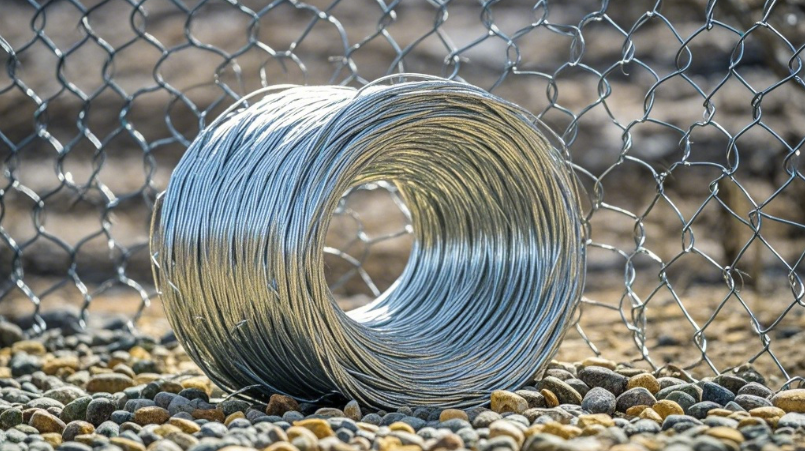
There are several advantages of using galvanized iron wire to process stone cage nets:
Corrosion Resistance
-
The galvanized layer on the iron wire provides excellent protection against rust and corrosion. This is crucial as stone cage nets are often used in outdoor environments, such as riverbanks, shorelines, and slopes, where they are constantly exposed to moisture, water flow, and other elements. The zinc coating acts as a sacrificial anode, corroding preferentially to the underlying iron wire, thereby extending the lifespan of the stone cage net.
-
In different environmental conditions, the anti-corrosion performance of galvanized iron wire is manifested in different ways. For example, in coastal areas with high salt content in the air and water, the thick galvanized layer can effectively prevent the erosion of sea water on the iron wire; in industrial areas with more acidic substances in the air, it can also resist the corrosion of acidic substances to a certain extent.
High Strength and Durability
-
Galvanized iron wire has relatively high tensile strength, which enables the stone cage net to bear significant loads. It can withstand the pressure and impact of filled stones, as well as external forces such as water flow and waves, without easily deforming or breaking. This ensures the long-term stability and integrity of the stone cage structure, making it suitable for various engineering applications, such as retaining walls, slope protection, and river channel regulation.
-
The durability of galvanized iron wire also means that the stone cage net can maintain its performance and functionality over an extended period. It is not easily damaged by natural factors or mechanical wear, reducing the need for frequent repairs and replacements, and thus saving maintenance costs in the long run.
Flexibility and Adaptability
-
The flexibility of galvanized iron wire allows the stone cage net to be easily bent, shaped, and assembled into different configurations according to the specific requirements of the project site. It can conform to the irregular shape of the terrain, such as slopes and curved riverbanks, providing a more customized and effective protection solution.
-
Moreover, during the installation process, the flexibility of the stone cage net makes it easier to handle and position, even in difficult or restricted working conditions. Workers can adjust the shape and position of the stone cage net on-site to ensure its proper installation and connection, enhancing the overall construction efficiency.
Permeability and Ecological Friendliness
-
The open mesh structure of the stone cage net made of galvanized iron wire offers good permeability. This allows water to flow through freely, which is beneficial for maintaining the natural water cycle and groundwater level. It also enables the exchange of air and nutrients, creating a favorable environment for the growth of plants and microorganisms.
-
The voids between the stones in the stone cage net can be gradually filled with soil and seeds through natural processes or artificial seeding. As plants grow, their roots penetrate and bind the stones and soil together, further enhancing the stability of the slope or embankment while also improving the ecological environment by increasing vegetation cover and biodiversity.
Cost-Effectiveness
-
Galvanized iron wire is relatively inexpensive compared to some other materials with similar properties. Using galvanized iron wire to produce stone cage nets can help reduce material costs without sacrificing the quality and performance of the product. Additionally, the long service life and low maintenance requirements of galvanized stone cage nets result in overall cost savings during the entire life cycle of the project.
-
In large-scale engineering projects, the cost advantage of using galvanized iron wire becomes more significant. It allows for a more economical solution to achieve the desired engineering and environmental protection goals, making it a popular choice among engineers and contractors.

Additional Resources
-
Commercial Galvanized Steel Welded Wire Mesh
-
What is Gi Wire, Tie Wire, Galvanized Iron Wire 0.7mm
-
Galvanized Square Hole Iron Welded Wire Mesh
-
1/4" 3/4" Chicken Wire Mesh /Rabbit Wire Mesh
Keywords:
More information


Contact
Phone/WhatsApp:
E-mail:
Address:
Huangtai Industrial Park, Xiaozhan Town,
Jinnan District, Tianjin, 300353, China
Follow us

Inquiry