


Understanding the Process of Galvanized Wire Handicraft Wire
Release time:
2024-11-06
“Galvanized wire handicraft wire” refers to galvanized wire used for making handicrafts.
“Galvanized wire handicraft wire” refers to galvanized wire used for making handicrafts.
1. Material characteristics
- Corrosion resistance: The zinc coating on the wire provides a certain level of protection against rust. Zinc is more reactive than the base metal (usually iron). When exposed to the atmosphere, zinc corrodes preferentially, forming a protective layer of zinc compounds that prevent the underlying iron from rusting. This property makes it suitable for both indoor and outdoor handicrafts to some extent.
- Malleability: It can be easily bent, twisted, and shaped into various forms. The wire's flexibility allows artisans to create complex and delicate structures such as wire - framed sculptures, flower shapes, and decorative grids.
2. Applications in handicrafts
- Home decoration:
- It can be used to make wall - mounted wire art. For example, by bending and twisting the wire, artists can create beautiful patterns like geometric shapes, floral motifs, or abstract designs that add a unique artistic touch to the walls of a living room or bedroom.
- Galvanized wire handicraft wire is also suitable for making three - dimensional decorative objects such as wire - wrapped vases. The wire can be wrapped around a glass or ceramic vase to give it an industrial - chic or rustic look.
- Garden and outdoor decoration:
- In gardens, it can be used to make trellises for climbing plants. The wire's strength allows it to support the weight of growing plants such as vines and roses.
- Wire sculptures are also a popular application. Artists can create life - sized or smaller - scale animal sculptures (such as birds, rabbits) or other natural elements (like leaves, branches) to decorate outdoor spaces such as parks and gardens.
3. Processing and precautions
- Processing:
- When using galvanized wire for handicrafts, basic tools like pliers and wire cutters are often needed. Pliers are used to bend and shape the wire precisely. For more complex shapes, a jig or a template can be used to guide the shaping process.
- If necessary, the wire can be joined together using techniques such as twisting the ends tightly or using small wire connectors. In some cases, soldering can also be used, but it's important to ensure that the heat from soldering doesn't damage the zinc coating too much.
- Precautions:
- Although galvanized wire has good corrosion resistance, scratches or deep cuts on the zinc coating can expose the underlying metal and lead to rusting. Therefore, when handling and processing the wire, care should be taken to avoid damaging the coating.
- If the handicraft is to be placed outdoors, regular inspection and maintenance are recommended. Checking for any signs of rust or damage to the zinc coating and taking timely measures such as touch - up painting or cleaning can significantly extend the life of the handicraft.
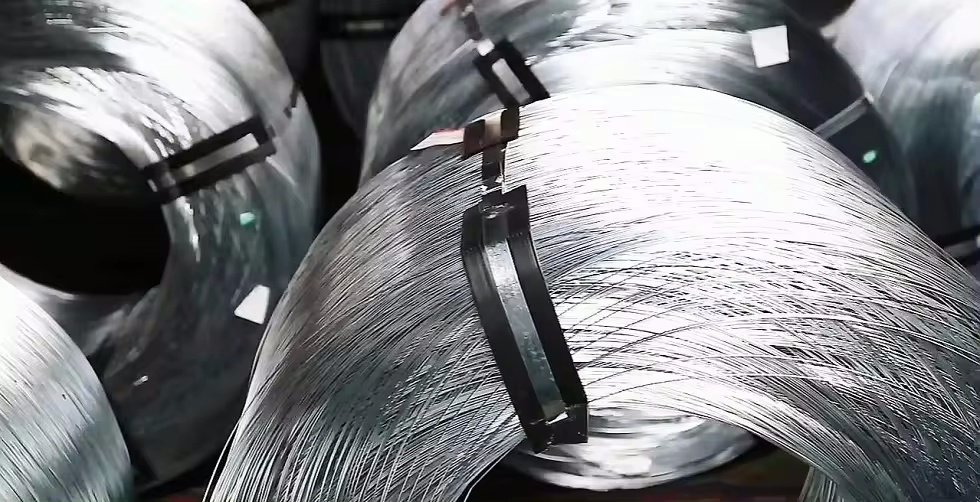
Here are several ways to prevent galvanized wire craft wire from rusting:
1. Keep it in a suitable environment
- Control humidity: Store the galvanized wire craft wire in a dry environment. The relative humidity of the storage environment is preferably maintained below 60%. You can use a dehumidifier to reduce the humidity in the air. For example, in a warehouse, regularly monitor and adjust the humidity level to prevent the wire from being affected by excessive moisture.
- Avoid corrosive gases: Keep the wire away from environments with a high concentration of corrosive gases such as sulfur dioxide and chlorine. These gases can react with the metal and accelerate the rusting process. If the wire is used near industrial areas with a lot of chemical emissions, it is best to take appropriate isolation or protection measures.
2. Protect the surface
- Apply a protective coating:
- Paint: Use anti - rust paint to coat the surface of the galvanized wire. Before painting, make sure the surface of the wire is clean and dry. You can choose epoxy - based anti - rust paint, which has good adhesion and anti - corrosion performance. Usually, 2 - 3 coats of paint are recommended, with an interval of a few hours between each coat to ensure that the paint dries thoroughly.
- Wax: Coating the wire with a layer of wax can also provide a certain degree of protection. Beeswax or paraffin wax can be used. Melt the wax and evenly apply it to the wire surface. The wax layer can prevent moisture and air from coming into contact with the wire.
- Seal the surface: Use a transparent sealant, such as a polyurethane - based sealant. This kind of sealant can form a transparent and durable protective film on the wire surface, which not only prevents rust but also maintains the original appearance of the galvanized wire to a certain extent.
3. Handle with care during use
- Avoid scratches: When handling the galvanized wire, be careful not to scratch the zinc - plated layer with sharp tools. Even a small scratch can expose the underlying iron and become a starting point for rust. For example, when using pliers to bend the wire, make sure the jaws of the pliers are smooth and do not cause excessive damage to the wire surface.
- Prevent mechanical damage: Avoid over - bending or over - stretching the wire, as this can cause cracks or breaks in the zinc - plated layer. If the wire is to be used to make a complex - shaped handicraft, it is best to follow the correct bending and shaping methods to ensure that the integrity of the zinc - plated layer is maintained.

Additional Resources
- How to prevent galvanized wire crafts wire rust?
- Rust Resistance Galvanized Steel Wire U Type
- Galvanized wire-Steel Materials
- Ungalvanized Steel Wire Rope 19X7 18X7+Iws
Keywords:
More information


Contact
Phone/WhatsApp:
E-mail:
Address:
Huangtai Industrial Park, Xiaozhan Town,
Jinnan District, Tianjin, 300353, China
Follow us

Inquiry