


The Clear Difference Between Q195 and Q235 Galvanized Wire in Appearance?
Release time:
2024-11-04
To improve the appearance quality of Q195 and Q235 galvanized wire, the following methods can be considered:
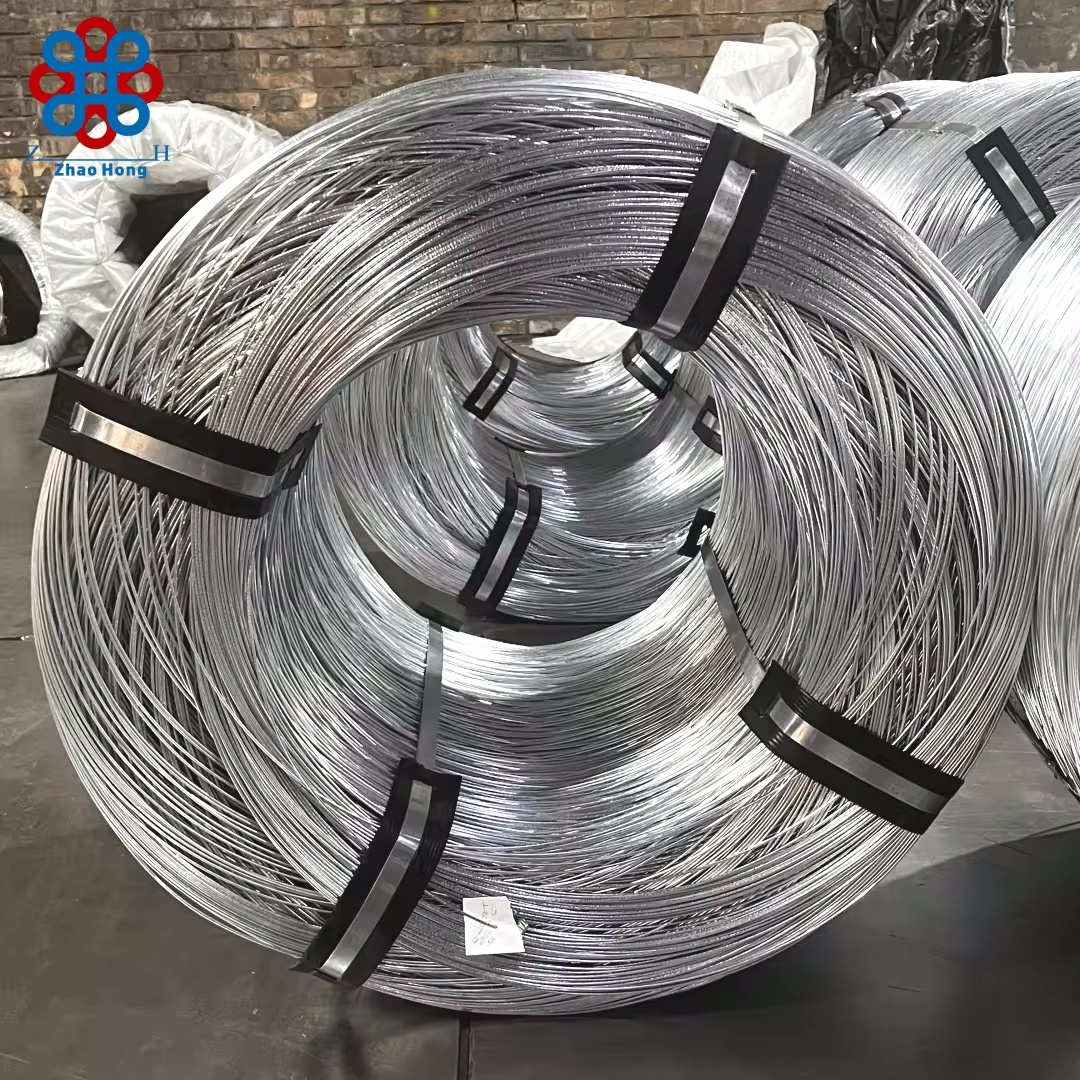
The following are the differences in appearance between Q195 and Q235 galvanized wire:
Color
- Q195 Galvanized Wire:
- Generally, the color of Q195 galvanized wire is relatively lighter and brighter. Since Q195 has a relatively lower carbon content and its mechanical properties are not as high as those of Q235, the galvanized layer on it may appear more shiny and silvery white, with a relatively more prominent metallic luster.
- Q235 Galvanized Wire:
- The color of Q235 galvanized wire is often a bit darker compared to Q195 galvanized wire. Due to its relatively higher carbon content and stronger mechanical properties, the appearance of the galvanized layer may seem a bit duller, usually showing a darker shade of silver or grayish white.
Surface Smoothness
- Q195 Galvanized Wire:
- Q195 galvanized wire usually has a relatively smoother surface. Because its strength is not extremely high, during the galvanizing process, the wire is less likely to deform or cause irregularities on the surface, resulting in a smoother appearance of the galvanized layer.
- Q235 Galvanized Wire:
- The surface of Q235 galvanized wire may be relatively rougher. Given its higher strength, during processes such as wire drawing and galvanizing, it may be more prone to some slight deformations or surface irregularities, making the surface of the galvanized layer not as smooth as that of Q195 galvanized wire.
Uniformity of Galvanized Layer
- Q195 Galvanized Wire:
- The galvanized layer on Q195 galvanized wire tends to be more uniform. The lower strength of Q195 wire makes it easier to control the galvanizing process, and the deposition of the galvanized layer on the wire surface can be more evenly distributed, resulting in a relatively more consistent thickness of the galvanized layer across the wire.
- Q235 Galvanized Wire:
- For Q235 galvanized wire, the uniformity of the galvanized layer may be slightly worse. Due to its higher strength and some possible challenges in the production process related to its properties, the deposition of the galvanized layer on the wire surface may not be as evenly distributed as that of Q195 galvanized wire, and there may be some local differences in the thickness of the galvanized layer.
It should be noted that these differences in appearance are not absolute and can also be affected by factors such as the specific galvanizing process and production conditions.
To improve the appearance quality of Q195 and Q235 galvanized wire, the following methods can be considered:
1. Raw Material Selection and Pretreatment
- High-Quality Raw Materials:
- Select high-quality wire rods as the raw materials for Q195 and Q235 galvanized wires. Ensure that the wire rods have no obvious defects such as cracks, folds, scabs, ears, delaminations, and inclusions on the surface. The chemical composition of the wire rods should also meet the relevant standards.
- For example, for Q195 wire rods, the carbon content should be within the specified range (usually around 0.06% - 0.12%), and for Q235 wire rods, the carbon content should be in the appropriate range (about 0.12% - 0.20%).
- Surface Pretreatment:
- Pickling: Before galvanizing, the wire rods need to be pickled to remove rust and oxides on the surface. Use an appropriate concentration of acid (such as hydrochloric acid) for pickling. The pickling time and acid concentration should be adjusted according to the degree of rust on the wire rods. After pickling, rinse the wire rods thoroughly with clean water to remove residual acid.
- Cleaning and Drying: After pickling and rinsing, ensure that the wire rods are thoroughly cleaned and dried. Any remaining moisture or impurities on the surface can affect the quality of the galvanizing process and the appearance of the galvanized wire. Use a drying device to dry the wire rods completely to a moisture-free state.
2. Optimization of Galvanizing Process
- Galvanizing Method Selection:
- For better appearance quality, consider the characteristics of different galvanizing methods. Hot-dip galvanizing can provide a thicker galvanized layer with good corrosion resistance, but it may require more careful control of the process to ensure uniform appearance. Electro-galvanizing can produce a thinner and more uniform galvanized layer, which is often suitable for applications where a smooth and bright appearance is required.
- Control of Galvanizing Parameters:
- Temperature: In hot-dip galvanizing, accurately control the temperature of the zinc bath. For example, the optimal temperature range for hot-dip galvanizing Q195 and Q235 wires may be around 440°C - 460°C. If the temperature is too high, it may lead to excessive generation of zinc slag and affect the smoothness of the galvanized layer; if the temperature is too low, the galvanizing effect may not be satisfactory.
- Time: Reasonably control the galvanizing time. The appropriate galvanizing time should be determined according to the diameter of the wire and the required thickness of the galvanized layer. Too long or too short a time can result in an uneven or insufficient galvanized layer.
- Zinc Bath Quality: Keep the zinc bath clean and free from impurities. Regularly monitor and remove zinc slag and other impurities in the zinc bath. Impurities in the zinc bath can cause uneven deposition of the galvanized layer and affect the appearance quality.
- Use of Advanced Galvanizing Equipment:
- Employ advanced galvanizing equipment with precise temperature control, uniform agitation, and automatic operation capabilities. Such equipment can help ensure the uniformity and stability of the galvanizing process, thereby improving the appearance quality of the galvanized wire.
3. Post-Treatment Processes
- Buffing and Polishing:
- After galvanizing, perform buffing and polishing operations on the galvanized wire to remove any surface irregularities such as zinc nodules and burrs. Use appropriate buffing and polishing tools and control the intensity and speed of the operation to avoid damaging the galvanized layer.
- This can make the surface of the galvanized wire smoother and more aesthetically pleasing.
- Passivation Treatment:
- For electro-galvanized wires, consider applying a passivation treatment. Passivation can form a dense oxide film on the surface of the galvanized layer, which not only improves the corrosion resistance but also enhances the appearance quality by giving the surface a more uniform and shiny look.
- Select an appropriate passivation solution and control the treatment conditions such as temperature and time according to the specific requirements.
- Oil Coating:
- Coat the surface of the galvanized wire with a thin layer of oil. The oil can prevent rusting and also make the surface of the galvanized wire smoother and more lustrous. Choose an appropriate type of oil (such as anti-rust oil) and control the coating thickness to achieve the best appearance quality.
4. Production Environment Control
- Cleanliness:
- Keep the production environment clean and free from dust, oil, and other contaminants. Regularly clean the production area and equipment to prevent these substances from adhering to the surface of the galvanized wire and affecting its appearance quality.
- Temperature and Humidity:
- Control the temperature and humidity in the production environment. Extreme temperatures or high humidity can affect the galvanizing process and the appearance quality of the galvanized wire. For example, high humidity may cause moisture to condense on the surface of the wire during the galvanizing process, leading to an uneven galvanized layer.
By implementing these measures, the appearance quality of Q195 and Q235 galvanized wires can be effectively improved.

Addional Resources
- Q195 Galvanized Wire/Iron Wire/Galvanized Steel Wire
- Q195 Q235 galvanized steel electric fence wire
- Q195 Black Annealled Galvanized Small Coil Wire
- Hot Dipped Q215 Q195 Galvanized Round/Square
Keywords:
More information


Contact
Phone/WhatsApp:
E-mail:
Address:
Huangtai Industrial Park, Xiaozhan Town,
Jinnan District, Tianjin, 300353, China
Follow us

Inquiry