


Best Description about Specifications of Zinc Aluminum Wire in Detail
Release time:
2024-10-31
The specifications of zinc aluminum wire can be detailedly described from the following aspects:
The specifications of zinc aluminum wire can be detailedly described from the following aspects:
1. Diameter
- The diameter of zinc aluminum wire usually ranges from φ0.3mm to φ10mm. For example, in some precision instruments or for connecting small components, thinner zinc aluminum wires with a diameter of φ0.3mm to φ1mm might be used. In large-scale steel structure anti-corrosion projects, such as on bridges, zinc aluminum wires with a diameter of φ2mm to φ6mm could be applied. And for some special requirements where higher strength or greater anti-corrosion protection is needed, zinc aluminum wires with a diameter of φ6mm to φ10mm may be utilized.
2. Tolerance
- Different diameters of zinc aluminum wire have different tolerance requirements:
- For zinc aluminum wires with a diameter between 0.3mm and 1.0mm, the tolerance is generally +0.00mm to -0.03mm.
- For those with a diameter between 1.0mm and 2.0mm, the tolerance is usually +0.00mm to -0.05mm.
- For wires with a diameter between 2.0mm and 3.0mm, the tolerance is +0.00mm to -0.06mm.
- For zinc aluminum wires with a diameter between 3.0mm and 4.76mm, the tolerance is +0.00mm to -0.07mm.
3. Length
- The length of zinc aluminum wire can be customized according to specific needs. It is commonly packaged in forms such as coils, bundles, and drums. For example, a coil of zinc aluminum wire may have a length ranging from tens of meters to hundreds of meters. A bundle of zinc aluminum wire usually has a length of several meters to more than ten meters. And the length of zinc aluminum wire in a drum depends on the size of the drum and the actual packaging situation.
4. Composition Ratio
- The composition ratio of zinc and aluminum in zinc aluminum wire also has different specifications. For example, zinc aluminum alloy wires may have ratios like Znal85/15 (that is, about 85% zinc content and about 15% aluminum content), Znal95/05 (about 95% zinc content and about 5% aluminum content), Znal98/02 (about 98% zinc content and about 2% aluminum content), etc. Different composition ratios will affect the properties of the zinc aluminum wire, such as anti-corrosion performance, strength, and melting point.
5. Packaging Specifications
- Bundled zinc aluminum wires generally weigh between 20kg and 50kg per bundle.
- Shaft-mounted zinc aluminum wires usually weigh between 10kg and 20kg per shaft.
- Drums of zinc aluminum wires have different weight specifications such as 50kg per drum, 100kg per drum, and 250kg per drum. The dimensions of the shaft-mounted packaging are generally an outer diameter of 270mm, a shaft hole of 52mm, and a height of 105mm (this is a common specification, and different manufacturers may have certain differences).
In conclusion, the specifications of zinc aluminum wire are diverse, and the appropriate specifications can be selected according to specific application scenarios and requirements. In actual applications, factors such as the surface properties, physical properties, and chemical properties of the zinc aluminum wire also need to be considered.
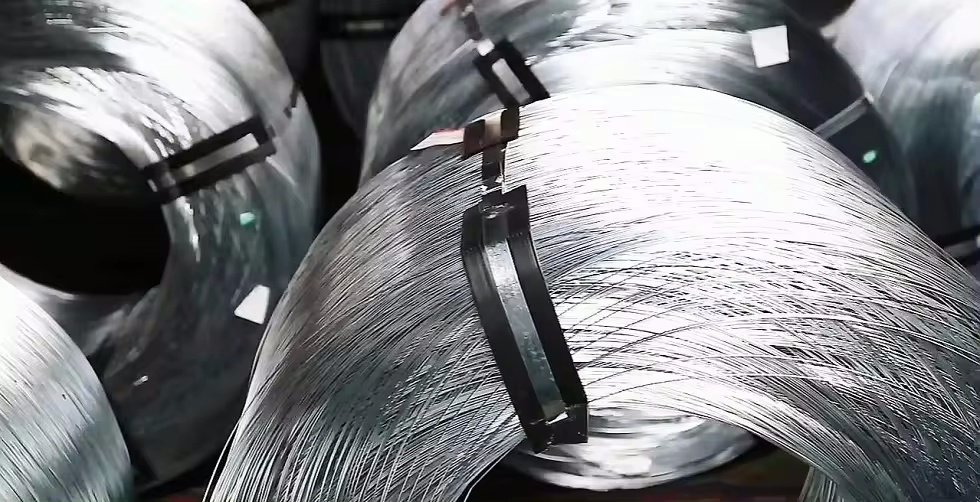
The strength and corrosion resistance of zinc-aluminum wire are as follows:
- Strength:
- Good Tensile Strength: Zinc-aluminum alloy wire exhibits relatively good tensile strength. Generally, the tensile strength can reach more than 200 MPa. This allows it to withstand certain mechanical stress and deformation in applications, ensuring its structural stability.
- Influenced by Composition Ratio: The strength of zinc-aluminum wire is also affected by the composition ratio of zinc and aluminum. For example, when the zinc content is relatively high, the strength may be enhanced to some extent due to the characteristics of zinc itself. However, different application scenarios may require different strength levels, and the specific composition ratio can be adjusted accordingly.
- Improved by Processing Technology: Through processes such as cold drawing and cold rolling, the strength of zinc-aluminum wire can be further improved. During cold working, the crystal structure inside the metal is deformed and reorganized, resulting in work hardening, which increases the wire's ability to resist external forces.
- Corrosion Resistance:
- Formation of Protective Layers: Aluminum in the alloy forms a dense oxide layer on the surface, which significantly enhances the corrosion resistance of the wire. At the same time, zinc also undergoes oxidation reactions in corrosive environments to form a zinc oxide protective layer. The synergy between zinc and aluminum makes the corrosion resistance of the alloy more remarkable.
- Adaptable to Various Environments: In atmospheric environments, whether in dry or humid conditions, zinc-aluminum wire can maintain good corrosion resistance and can be used for a long time without significant corrosion. In fresh water environments, it also has certain anti-corrosion ability, although the protection effect may be slightly weaker than in the atmospheric environment. However, in seawater or other harsh corrosive environments with high salt and chloride content, the corrosion resistance of zinc-aluminum wire will be challenged, but it still has better performance than some single-metal materials.
- Long Service Life in Anti-corrosion Applications**: When used as a sacrificial anode for spraying on the surface of steel components, zinc-aluminum wire can significantly extend the service life of the components by 5 to 10 times, which shows its excellent anti-corrosion performance in practical applications.

Additioanal Resources
- Microstructure and mechanical properties of zinc
- Increasing the corrosion resistance of aluminum
- On the Corrosion Resistance of the Zinc Based Alloy
- Zinc-Aluminum-Magnesium Coated Steel Plates
Keywords:
More information


Contact
Phone/WhatsApp:
E-mail:
Address:
Huangtai Industrial Park, Xiaozhan Town,
Jinnan District, Tianjin, 300353, China
Follow us

Inquiry