


The Best General Manufacturing Process & Specifications of Galvanized Spool Wire
Release time:
2024-10-28
Galvanized spool wire typically has the following general specifications:
Galvanized spool wire typically has the following general specifications:
1. Wire Diameter
- Range: The diameter of galvanized spool wire usually varies from about 0.15 mm to 6.0 mm. Common diameters include 0.5 mm, 0.8 mm, 1.0 mm, 1.2 mm, 1.6 mm, 2.0 mm, 2.5 mm, 3.0 mm, etc.
- Application-based Consideration:
- Thinner wires like 0.15 - 0.5 mm are often used for delicate applications such as in electronics for wire wrapping or in making fine jewelry and crafts.
- Wires with diameters between 0.8 mm and 2.0 mm are suitable for general-purpose tasks like fencing for small gardens, binding in light construction work, or for handicrafts.
- Thicker wires of 2.5 mm and above are used for more heavy-duty applications such as large-scale fencing, supporting structures in agriculture (like greenhouse frames), or in some industrial setups where higher strength is needed.
2. Spool Length
- Common Values: The length of wire on a spool can vary widely. Common lengths are 50 meters, 100 meters, 200 meters, 500 meters, and 1000 meters.
- Selection for Different Projects:
- For small DIY projects or home use, 50-meter or 100-meter spools might be sufficient.
- In medium-sized construction or fencing jobs, 200-meter or 500-meter spools could be more appropriate.
- For large industrial projects or extensive fencing installations, 1000-meter spools are often preferred to reduce the number of spool changes and ensure continuous work.
3. Tensile Strength
- Strength Categories: Galvanized spool wire is classified into different tensile strength grades, mainly soft, semi-hard, and hard.
- Usage Scenarios:
- Soft galvanized wire has relatively low tensile strength and is ideal for applications where flexibility and ease of bending are crucial, such as in creating decorative wire art or for gentle binding in gardening (e.g., tying up plants).
- Semi-hard wire offers a balance between flexibility and strength and is used for general binding and fixing tasks, like attaching signs to poles or for some light-duty fencing.
- Hard galvanized wire has high tensile strength and is employed in applications that require significant structural support, such as in building heavy-duty fences, suspension bridges (in a limited sense for certain components), or for supporting large agricultural canopies.
4. Galvanized Layer Thickness
- Variations: There are different levels of galvanized layer thickness, typically categorized as standard galvanizing and heavy-duty galvanizing.
- Environmental Adaptation:
- Standard galvanized wire with a thinner galvanized layer is suitable for relatively mild environments, such as indoor applications or in areas with low humidity and minimal exposure to corrosive elements.
- Heavy-duty galvanized wire with a thicker galvanized layer is designed for harsher environments, including outdoor use in coastal areas (where there is salt spray), industrial zones with chemical emissions, or in areas with high humidity and frequent rainfall.
These are the main specifications that one usually considers when dealing with galvanized spool wire, and the specific choice depends on the intended application and the environmental conditions it will be exposed to.
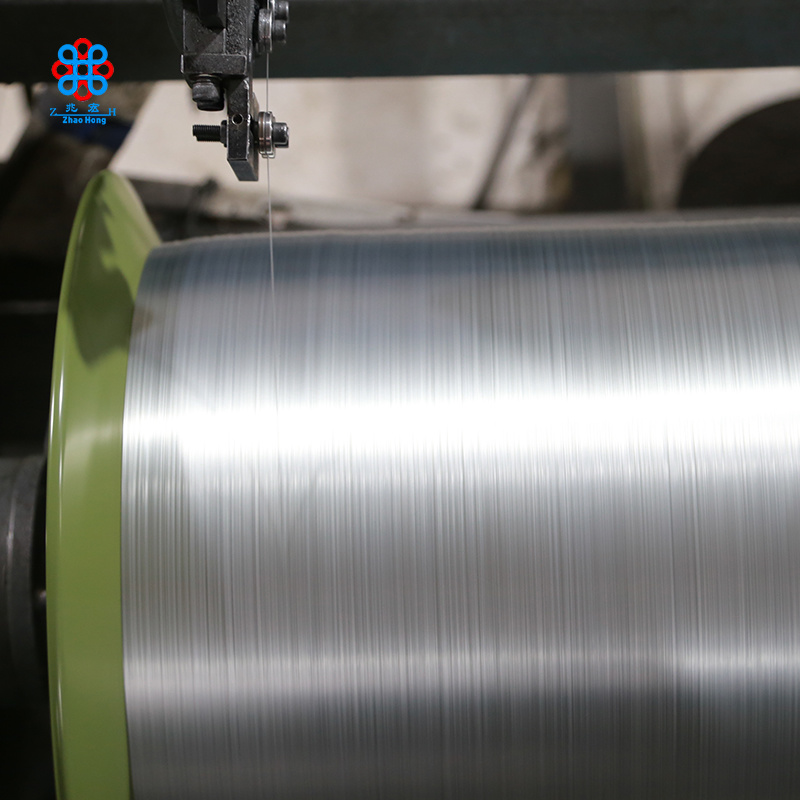
The manufacturing process of galvanized spool wire generally involves the following steps:
1. Raw Material Preparation
- Selection of Wire Rod: High-quality low-carbon steel wire rods, such as Q195 or Q235, are commonly chosen as the raw materials. These wire rods possess good plasticity and workability, which are suitable for subsequent drawing and galvanizing processes.
- Quality Inspection: The wire rods undergo a thorough quality inspection to ensure that their chemical compositions, physical properties, and other indicators meet the required standards. This includes checking for uniform diameter, surface defects, and other issues.
2. Wire Drawing
- Initial Drawing: The wire rod is passed through a drawing machine, which gradually reduces its diameter to the desired size of the wire. During this process, the stress on the wire rod increases, so the speed and force of drawing need to be carefully controlled to ensure the quality and performance of the wire.
- Intermediate Annealing (Optional): Depending on the product requirements, an intermediate annealing treatment may be carried out during the drawing process. The purpose of annealing is to relieve the stresses generated during drawing, enhancing the toughness and plasticity of the wire for further processing. The annealing temperature is usually around 800 - 830°C.
- Fine Drawing: After the initial drawing and intermediate annealing (if applicable), a fine drawing operation is performed to precisely control the wire diameter to meet the design requirements with high accuracy.
3. Pickling and Rust Removal
- Preparation of Pickling Solution: Hydrochloric acid is typically used to prepare the pickling solution, usually with a concentration ratio of 1:1. If the surface rust of the wire is severe, the concentration of hydrochloric acid can be appropriately increased; if the surface is relatively smooth and intact, the pickling time can be shortened.
- Pickling Operation: The drawn wire is immersed in the pickling solution to remove surface rust, oxides, and other impurities. During pickling, ferrous ions are continuously released. When the iron salt content reaches 150 grams per liter, the pickling speed slows down significantly. At this point, part of the pickling solution needs to be drained and fresh hydrochloric acid solution (with a concentration of 1:1) should be added.
- Washing: After pickling, the wire is washed multiple times to thoroughly remove the residual pickling solution and impurities. Ensuring thorough washing is crucial as any remaining pickling solution can affect the quality of subsequent galvanizing.
4. Fluxing Treatment
- Preparation of Flux: The main components of the flux include zinc chloride and ammonium chloride. These are mixed in a certain proportion to prepare the flux solution.
- Fluxing Operation: The pickled and washed wire is immersed in the flux solution to form a uniform flux film on the wire surface. The flux activates the surface of the steel wire, preventing oxidation during the galvanizing process, improving the quality of galvanizing, and reducing the formation of zinc slag.
- Drying: After fluxing, the wire is dried to remove surface moisture. This is to prevent water from causing zinc liquid splashing during the galvanizing process, which could affect the galvanizing effect. The drying temperature and time need to be appropriately controlled according to the wire specifications and quantity.
5. Hot Galvanizing
- Heating of Zinc Liquid: Zinc ingots are heated to around 440 - 460°C to melt them into zinc liquid. The temperature control of the zinc liquid is crucial. A lower temperature can reduce the influence of silicon on the galvanized layer and the formation of zinc slag; a higher temperature will intensify the generation of zinc slag and zinc ash, and also shorten the lifespan of the zinc heating furnace.
- Galvanizing Operation: The dried wire is immersed in the zinc liquid so that a uniform zinc layer adheres to the wire surface. The galvanizing time needs to be adjusted according to factors such as the wire diameter and the temperature of the zinc liquid to ensure that the thickness and quality of the galvanized layer meet the requirements.
- Removal of Zinc Slag: During the hot galvanizing process, zinc slag is inevitably generated. Zinc slag is mainly an intermetallic compound of iron and zinc, with a greater specific gravity than the zinc liquid, and it sinks to the bottom. When the zinc slag accumulates to a certain extent, it needs to be removed in a timely manner to avoid affecting the quality of the galvanized layer and also to prevent the zinc slag from piling up on the walls of the zinc boiler, which would affect heat conduction.
6. Cooling
- Natural Cooling: The galvanized wire is taken out of the zinc liquid and placed in the air for natural cooling to solidify the zinc layer.
- Water Cooling (Optional): For some products that require a higher cooling speed, water cooling can be used. However, the speed and water temperature of cooling need to be carefully controlled to avoid cracks or other defects in the galvanized layer due to excessive cooling speed.
7. Spooling
- Selection of Spool Core: According to the customer's requirements and product specifications, an appropriate spool core is selected. The material of the spool core can be plastic, wood, or metal.
- Winding of Wire: The cooled galvanized wire is wound onto the spool core by a spooling machine to form galvanized spool wire. During the winding process, the speed and tension of the winding need to be controlled to ensure that the wire is wound tightly and neatly, avoiding loose or twisted conditions.
8. Quality Inspection
- Appearance Inspection: The appearance of the galvanized spool wire is inspected to check for defects such as missed galvanizing, zinc nodules, zinc drips, and surface scratches.
- Dimension Measurement: The diameter of the wire, the outer diameter and inner diameter of the spool, etc. are measured to ensure that they meet the design requirements.
- Galvanized Layer Thickness Detection: Professional detection equipment such as metallurgical microscopes and electron probes are used to detect whether the thickness of the galvanized layer meets the standard requirements.
- Mechanical Property Testing: Tensile tests, bending tests, etc. are carried to test the mechanical properties of the galvanized spool wire to check whether its strength, toughness, etc. meet the usage requirements.
9. Packaging and Storage
- Packaging: The inspected and qualified galvanized spool wire is packaged. The packaging method can be chosen according to the customer's requirements, including common packaging forms such as stretch film packaging, carton packaging, and wooden box packaging. During the packaging process, the surface of the spool wire should be protected from collisions and scratches.
- Storage: The packaged galvanized spool wire is stored in a dry, ventilated, and shaded warehouse, avoiding direct sunlight and rain, to prevent rusting and deterioration of the product.

Additional Resources
- Factory Supplied Galvanized Wire /Steel Wire
- GALVANISED STEEL WIRE PRODUCT CODE DC
- 0.3mm Galvanized Spool Wire
- Machine Drawing Wire Cable Spool/Galvanized Spool
Keywords:
More information


Contact
Phone/WhatsApp:
E-mail:
Address:
Huangtai Industrial Park, Xiaozhan Town,
Jinnan District, Tianjin, 300353, China
Follow us

Inquiry