


Galvanized Wire Zinc Layer Numerical Detection: Method and Principle
Release time:
2024-10-23
There are several methods for the numerical detection of the zinc layer of galvanized wire, and their principles are as follows:
- Weighing method:
- Principle: The galvanized layer on the known surface area of the sample is dissolved in a test solution with a corrosion-inhibiting effect. The mass of the sample before and after the dissolution of the coating is weighed. The mass of the galvanized layer per unit area is calculated based on the difference in weight and the sample area, and then the thickness of the zinc layer is converted through the density of zinc.
- Steps: Clean the oil, dust, and water traces on the sample surface with a cleaning solution, and then dry it thoroughly. Weigh the sample accurately with a balance. When the mass of the zinc layer of the sample is not less than 0.1 g, the weighing should be accurate to 0.001 g. Immerse the sample completely in the test solution. The sample can be turned over until the coating is completely dissolved. After that, take out the sample and rinse it in running water. If necessary, use a nylon brush to remove the loose attachments that may be adsorbed on the sample surface. Then, clean it with ethanol and dry it quickly or use absorbent paper to remove the water and blow dry it quickly with hot air. Finally, weigh the sample again and measure the exposed surface area after the zinc layer is dissolved, with an accuracy of 1%.
- Magnetic method:
- Principle: An electromagnetic thickness gauge is used to measure the thickness of the zinc layer. The probe of the magnetic thickness gauge generates a magnetic field. When the probe approaches the galvanized wire, due to the different magnetic properties of the iron substrate and the zinc layer, different influences will be generated on the magnetic field. The thickness of the zinc layer is determined by measuring the magnitude of this influence.
- Anodic dissolution coulometry:
- Principle: A specific electrolyte is used to anodically dissolve the coating on a limited area. The complete dissolution of the coating is determined by the change in the voltage of the electrolytic cell. The thickness of the coating is calculated based on the amount of electricity consumed (in coulombs) during electrolysis.
- Cross-section microscope method:
- Principle: A sample is cut from the galvanized wire to be tested, and after embedding, appropriate techniques are used to grind, polish, and etch the cross-section. Then, the thickness of the coating is measured using a calibrated scale. However, this method is a destructive test and only represents a single cross-section, so it is not commonly used.
- X-ray fluorescence measurement method:
- Principle: A primary ray generated by a ray source (such as an X-ray tube or a radioactive isotope) irradiates the metal-coated wire. Under certain conditions, characteristic fluorescent X-rays of iron (secondary rays) are excited in the steel substrate. When penetrating metal coatings of different thicknesses, the intensity of the secondary rays will be attenuated to different degrees. By detecting the intensity of the secondary rays, and when the generation of the primary ray and the detection of the secondary ray are under fixed conditions, the detected intensity of the fluorescent X-rays is a function of the thickness of the coating. The coating thickness can be obtained using the quantitative relationship between the intensity and the coating thickness.
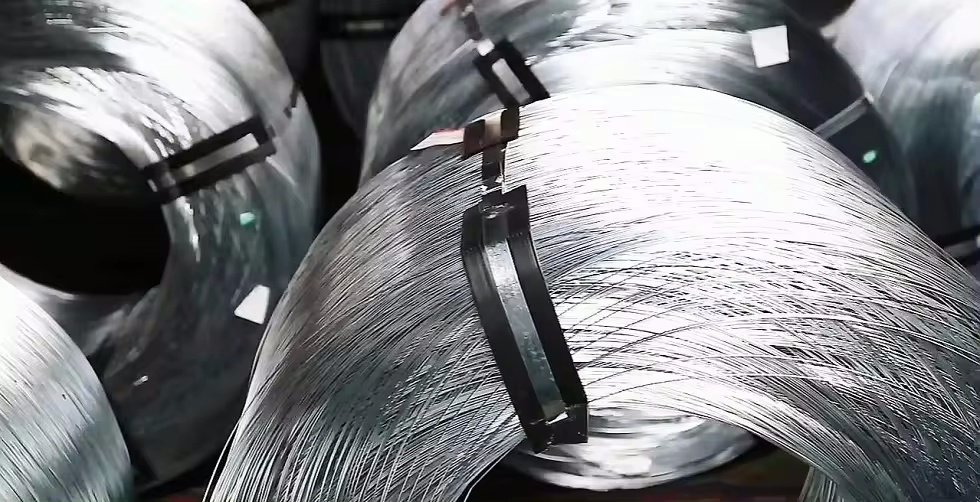
The zinc layer thickness standards for galvanized wire are as follows:
- For general industrial products:
- If the thickness of the workpiece is greater than or equal to 6 millimeters, the average zinc layer thickness should be greater than 85 microns, and the local thickness should be greater than 70 microns.
- If the workpiece thickness is less than 6 millimeters but greater than 3 millimeters, the average thickness should be greater than 70 microns, and the local thickness should be greater than 55 microns35.
- If the workpiece thickness is less than 3 millimeters but greater than 1.5 millimeters, the average thickness should be greater than 55 microns, and the local thickness should be greater than 45 microns.
- For specific galvanized wire products:
- When the thickness of the galvanized wire is 3 - 4 millimeters, the zinc adhesion amount should be lower than 460 grams per square meter, that is, the average zinc layer thickness is not lower than 65 microns. When the thickness of the wire is greater than 4 millimeters, the zinc adhesion amount should be not lower than 610 grams per square meter, that is, the average zinc layer thickness is not lower than 86 microns.

Addition Resources
- Galvanized steel wire/Stay wire 5/16'' (7/2.64mm)
- What is Zinc Galvanized Yellow Galvanized
- Galvanizing Wire Production Line for Steel Wire
- What is galvanized steel? How is it made?
Keywords:
More information


Contact
Phone/WhatsApp:
E-mail:
Address:
Huangtai Industrial Park, Xiaozhan Town,
Jinnan District, Tianjin, 300353, China
Follow us

Inquiry