


Best Difference of Annealed Wire and Cold Drawn Wire in the Production Specifications and Applications
Release time:
2024-10-17
Annealed wire and cold drawn wire have the following differences in production specifications:
Annealed wire and cold drawn wire have the following differences in production specifications:
I. Diameter range
Annealed wire:
- The diameter is usually relatively thick, generally above 0.5 millimeters. Common specifications include 1.0 millimeter, 1.2 millimeters, 1.5 millimeters and other larger diameter products.
- Due to annealing treatment, it has better flexibility and is suitable for some occasions with high requirements for flexibility, such as handicraft production and construction bundling. In these application scenarios, annealed wire with a larger diameter can provide better strength and operability.
Cold drawn wire:
- The diameter is relatively thin and can start from a very small size. Common ones are 0.2 millimeters, 0.3 millimeters, etc.
- Cold drawn wire is mainly strengthened by cold working and has high strength and hardness. It is suitable for fields such as prestressed concrete components and metal meshes. The thinner diameter can meet the requirements for precision and strength in these fields.
II. Length specifications
Annealed wire:
- The length specifications of annealed wire are relatively flexible and can be customized and cut according to customer needs. Generally speaking, common lengths are 1 meter, 2 meters, 5 meters, etc.
- Since annealed wire mainly focuses on flexibility and processability during the production process, there are relatively few restrictions on length and can be adjusted according to different usage scenarios.
Cold drawn wire:
- Cold drawn wire is usually supplied in the form of coils with a long length. The length of a coil of cold drawn wire can reach several hundred meters or even thousands of meters.
- This long-length supply form is mainly to meet the needs of large-scale production and continuous processing. For example, in construction projects, long-length cold drawn wire can reduce the number of joints and improve the integrity and stability of the structure.
III. Precision differences
Annealed wire:
- The precision of annealed wire is relatively low. During the production process, due to annealing treatment, the size of the metal wire will change to a certain extent, so the tolerance range of its diameter is relatively large.
- Generally, the diameter tolerance of annealed wire may be ±0.1 millimeter or even larger. This level of precision is suitable for some occasions where the size requirements are not particularly strict.
Cold drawn wire:
- The precision of cold drawn wire is relatively high. Through the cold drawing process, the diameter of cold drawn wire can be precisely controlled within a small tolerance range.
- Usually, the diameter tolerance of cold drawn wire can be controlled within ±0.05 millimeter or even smaller. This high-precision specification enables cold drawn wire to play an important role in fields with high requirements for dimensional accuracy, such as mechanical manufacturing and electronic components.
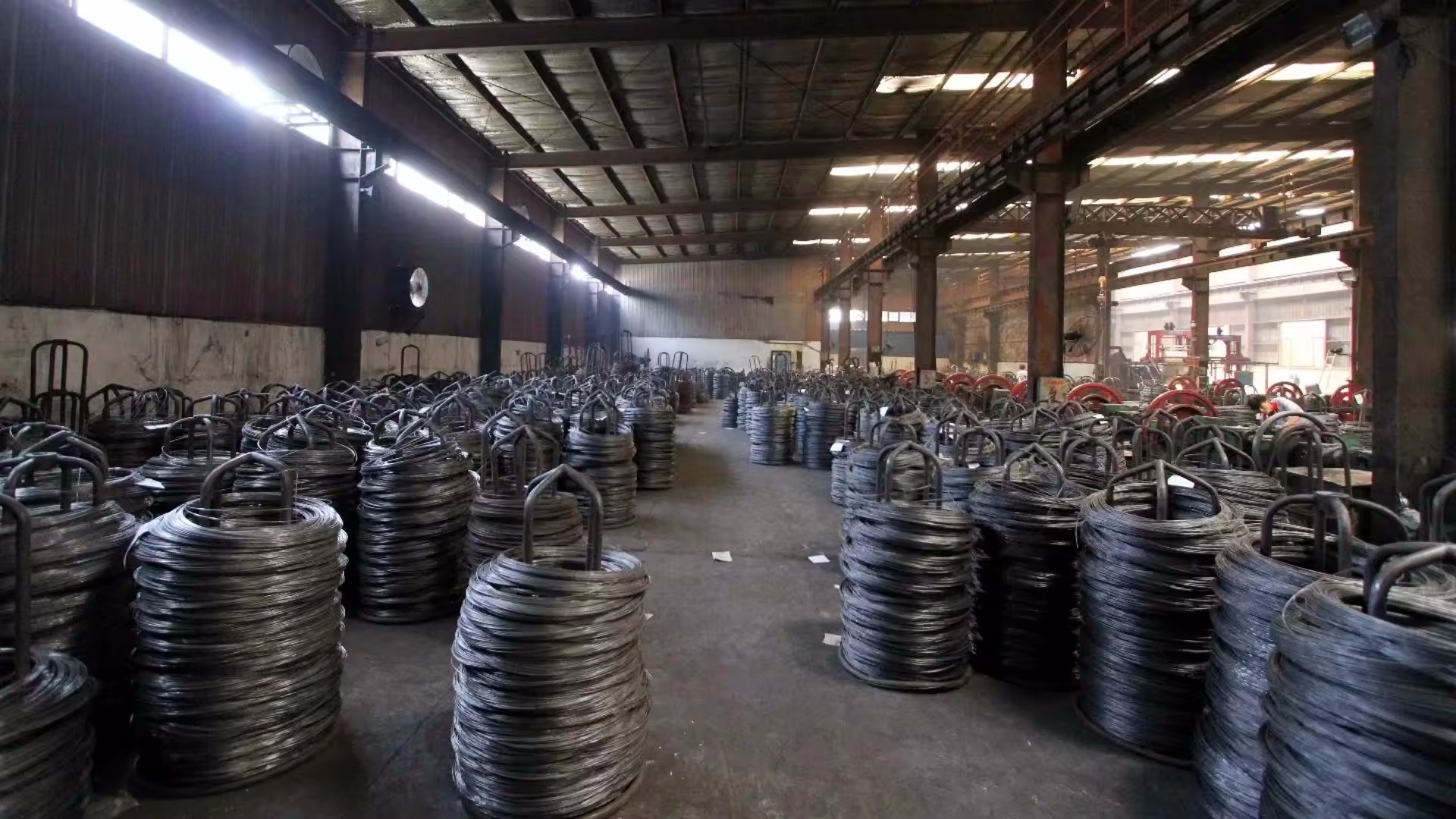
Annealed wire and cold drawn wire have the following differences in application:
I. In the construction field
Annealed wire:
- In construction, it is mainly used for binding steel bars and fixing scaffolding. Its soft characteristic makes it easier to bend and wrap during binding operations and is not easy to break. For example, on construction sites, workers can easily wrap annealed wire around the intersections of steel bars for firm binding to ensure the stability of the steel bar structure during concrete pouring.
- It can also be used to make construction safety nets. The flexibility of annealed wire enables it to adapt to different shapes of protective frames and can play a buffering role when subjected to a certain external force, improving the safety of the protective net.
Cold drawn wire:
- It is often used in prestressed concrete structures. Cold drawn wire has high strength and hardness and can withstand large tensile forces. By applying prestress to cold drawn wire in advance, the bearing capacity and crack resistance of concrete components can be improved. For example, in bridge and large factory building structures, cold drawn wire prestressed concrete is widely used.
- Used to make steel wire meshes for construction. The steel wire mesh made of cold drawn wire has high strength and stability, which can enhance the crack resistance and seismic performance of concrete and improve the overall quality of building structures.
II. In the field of handicraft production
Annealed wire:
- It is one of the commonly used materials for making handicrafts. Due to its softness and easy bending, it can be shaped into various complex shapes, such as making iron art flower stands and iron art ornaments. Craftsmen can bend, twist, and weld annealed wire through hand tools to create beautiful handicrafts.
- It is also widely used in the field of hand weaving. It can be combined with other materials such as woolen yarn and ribbons to make various woven handicrafts, such as woven baskets and hanging decorations.
Cold drawn wire:
- It is used in some handicraft production that requires high strength and stability. For example, in making metal sculptures, cold drawn wire can be used as a skeleton material to provide support and a stable structure for the sculpture. Its high strength can ensure that the sculpture is not easily deformed during long-term display.
- Used to make high-end metal handicraft frames such as photo frames and picture frames. The precise size and high hardness of cold drawn wire can make the frame more regular and sturdy, enhancing the grade of handicrafts.
III. In the field of industrial manufacturing
Annealed wire:
- In the electrical industry, it can be used to make binding straps for wires and cables. The softness of annealed wire enables it to bind wires and cables tightly without causing damage to the insulation layer of wires and cables.
- In some light machinery manufacturing, such as small agricultural machinery and household tools, annealed wire can be used to make simple connectors and fasteners.
Cold drawn wire:
- In mechanical manufacturing, it is used to make high-strength parts such as springs, bolts, and nuts. The high strength and good processing performance of cold drawn wire can meet the material requirements of these parts and ensure the normal operation and safety of machinery.
- In the automotive manufacturing industry, cold drawn wire can be used to make important parts such as car chassis and suspension systems. Its high strength and stability can withstand various forces and vibrations during vehicle driving and ensure the safety and reliability of cars.

Additional Resources
-
Annealed Wire Small Coil Annealed Wire 1.24mm
-
Mild Steel Cold Drawn Wire & Black Bright Hard Nail
-
Gauge Black Annealed Wire - Black Annealed Iron Wire
-
Annealed/Hard Drawn Enameled 20% CCA Copper Clad
More information


Contact
Phone/WhatsApp:
E-mail:
Address:
Huangtai Industrial Park, Xiaozhan Town,
Jinnan District, Tianjin, 300353, China
Follow us

Inquiry