


Best Analysis of the Influence of Low Carbon Steel Rod Materials on Galvanized Wire Quality
Release time:
2024-10-14
Different materials of low carbon steel discs can have significant impacts on the quality of galvanized wire.
Different materials of low carbon steel discs can have significant impacts on the quality of galvanized wire.
I. Variations in low carbon steel compositions
-
Carbon content differences
- Different low carbon steel discs may have fluctuations in carbon content. Galvanized wire produced from low carbon steel discs with slightly higher carbon content will have relatively higher strength. For example, in applications such as making fences in home gardening where there is a certain requirement for the strength of galvanized wire but not an extremely high strength demand, galvanized wire with slightly higher carbon content can better withstand daily slight collisions and pulls.
- Low carbon steel discs with slightly lower carbon content result in galvanized wire with better toughness. In applications that require frequent bending or twisting, such as frames for handmade crafts, this kind of galvanized wire is less likely to break and can better adapt to various shaping requirements.
-
Influence of trace elements
- Different low carbon steel discs may contain different types and amounts of trace elements such as manganese and silicon. Manganese can improve the strength and hardness of low carbon steel. Low carbon steel discs containing an appropriate amount of manganese will produce galvanized wire with enhanced strength and wear resistance. For example, galvanized wire used for bundling goods in logistics transportation requires good wear resistance to prevent rapid damage during friction.
- Silicon can enhance the oxidation resistance of low carbon steel. Low carbon steel discs containing a certain amount of silicon will result in galvanized wire where the protective effect of the galvanized layer can be better exerted when exposed to air for a long time, delaying the rusting time of the galvanized wire.
II. Impact on mechanical properties of galvanized wire
-
Tensile strength
- Galvanized wire produced from high-quality low carbon steel discs has more stable tensile strength. In practical use, it can withstand relatively uniform tension and is less likely to have local fractures. For example, galvanized wire used as temporary tie-downs in construction projects can ensure construction safety with stable tensile strength.
- Galvanized wire produced from low-quality low carbon steel discs may have large fluctuations in tensile strength and is prone to fractures at weak points when subjected to large tension, posing safety hazards to projects.
-
Ductility
- Galvanized wire made from high-quality low carbon steel discs has good ductility. When subjected to external forces, it can deform to a certain extent without immediately breaking. This is very important in applications that need to adapt to certain deformations. For example, in building structures in earthquake-prone areas, galvanized wire with good ductility can absorb some energy during earthquakes and reduce structural damage.
- Galvanized wire produced from low-quality low carbon steel discs has poor ductility and may break brittlely when subjected to a small external impact.
III. Impact on corrosion resistance of galvanized wire
-
Surface quality
- Different materials of low carbon steel discs have different surface qualities. Low carbon steel discs with smooth surfaces and no impurities can better combine with the zinc layer during the galvanizing process, forming a uniform and dense galvanized layer, thereby improving the corrosion resistance of galvanized wire. For example, galvanized wire used in humid marine environments requires good corrosion resistance to prolong its service life.
- Low carbon steel discs with surface defects such as scratches and rust spots may have incomplete galvanized layers at these defects after galvanizing, leading to reduced corrosion resistance and prone to rusting at these locations first.
-
Stability of chemical composition
- Low carbon steel discs with stable chemical compositions produce galvanized wire with relatively stable corrosion resistance in various environments. There will be no large fluctuations in corrosion resistance due to changes in the material itself.
- Low carbon steel discs with unstable chemical compositions may cause differences in corrosion resistance of galvanized wire between different batches, causing troubles for users.
IV. Impact on the appearance quality of galvanized wire
-
Uniformity of color
- Galvanized wire produced from high-quality low carbon steel discs has uniform color and better aesthetics. In applications with high appearance requirements, such as indoor decoration and handicraft production, galvanized wire with uniform color can enhance the overall visual effect.
- Galvanized wire made from low-quality low carbon steel discs may have uneven color, affecting the appearance quality of the product.
-
Surface finish
- Galvanized wire produced from high-quality low carbon steel discs has a high surface finish without obvious burrs and scratches. This not only makes the galvanized wire look more beautiful but also reduces the risk of scratching the human body and other items during use.
- Galvanized wire with poor surface finish may easily catch on clothing, wires and other items during use, causing inconvenience to people's lives and work.
In conclusion, different materials of low carbon steel discs have multiple impacts on the quality of galvanized wire. When producing and using galvanized wire, the material differences of low carbon steel discs should be fully considered and appropriate materials should be selected to ensure that the quality of galvanized wire meets different application needs.
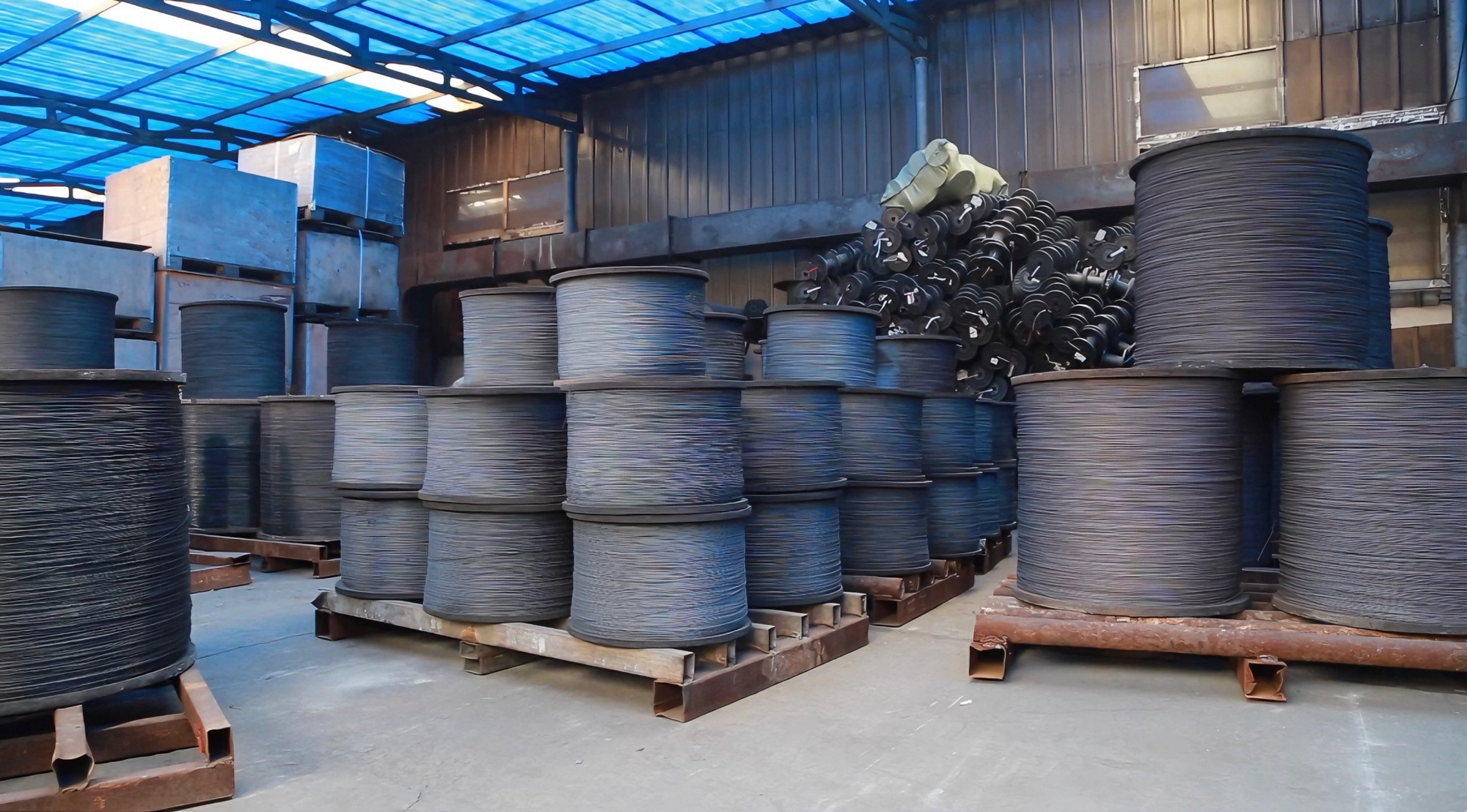
For the production and processing of galvanized wire, the following materials of low carbon steel discs are relatively good choices:
Q195:
- Advantages: This is a widely used low carbon steel material with low carbon content. It has good plasticity and weldability and is very easy to process and draw. After galvanizing, it can produce galvanized wire with good surface quality and strong zinc layer adhesion. Its price is relatively low, which can reduce production costs. It is widely used in fields such as construction wire and general binding wire where the material performance requirements are not extremely strict.
- Disadvantages: The strength is relatively low and it is not very suitable for special scenarios with extremely high strength requirements.
Q235:
- Advantages: The low carbon steel disc of this material has relatively high strength and good toughness. After being processed into galvanized wire, it can withstand a certain degree of tension and impact force. It is suitable for occasions where there is a certain requirement for the strength of galvanized wire, such as making protective fences and some auxiliary connectors in building structures. Compared with other low carbon steel materials, Q235 has relatively balanced comprehensive performance and the quality of the produced galvanized wire is relatively stable.
- Disadvantages: In some cases where extremely high toughness is required or there are strict limitations on material weight, its performance may not be optimal.
In general, if the requirement for the strength of galvanized wire is not high and low cost and good processing performance are pursued, Q195 is a good choice; if it is necessary to balance strength and toughness, Q235 is more appropriate. Of course, the specific choice of material also needs to be comprehensively considered based on factors such as production process, product use, and cost budget.

Addtional Resources
- Low-carbon steels of superior mechanical and corrosion
- Ultra-low carbon steel for DWI cans production
- High carbon steel - definition of High carbon steel
- The 7 Best Stainless Steel Cookware Sets
Keywords:
More information


Contact
Phone/WhatsApp:
E-mail:
Address:
Huangtai Industrial Park, Xiaozhan Town,
Jinnan District, Tianjin, 300353, China
Follow us

Inquiry