


Breaking Down the Distinctions Between Q195 and Q235 Galvanized Wire
Release time:
2024-09-30
The differences between Q195 galvanized wire and Q235 galvanized wire are as follows:
The differences between Q195 galvanized wire and Q235 galvanized wire are as follows:
- Chemical composition:
- Carbon content: The carbon content of Q195 is relatively lower, usually between 0.06% and 0.12%, while that of Q235 is between 0.14% and 0.22%. The lower carbon content in Q195 makes it have better formability during cold working and is not prone to cracking and other defects. Q235 has a slightly higher carbon content, which provides it with relatively higher strength.
- Other elements: The contents of other alloying elements such as manganese in both Q195 and Q235 are in a similar range, but their specific influences on the properties of the materials may still have some differences.
- Mechanical properties:
- Yield strength: The yield strength of Q195 is 195 MPa, and for Q235, it is around 235 MPa. This means that Q235 is less likely to deform under stress and has better resistance to deformation. In practical applications, Q235 galvanized wire is more suitable for scenarios requiring higher strength.
- Tensile strength: The tensile strength of Q195 is generally in the range of 315 - 430 MPa, while that of Q235 is in the range of 375 - 460 MPa. Q235 has a higher tensile strength, which indicates that it can bear greater pulling force.
- Elongation: Q195 has a relatively higher elongation rate, about 32% - 33%, meaning it has better plasticity and is easier to undergo plastic deformation. Q235 has a relatively lower elongation rate, around 23%.
- Processing performance:
- Cold working: Due to its lower carbon content, Q195 is easier to be processed by cold working methods such as bending and twisting. It is suitable for applications that require complex shaping and processing.
- Welding: Both Q195 and Q235 have good weldability, but Q195 is more suitable for welding processes that require higher formability and less deformation of the welded parts.
- Corrosion resistance: After galvanization, both Q195 and Q235 galvanized wires have good corrosion resistance. However, in some harsh environments, Q235 may have a relatively better performance in terms of corrosion resistance due to its higher strength and better stability of the material structure.
- Application scenarios:
- Q195 galvanized wire: It is often used in applications where the strength requirements are not extremely high, such as in the binding of light building materials, the production of some simple metal structures, and the manufacturing of daily metal products. For example, it can be used for binding wire mesh in some simple fences or as a support structure for lightweight shelves.
- Q235 galvanized wire: Widely used in construction projects that require higher strength, such as the construction of building scaffolds, the fabrication of guardrails, and the reinforcement of concrete structures. It can also be used in the manufacturing of mechanical parts and components that require certain strength and wear resistance, such as gears and shafts.
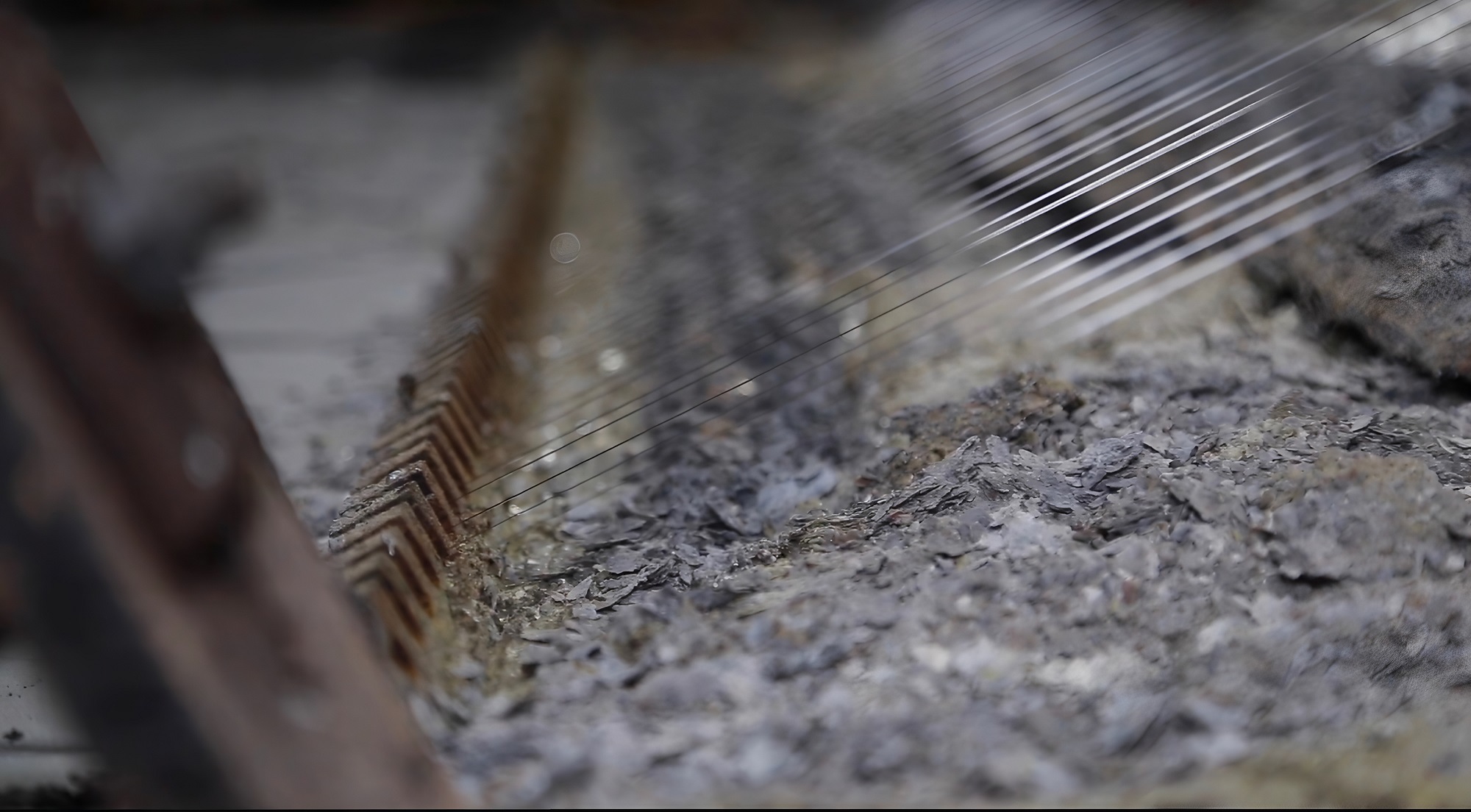
In the construction field, the differences between Q195 and Q235 galvanized wire are as follows:
- Mechanical properties:
- Strength: The yield strength of Q195 is 195 MPa, while that of Q235 is 235 MPa. This means that Q235 galvanized wire is stronger and less likely to deform under stress. For example, in the construction of building scaffolds, Q235 galvanized wire is more suitable as it can better bear the weight of construction personnel and materials, ensuring the stability of the scaffold structure. On the other hand, Q195 is relatively weaker and may not be suitable for such high-load-bearing applications3.
- Tensile strength: The tensile strength of Q195 is generally in the range of 315 - 430 MPa, and that of Q235 is in the range of 375 - 500 MPa. Q235 has a higher tensile strength, indicating that it can withstand greater pulling force. This makes Q235 galvanized wire more resistant to external forces in the construction process.
- Application scenarios:
- Q195 galvanized wire: Due to its relatively lower strength, it is often used in construction projects where the strength requirements are not extremely high. For instance, it can be used for binding light building materials, such as fixing insulation boards or lightweight decorative panels. It is also suitable for making some small-scale support structures or temporary fixtures in the construction site3.
- Q235 galvanized wire: It is widely used in key structural parts of construction. For example, it is used in the reinforcement of concrete structures, such as in the fabrication of rebar cages. It is also used for the construction of building frameworks, high-voltage transmission tower foundations, bridges, and other large-scale infrastructure projects where high strength is required3.
- Processing and installation:
- Processing difficulty: Q195 has a lower carbon content, making it easier to process by cold working methods such as bending and twisting. It is more convenient for construction workers to handle during the installation process, especially for some applications that require complex shaping.
- Welding performance: Both Q195 and Q235 have good weldability, but Q235's higher strength after welding makes it more reliable in terms of connection strength. In construction projects that require high connection stability, such as the welding of steel structures, Q235 galvanized wire is often preferred.
- Cost and economy:
- Material cost: Generally, the raw material cost of Q195 is relatively lower than that of Q235. Therefore, in some projects where the strength requirements can be met, using Q195 galvanized wire can bring certain cost advantages.
- Overall cost-effectiveness: However, considering the long-term use and safety of the construction project, although Q235 galvanized wire may have a higher material cost initially, its better mechanical properties and durability can ensure the stability and safety of the structure in the long run, resulting in higher overall cost-effectiveness in some high-demand construction projects.

Addtional Resources
- Galvanized Wire Q195 Q235 Q275 Q345
- Hot Dipped Galvanized Q195 Common Nail
- Q195 Galvanized Metal Wire / Binding Wire
- Hard Drawn Nail Wire for Nail Making - China Wires
Keywords:
More information


Contact
Phone/WhatsApp:
E-mail:
Address:
Huangtai Industrial Park, Xiaozhan Town,
Jinnan District, Tianjin, 300353, China
Follow us

Inquiry