


The Different Details Between Galvanized Round Wire and Galvanized Flat Wire
Release time:
2024-09-23
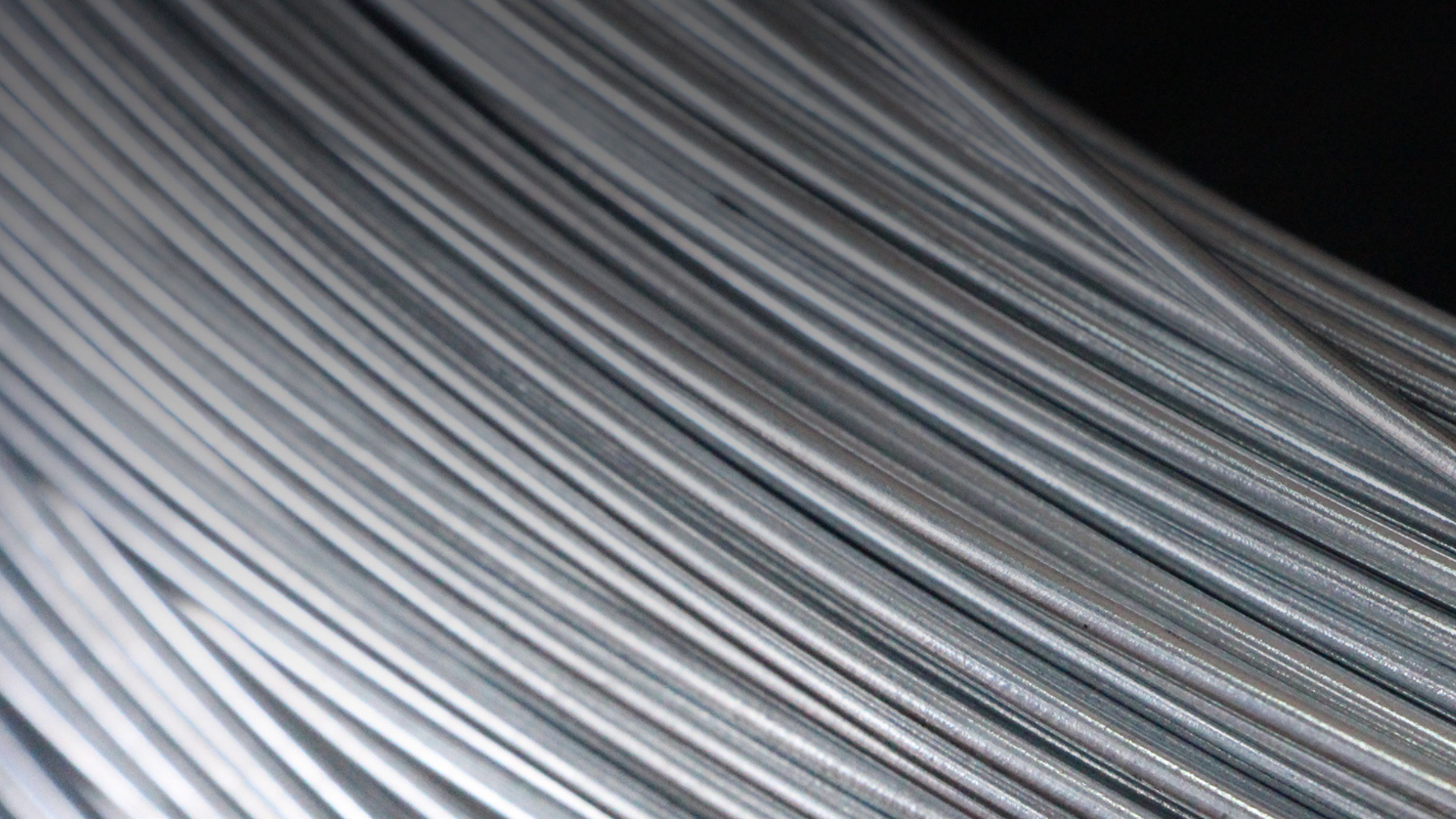
In galvanized wire, galvanized round wire and galvanized flat wire have the following specific differences:
In galvanized wire, galvanized round wire and galvanized flat wire have the following specific differences:
I. Appearance and Shape
-
Galvanized round wire:
- It is cylindrical in shape with a smooth curved surface. The cross-section is circular, and the diameter is the same in all directions.
- The appearance is relatively regular and the lines are smooth.
-
Galvanized flat wire:
- It is flat in shape with a rectangular or nearly rectangular cross-section.
- There is a clear distinction between width and thickness, and usually the width is greater than the thickness.
II. Physical Properties
-
Strength:
- Galvanized round wire: Generally, under the same material and diameter, round wire has relatively high bending strength. This is because the circular cross-section can evenly distribute stress when subjected to force. For example, when used to hang heavy objects, thicker galvanized round wire can withstand greater tension without easily deforming.
- Galvanized flat wire: Due to its flat shape, it may have different strength performances in specific directions. Usually, the bending strength in the width direction is relatively low, but it may have better rigidity in the thickness direction. For example, when used in applications that require certain rigid support, such as making the frame border, flat wire can provide better stability.
-
Flexibility:
- Galvanized round wire: It has good flexibility and can be bent into various shapes without easily breaking. This makes round wire have an advantage in applications that require complex shapes, such as making handicrafts and woven nets.
- Galvanized flat wire: Relatively less flexible than round wire, but in some cases, its flat shape can make it easier to maintain a certain shape in a specific direction and is not easily twisted. For example, when making products that need to maintain a flat shape, flat wire is more applicable.
III. Uses
-
Galvanized round wire:
- Widely used in the construction field, such as binding steel bars and making wire meshes. Its circular cross-section makes it better able to fit the surface of steel bars during binding, providing a firm binding effect.
- In the gardening field, it can be used to make support structures such as flower racks and grape trellises. The smooth surface of round wire is not easy to scratch plants, and its strength can bear a certain weight.
- In the industrial field, it can be used to make springs, screens, etc. Due to its good flexibility and strength, it can meet the needs of different industrial applications.
-
Galvanized flat wire:
- Commonly used in making furniture borders and decorative lines. The flat shape of flat wire can provide a larger surface area, which is convenient for connection and fixation. At the same time, its appearance is more beautiful and can increase the decorative nature of furniture.
- In handicraft production, flat wire can be used to make various unique ornaments such as earrings and necklaces. Its flat shape is convenient for processing techniques such as engraving and inlaying.
- In the packaging field, flat wire can be used for bundling cartons and wooden boxes. Its larger width can provide a larger contact area, making the bundling more firm.
IV. Processing Technology
-
Production process:
- Galvanized round wire: Generally, the raw material is drawn into round wire of the required diameter through the wire drawing process, and then galvanized. During the wire drawing process, it is necessary to control the diameter accuracy and surface quality of the wire to ensure the stable quality of the round wire.
- Galvanized flat wire: Generally, the raw material is rolled into a flat shape first, and then drawn and galvanized. During the rolling process, it is necessary to control the width, thickness and flatness of the flat wire to meet the requirements of different applications.
-
Connection method:
- Galvanized round wire: It can be connected by welding, winding, knotting, etc. When welding, it is necessary to pay attention to the welding quality to avoid problems such as false welding and missed welding. Winding and knotting methods are relatively simple, but the firmness of the connection may not be as good as welding.
- Galvanized flat wire: Usually connected by welding, riveting, bolt connection, etc. Due to the shape characteristics of flat wire, when welding, it is necessary to select the appropriate welding method and parameters to ensure the welding quality. Riveting and bolt connection can provide a more firm connection, but additional connectors are required, increasing the cost and processing difficulty.
When choosing the appropriate galvanized round wire or galvanized flat wire according to specific needs, consider the following aspects:
I. Application Scenarios
-
Construction field:
- For binding steel bars, galvanized round wire is generally chosen. Because the round wire is easier to wrap around the steel bars and can provide uniform binding force to ensure that the steel bars will not shift during concrete pouring.
- When making protective nets, choose according to specific requirements. If higher flexibility and anti-twisting ability are required, galvanized round wire may be more suitable; if flatness and firmness of the net surface are emphasized, galvanized flat wire can be considered. Especially for larger-sized protective nets, flat wire can provide better support.
- For temporary tying or fixing of building frames, the flexibility of round wire makes it easy to operate and can be quickly tied and adjusted.
-
Gardening field:
- When building flower racks, grape trellises and other structures, if natural beauty and low strength requirements are pursued, galvanized round wire can create softer lines and be more harmonious with plants. At the same time, the flexibility of round wire is also convenient for adjustment according to different gardening layouts.
- When a sturdy fence is needed to protect plants in a specific area, galvanized flat wire may be more suitable. Flat wire can provide a larger blocking area and is easier to fix at the connection points, enhancing the stability of the fence.
-
Industrial field:
- When manufacturing equipment such as screens and filters, choose according to different filtration precision and material characteristics. For filtering smaller particles or requiring higher porosity, galvanized round wire can be woven into finer mesh holes; for screening larger particles or requiring stronger wear resistance, the screen woven by galvanized flat wire may be more durable.
- As a spring material, galvanized round wire is usually chosen. Round wire can better withstand compression and tensile forces when stressed and has better elastic recovery performance.
-
Handicraft production:
- When making fine handicrafts such as jewelry and decorations, galvanized round wire can create round and smooth shapes, suitable for making ring-shaped, spiral-shaped and other structures. For example, when making earrings and bracelets, the smooth surface of round wire can also increase the texture of accessories.
- For handicrafts that need to show three-dimensionality and unique shapes, such as sculptures and ornaments, galvanized flat wire can create various shapes by bending and splicing. Its flat characteristics are easier to show the details and layering of works.
II. Physical Performance Requirements
-
Strength requirements:
- If the application scenario requires withstanding greater tension, pressure or weight, wire with higher strength should be considered. Generally speaking, under the same diameter or thickness, galvanized flat wire usually has higher bending strength and rigidity than galvanized round wire. For example, when making heavy-duty shelves and fixing devices for mechanical parts, flat wire may be more able to meet strength requirements.
- But if the wire is required to have a certain elastic deformation ability when stressed to avoid sudden fracture, galvanized round wire may be more suitable. For example, in some buffer devices or elastic connectors, the flexibility of round wire can play a role in absorbing impact.
-
Flexibility requirements:
- For applications that require frequent bending, twisting or winding, the flexibility of galvanized round wire makes it easier to operate. For example, in the binding of wires and cables and hand weaving, round wire can easily adapt to various shape changes without easily breaking.
- If the requirement for flexibility is not high, but the wire is required to maintain a certain shape stability in a specific direction, galvanized flat wire has an advantage. For example, when making flat frames or structures that need to maintain a straight shape, flat wire is not easily bent and deformed.
III. Appearance Requirements
-
Aesthetic degree:
- If you pay attention to the round, smooth feeling of appearance, galvanized round wire is a better choice. It can present a simple and unified visual effect and is suitable for occasions with high requirements for appearance, such as interior decoration and high-end handicrafts.
- Galvanized flat wire has a unique flatness and line sense, which can add a modern and three-dimensional visual effect to the work. In some decorative projects that emphasize design sense and individuality, flat wire can create unique visual effects.
-
Surface treatment:
- Consider the impact of different surface treatment effects on appearance. Both galvanized round wire and flat wire can undergo various surface treatments such as polishing and painting. If a smooth and shiny surface is required, polished round wire may meet the requirements better; if a specific color or texture effect is desired through painting, the larger surface area of flat wire can better adsorb paint.
IV. Cost and Processing Difficulty
-
Cost factors:
- Generally, galvanized round wire and flat wire of the same specification may have price differences. Usually, the production process of round wire is relatively simple and the cost may be lower. However, when choosing specifically, the influence of different specifications, quality requirements and market supply and demand on prices should also be considered.
- For large-scale use projects, cost differences may have a greater impact on the overall budget. Therefore, under the premise of meeting performance requirements, wire with lower cost should be selected.
-
Processing difficulty:
- Galvanized round wire is relatively easy to process in the processing process, such as cutting, welding, and bending are relatively simple. For some small processing workshops or handmade projects, round wire may be more convenient for processing.
- Galvanized flat wire may require special tools and techniques in some processing links due to its special shape. For example, when welding flat wire, more accurate welding parameters and equipment are required to ensure welding quality. When performing bending processing, greater force and professional molds are also required.

Additioanal Resources
- galvanized spring steel wire 0.1/0.15/0.25/0.3/0.35
- Wire Handles • Bucket Handles | Marlin Steel
- A Dripping Atomizer Guide - The Art Of The Drip
- 0.45-1.2mm galvanized or bright steel wire steel fiber
More information


Contact
Phone/WhatsApp:
E-mail:
Address:
Huangtai Industrial Park, Xiaozhan Town,
Jinnan District, Tianjin, 300353, China
Follow us

Inquiry