


Difference Analysis of Cold Drawn Wire and Annealed Wire: Processes and Applications Compared
Release time:
2024-09-20
Analysis of the differences in process and application between cold drawn wire and annealed wire:
Analysis of the differences in process and application between cold drawn wire and annealed wire:
I. Process differences
-
Cold drawn wire:
-
Production process: Cold drawn wire is a form of cold metalworking. It uses hard alloy dies to draw the raw material (usually wire rod) multiple times, gradually reducing its diameter to the required size. During the drawing process, the cross-sectional area of the metal decreases while the length increases.
-
Processing characteristics: During cold drawing, the metal material undergoes work hardening. That is, as the degree of deformation increases, the strength and hardness of the material increase, while the plasticity and toughness decrease. The surface of cold drawn wire is usually relatively smooth and has high dimensional accuracy.
-
-
-
Production process: Annealed wire is made by first performing preliminary processing such as drawing on the wire rod and then undergoing annealing treatment. Annealing is a heat treatment process where the wire is heated to a certain temperature, held for a period of time, and then slowly cooled.
-
Processing characteristics: Through annealing treatment, the internal stress generated in the cold working process of the wire is eliminated, reducing the hardness of the wire and restoring its plasticity and toughness. The surface color of annealed wire is relatively dark and may have some oxide layers.
-
II. Application differences
-
Cold drawn wire:
-
Construction field: In construction, cold drawn wire can be used in prestressed concrete components such as prestressed beams and slabs. The high strength of cold drawn wire can provide greater prestress, improving the load-bearing capacity and crack resistance of concrete components. In addition, cold drawn wire can also be used to make steel mesh and welded frameworks to enhance the integrity of concrete structures.
-
Metal product processing: It can be used to manufacture various metal wire meshes such as filter meshes and protective meshes. Due to the high dimensional accuracy and smooth surface of cold drawn wire, it is suitable for making wire mesh products with high precision requirements. It can also be used to manufacture fasteners such as nails, bolts, and nuts, as well as metal crafts.
-
Industrial field: In mechanical manufacturing, automobile manufacturing and other industrial fields, cold drawn wire can be used to make springs, wire brushes, wire ropes and other products. The high strength and good elasticity of cold drawn wire make it suitable for applications that bear large loads and frequent deformations.
-
-
Annealed wire:
-
Craft production: Annealed wire is soft and easy to bend, suitable for making various crafts such as iron art decorations and jewelry. It can be processed into various shapes by manual bending and welding to meet the design requirements of crafts.
-
Bundling material: Since annealed wire is softer and less likely to damage the surface of the bundled items, it is often used as a bundling material such as bundling steel, wood, and cartons. The flexibility of annealed wire enables it to tightly bind items and prevent loosening and movement.
-
Auxiliary use in the construction field: In the construction field, annealed wire can also be used for some auxiliary tasks such as temporarily fixing steel bars and binding formwork. Its softness makes the operation more convenient and less likely to damage other construction materials.
-
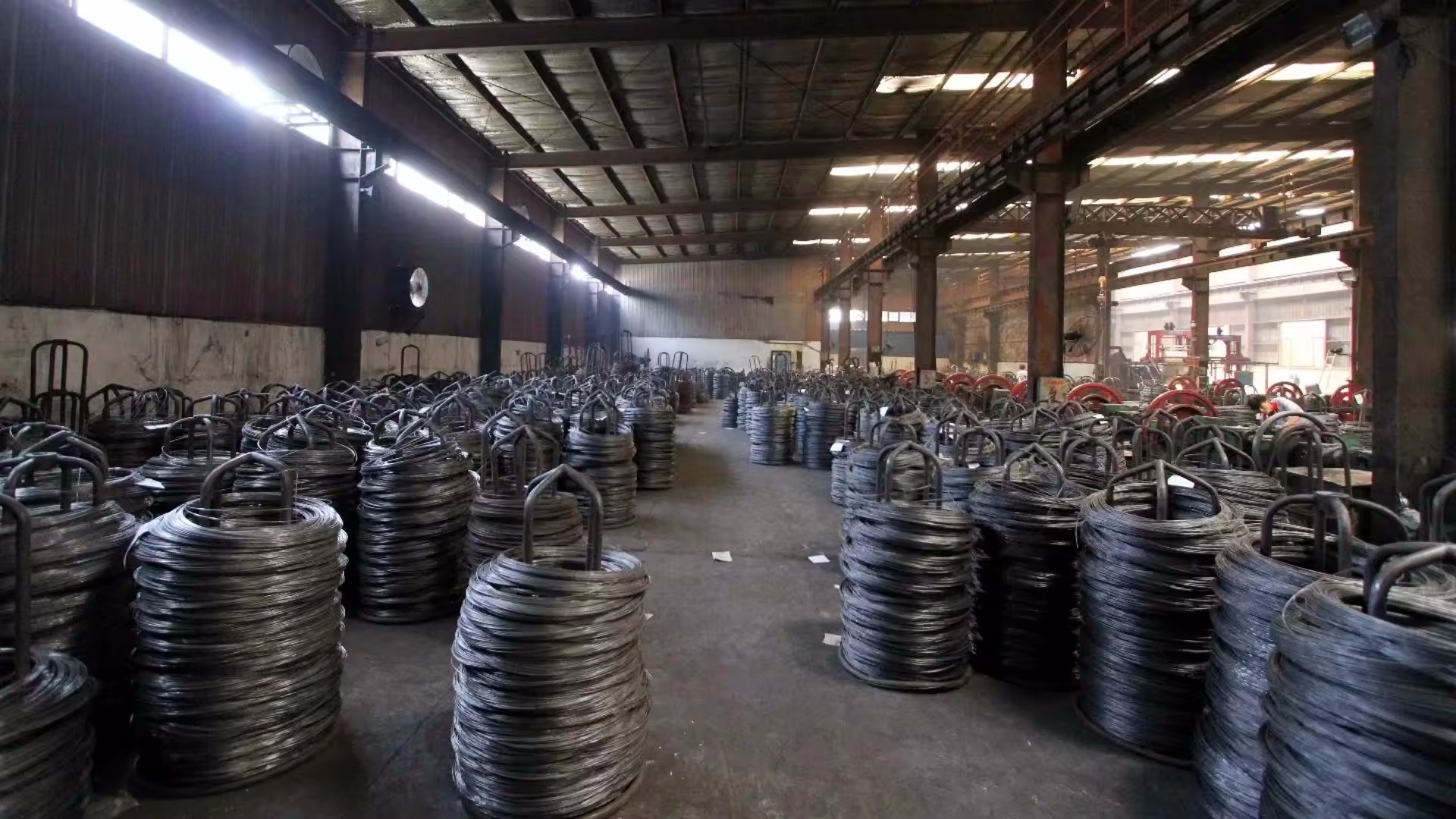
You can choose cold drawn wire or annealed wire according to the following aspects for specific uses:
I. Consider the strength requirements for the application
-
If high strength is required for the application:
- For example, in prestressed components in building structures, springs and wire ropes in mechanical manufacturing, cold drawn wire should be chosen. Cold drawn wire undergoes cold work hardening and has high strength, which can withstand large tensile forces and stresses.
- In some industrial fields with strict strength requirements, such as certain key components in automobile manufacturing, the high strength of cold drawn wire can ensure the safety and reliability of products.
-
If the application requires less strength and more flexibility:
- For crafts making and bundling materials, annealed wire is a better choice. Annealed wire undergoes annealing treatment, reducing hardness and increasing flexibility, making it easy to bend and shape without easily breaking during processing.
II. Consider the dimensional accuracy requirements for the application
-
For applications with high dimensional accuracy requirements:
- Such as manufacturing precision metal wire meshes and filter screens, cold drawn wire is more suitable. During the production process of cold drawn wire, hard alloy dies are used for drawing, resulting in high dimensional accuracy. It can meet the requirements for uniformity and precision of mesh sizes in these products.
- For some mechanical parts or metal components in electronic products that require precise fitting, the high dimensional accuracy of cold drawn wire can ensure the accuracy and stability of assembly.
-
For applications with relatively lower dimensional accuracy requirements:
- For example, for temporary fixing and bundling in the construction field, the dimensional accuracy of annealed wire can generally meet the requirements. In these cases, more attention is paid to the softness and ease of operation of the material rather than strict dimensional accuracy.
III. Consider the surface quality requirements for the application
-
For applications with high surface quality requirements:
- The surface of cold drawn wire is usually relatively smooth and is suitable for occasions where there are requirements for surface appearance, such as metal crafts and metal decorative parts of high-end furniture. The smooth surface can reduce the workload of subsequent processing and improve the aesthetics of the product.
- In some applications that require surface treatments such as electroplating and spraying, the smooth surface of cold drawn wire is also beneficial for improving the effect and quality of surface treatment.
-
For applications with lower surface quality requirements:
- The surface of annealed wire may have some oxide layers or be relatively dark in color. For applications where surface quality requirements are not high, such as bundling materials and auxiliary uses in construction, the surface condition of annealed wire does not affect its performance.
IV. Consider the ease of processing for the application
-
For applications that are easy to process:
- If the application requires complex processing operations such as bending and welding, annealed wire is easier to process. The softness of annealed wire makes it less likely to break during processing and can adapt to various complex shape requirements. For example, in making iron art crafts, annealed wire can be easily bent, twisted, and welded by hand tools to create various exquisite shapes.
- For some small processing plants or handcrafted occasions, the ease of processing of annealed wire can reduce production costs and processing difficulties.
-
For applications with more difficult processing:
- When the application requires high-precision processing operations such as cutting and punching, cold drawn wire may be more suitable. The high dimensional accuracy of cold drawn wire can ensure the accuracy of processing dimensions during processing and reduce the scrap rate. For example, in manufacturing metal wire meshes, cold drawn wire needs to be precisely cut and punched to ensure that the size and shape of the mesh holes meet the requirements.
V. Consider the cost factor
-
For cost-sensitive applications:
- Generally speaking, annealed wire has a relatively lower price. For some cost-sensitive applications such as bundling materials and auxiliary uses in construction, annealed wire can be chosen to reduce costs.
- If the budget is limited and the performance requirements for the material are not extremely high for the application, annealed wire can be an economical choice.
-
For applications that are less sensitive to cost:
- For some applications with high requirements for material performance and strict quality requirements, such as high-end crafts making and precision mechanical manufacturing, the high performance of cold drawn wire may be worth the higher cost. In these cases, choosing cold drawn wire can ensure the quality and performance of the product and meet the needs of the high-end market.

Additional Resources
- Spring Wire Oil Tempered, Cold Drawn, Phosphated
- Cold Drawn Chq Ml08al Drawn Wire Phospahte Coated Rive
- High Quality Bwg 18 Black Annealed Binding Wire
- Cold Drawn 11smnpb37 Wire Rod Cold Drawn Wire
More information


Contact
Phone/WhatsApp:
E-mail:
Address:
Huangtai Industrial Park, Xiaozhan Town,
Jinnan District, Tianjin, 300353, China
Follow us

Inquiry