


Top Reasons to Choose Galvanized Wire for Welding
Release time:
2024-09-13
The advantages of galvanized wire welding are as follows:
The advantages of galvanized wire welding are as follows:
Corrosion resistance: Galvanized wire has a zinc coating that provides excellent corrosion resistance. Welding galvanized wire can maintain this property to a certain extent, ensuring a longer service life in various environments.
Strength and durability: The welded joints can be made strong, enhancing the overall strength and durability of the structure or product made from galvanized wire.
Versatility: It can be used in a wide range of applications such as fencing, construction, and manufacturing industries, providing flexibility in design and fabrication.
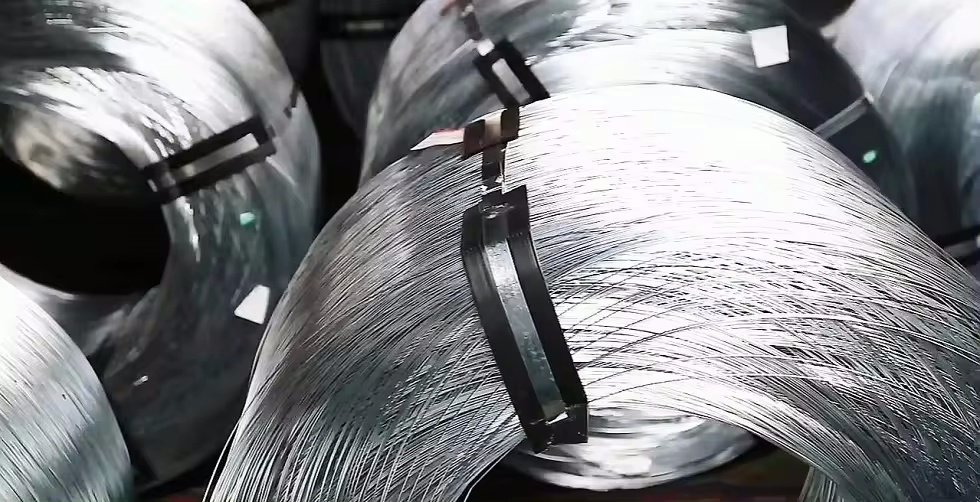
When welding galvanized wire, the following issues should be noted:
I. Welding Environment
-
Adequate ventilation:
- During welding, harmful gases and fumes such as zinc oxide smoke are generated. Ensure good ventilation in the welding area to expel these harmful substances and protect the welder's health. Ventilation equipment such as exhaust fans and ventilation ducts can be used to increase air circulation and reduce the concentration of harmful gases.
- When welding in an enclosed space, pay special attention to ventilation. If necessary, forced ventilation measures can be taken.
-
Dry environment:
- Avoid welding in a humid environment as moisture may affect welding quality and may react with the galvanized layer, accelerating corrosion. A humid environment may also cause electrical equipment failures, increasing safety risks.
- If welding in a humid environment is unavoidable, moisture-proof measures such as using moisture-proof mats and performing local drying treatment on the welding area should be taken.
II. Selection of Welding Equipment
-
Appropriate welding machine:
- Select an appropriate welding machine according to the material, thickness, and welding requirements of the galvanized wire. Common welding methods include arc welding and gas shielded welding. For thinner galvanized wire, a small arc welding machine or gas shielded welding machine can be selected. For thicker galvanized wire, a welding machine with higher power may be required.
- Ensure that the welding machine has stable performance and an appropriate current adjustment range to meet the needs of different welding processes.
-
Electrode and welding wire selection:
- Choose electrodes or welding wires that match the material of the galvanized wire. For welding galvanized wire, electrodes or welding wires specifically for galvanized materials can generally be selected to ensure welding quality.
- Note that the diameter of the electrode or welding wire should be suitable for the thickness of the galvanized wire to avoid affecting the welding effect due to diameters that are too large or too small.
III. Welding Process Parameters
-
Current and voltage:
- Adjust the welding current and voltage reasonably to obtain good welding results. Excessive current may cause burning through the galvanized layer and welding deformation; too little current may result in weak welding and lack of fusion.
- Based on the material and thickness of the galvanized wire and the welding method, refer to the welding process manual or conduct tests to determine appropriate current and voltage parameters.
-
Welding speed:
- Control the welding speed to avoid being too fast or too slow. Welding too fast may lead to insufficient welding and porosity; welding too slowly may cause overheating and welding deformation.
- Adjust the appropriate welding speed according to the welding current, voltage, and the material and thickness of the galvanized wire to ensure welding quality and efficiency.
IV. Preparations Before Welding
-
Clean the surface:
- Before welding, clean the oil, rust, dust and other impurities on the surface of the galvanized wire to ensure welding quality. Tools such as sandpaper, wire brushes, and cleaning agents can be used for cleaning.
- For galvanized wire with a thick galvanized layer, the galvanized layer at the welding area can be appropriately ground before welding to improve the adhesion of welding, but be careful not to over-grind to avoid damaging the anti-corrosion performance of the galvanized layer.
-
Fix the workpiece:
- Fix the galvanized wire workpiece firmly to prevent movement or deformation during welding. Tools such as clamps and positioning pins can be used for fixation.
- Ensure the fixed position of the workpiece is accurate to ensure dimensional accuracy and structural stability after welding.
V. Precautions During Welding
-
Avoid excessive damage to the galvanized layer:
- During welding, try to minimize damage to the galvanized layer. Methods such as using low current and rapid welding can reduce welding heat input and the degree of burning of the galvanized layer.
- For the damaged galvanized layer inevitably during welding, zinc replenishment treatment can be carried out after welding to restore its anti-corrosion performance.
-
Prevent welding deformation:
- Adopt appropriate welding sequences and methods to reduce welding deformation. For example, symmetrical welding and segmented welding can be used to evenly distribute welding heat and reduce the risk of welding deformation.
- For workpieces prone to deformation, pre-deformation treatment can be performed before welding or clamps can be used for restraint during welding to control welding deformation.
-
Pay attention to safety protection:
- During welding, welders should wear personal protective equipment such as welding masks, gloves, goggles, and protective clothing to prevent welding sparks, ultraviolet radiation, harmful gases, etc. from causing harm to the body.
- Follow welding safety operation procedures to ensure good grounding of welding equipment and prevent electric shock accidents.
VI. Post-Welding Treatment
-
Check welding quality:
- After welding, check the welding quality in time, including the appearance, size, and strength of the weld. Check whether there are defects such as pores, cracks, and lack of fusion in the weld. If there are problems, repair them in time.
- Non-destructive testing methods such as ultrasonic testing and radiographic testing can be used to test important welding parts to ensure that the welding quality meets the requirements.
-
Zinc replenishment treatment:
- For the damaged galvanized layer during welding, zinc replenishment treatment should be carried out. Methods such as hot-dip galvanizing, cold galvanizing, and zinc spraying can be used to restore the anti-corrosion performance of the galvanized layer.
- Before performing zinc replenishment treatment, ensure that the surface of the welding part is clean and dry to improve the zinc replenishment effect.
-
Surface treatment:
- According to needs, perform surface treatment on the welded workpiece, such as grinding, polishing, and painting, to improve the appearance quality and anti-corrosion performance of the workpiece.
- Surface treatment should be performed after zinc replenishment treatment to avoid damaging the zinc replenishment layer.

Additional Resources
- Improvement of Galvanized Steel-Stainless Spot Welded
- Galvanized Wire Mesh Welding Equipment in Roll/Automat
- What are galvanized welded steel pipes and their advantages
- Galvanized Welded Wire Mesh Fence for Building Outer
More information


Contact
Phone/WhatsApp:
E-mail:
Address:
Huangtai Industrial Park, Xiaozhan Town,
Jinnan District, Tianjin, 300353, China
Follow us

Inquiry