


The Specific Meaning of Various Specifications of Barbed Wire
Release time:
2024-07-23
The specifications of barbed wire typically include parameters such as wire gauge, barb spacing, and strand diameter. Here are the specific meanings of these common specifications:
The specifications of barbed wire typically include parameters such as wire gauge, barb spacing, and strand diameter. Here are the specific meanings of these common specifications:
- Wire gauge: It indicates the thickness or diameter of the wire used in the barbed wire. A smaller gauge number represents a thicker wire. For example, a higher gauge like 12 is thinner than a lower gauge like 8.
- Barb spacing: This refers to the distance between the barbs along the wire. Common barb spacings can be, for example, 3 inches, 4 inches, or 6 inches. A smaller barb spacing provides a denser and more deterrent barrier.
- Strand diameter: It refers to the thickness or diameter of the strands that make up the main structure of the barbed wire.
Different combinations of these specifications result in barbed wire with different characteristics, strength, and security levels, allowing it to be selected and applied based on specific security and fencing requirements.
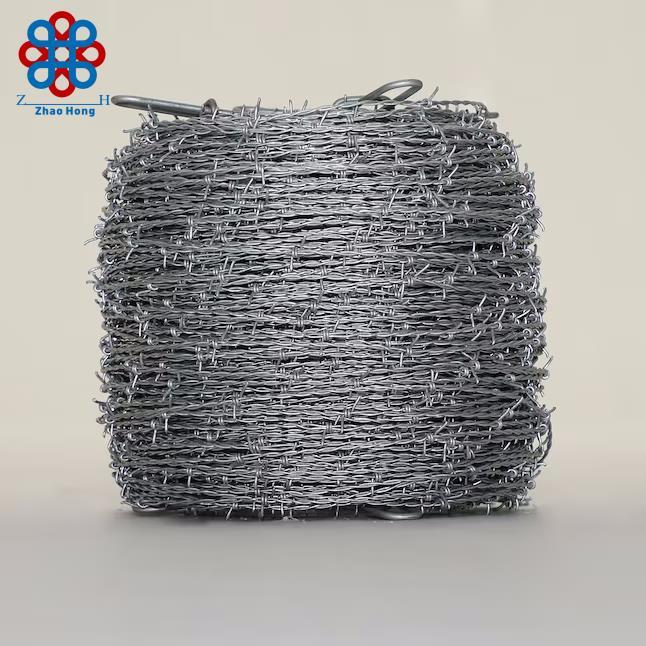
The application scenarios of barbed wire include:
-
Farms and ranches: To enclose land, prevent livestock from straying, and keep wild animals out.
-
Industrial and warehousing areas: Protect the boundaries of factories, warehouses, and industrial parks to prevent unauthorized entry and theft.
-
Prisons and detention centers: Enhance the security of the perimeter walls and restrict the movement of inmates.
-
Military facilities: Such as military bases, ammunition depots, etc., to ensure the safety of military areas.
-
Borders and boundary areas: Used to demarcate national, provincial, or specific regional boundaries and control the flow of people and goods.
-
Construction sites: Enclose the construction site to safeguard construction equipment and materials.
-
Private residences and real estate: Increase the security around the residence for theft prevention and as a warning.
-
Public facilities: Such as substations, sewage treatment plants, communication base stations, etc., to prevent vandalism and unauthorized access.
-
Orchards and plantations: Protect crops and fruits from unauthorized picking.
-
Along highways and railways: Serve as a barrier to prevent pedestrians or animals from entering dangerous areas and ensure traffic safety.

参考资料
-
General Applications of Barbed Wire Fence - katsuraya
-
Barbed Wire Fence Applications for Security and Protection
-
5 Common Uses for a Barbed Wire Fence
-
10 Types of Razor Wire - How Should You choose?
More information


Contact
Phone/WhatsApp:
E-mail:
Address:
Huangtai Industrial Park, Xiaozhan Town,
Jinnan District, Tianjin, 300353, China
Follow us

Inquiry