


Simplified Annealed Wire VS Constant-temperature Annealed Wire — Obvious Processing Waste Comparison
Release time:
2026-07-15
Galvanized wire with identical diameter and zinc coating has minor price gaps, yet differs drastically in scrap rate, machine downtime and labor cost after mesh weaving, construction binding and landscape shaping.
Galvanized wire with identical diameter and zinc coating has minor price gaps, yet differs drastically in scrap rate, machine downtime and labor cost after mesh weaving, construction binding and landscape shaping. The root cause lies in annealing furnace temperature control, holding time and uniform wire feeding. Simplified annealing cuts production cost for manufacturers but transfers all losses to downstream users, with intuitive test data showing the full gap.
1. Fundamental Process Difference
Simplified Annealed Wire (Low-cost batch furnace, short heating)
- Unclosed temperature control with huge furnace temperature fluctuation; insufficient holding time leaves residual drawing stress; inconsistent heating along one coil creates alternating hard & soft sections; rapid air cooling after furnace generates hidden inner stress.
- Poor ductility, easy to crack after repeated bending, zinc coating peels massively under twisting tension.
Standard Constant-temperature Low-temperature Annealed Wire (Sealed continuous furnace)
- Closed-loop intelligent temperature control with ±5℃ error, stable recrystallization temperature; uniform wire feeding & sufficient heat preservation completely eliminate work hardening stress; gradient slow cooling refines even metal grains, uniform flexibility from start to end of coil; elongation ≥25%, withstand over 50 bends without breakage.
- Balanced toughness for smooth deformation without zinc peeling or brittle fracture.
2. 5 Clear Processing Waste Contrast With Actual Data
(1) Automatic Wire Mesh Production (Biggest Downtime Loss Gap)
- Simplified annealed wire: 1.0%–1.2% breakage & jamming rate, 5–8 machine halts per loom daily for rethreading & waste cleaning, daily output drops over 30%; scrap rate 12%–15% per ton, uneven mesh texture leads to high rejection rate.
- Constant-temperature annealed wire: Breakage rate ≤0.1%, stable unattended running; scrap rate below 4%, first-pass yield rises 18%, daily output increases 30%.
(2) Manual Steel Bar Binding On Construction Sites
- Simplified wire: Stiff texture slows binding speed by 25%, frequent re-cutting due to fracture; broken cross-sections rust rapidly and cause project rework.
- Constant-temperature wire: Easy manual twisting, no repeated cutting, labor efficiency up 30%, minimal rust rework risk.
(3) Bonsai & Landscape Shaping
- Simplified wire: Heavy rebound cannot hold shape, easy fracture leads to wasted wire; cracked zinc layer creates rust stains polluting plants & stone, annual full replacement required.
- Constant-temperature wire: Tight fit without rebound, intact coating lasts 8–10 years, cutting gardening maintenance cost.
(4) Zinc Coating Loss & Shortened Anti-rust Life
Huge residual stress in simplified wire cracks zinc film during bending, creating permanent corrosion weak points that rust through within 1–2 years outdoors. Uniform flexible substrate of constant-temperature wire allows zinc layer to deform synchronously without peeling, maintaining full 72h salt spray anti-corrosion performance.
(5) Comprehensive Hidden Cost Per Ton
Simplified wire saves 100–200 CNY on unit price, yet extra loss from scrap, downtime, labor overtime and rust replacement reaches 800–1200 CNY per ton. Constant-temperature wire slightly raises upfront purchase cost but eliminates almost all hidden waste, delivering better long-term cost performance.
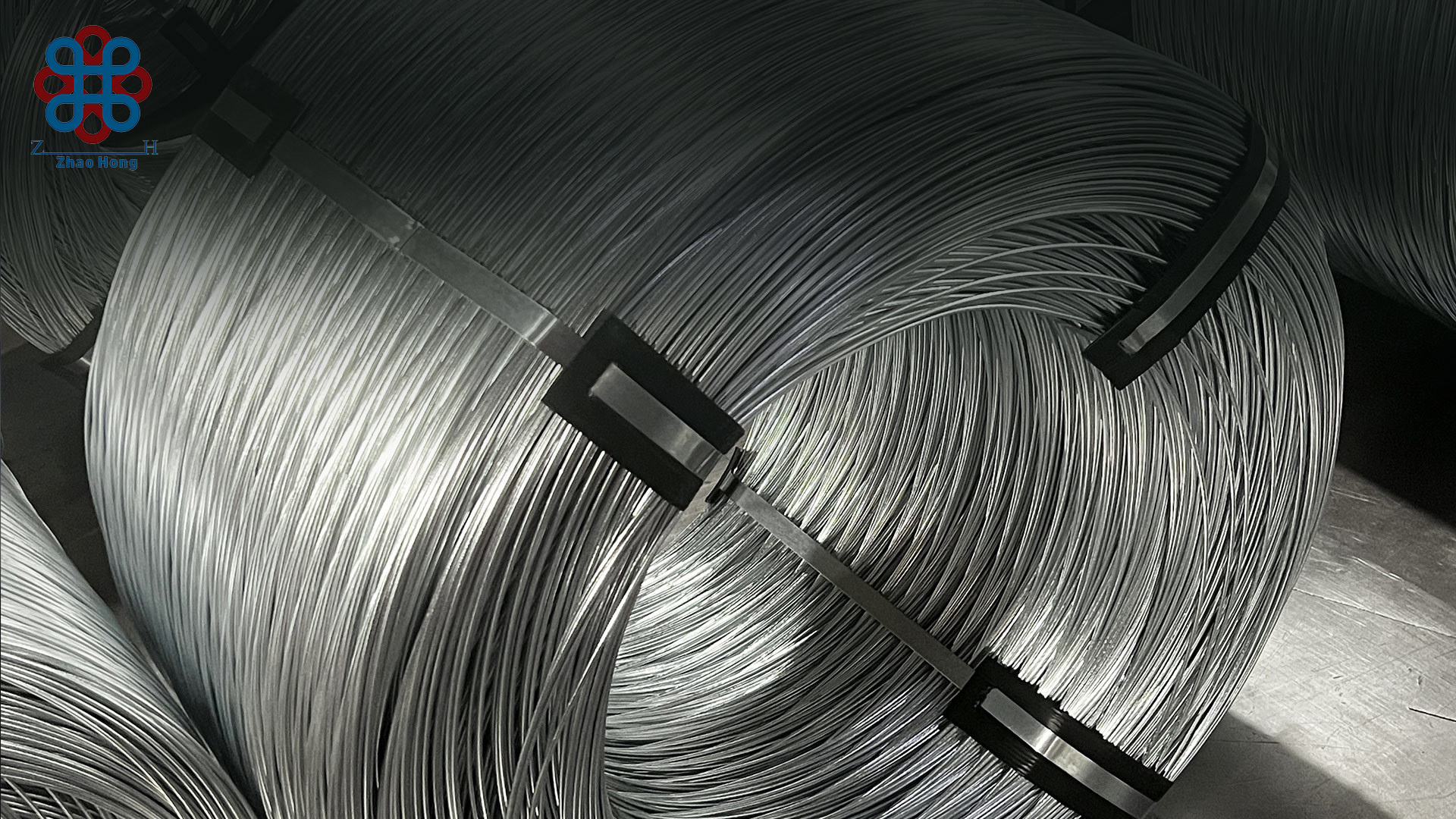
3. Three Visible Defects Of Poorly Annealed Wire
- Uneven hardness in one coil: smooth weaving at front, frequent jamming at rear;
- White zinc powder shedding at bending positions, red rust grows quickly after storage;
- Wavy uneven finished mesh, mass rejection for municipal & export inspection.
4. 30-second Field Test To Judge Annealing Quality
- Repeated folding test: Fold tightly 5 times
- Simplified wire: Breaks within 2–3 folds with massive zinc debris;
- Constant-temperature wire: Intact without crack or powder loss.
- Rebound test: Wrap around branch and release
- Simplified wire: Springs open instantly, cannot hold shaping;
- Constant-temperature wire: Clings tightly with tiny rebound.
- Full-coil torsion test: Consistent smooth twisting for qualified constant-temperature wire, fluctuating hard/soft resistance for simplified wire.
5. Scenario Selection Guide
- Short-term indoor static binding without bending/machining: Simplified annealed wire acceptable for budget control;
- Automatic mesh looms, mass construction steel binding, bonsai shaping, long-term outdoor PV/highway fastening: Mandatory constant-temperature annealed wire to minimize breakage, downtime and scrap waste.
Conclusion
Simplified annealing only reduces factory production cost, bringing five major downstream losses: machine downtime, raw material scrap, extra labor, finished product rework and premature rust replacement. Constant-temperature sealed annealing delivers uniform toughness across the whole coil, drastically cutting breakage, jamming and zinc peeling waste. For deep processing and permanent outdoor projects, higher unit price of standardized annealed wire leads to far lower total operating cost.

Keywords:
More information


Contact
Phone/WhatsApp:
E-mail:
Address:
Huangtai Industrial Park, Xiaozhan Town,
Jinnan District, Tianjin, 300353, China
Follow us

Inquiry