


Why do similar galvanized wires rust in one year while others last for a decade?
Release time:
2026-06-12
To the untrained eye, galvanized wires that look nearly identical seem to have no differences. But in real application, their service lives vary greatly. Some get rusty and lose zinc coating within one year outdoors, while others remain intact for a decade despite wind, rain and salt fog.
To the untrained eye, galvanized wires that look nearly identical seem to have no differences. But in real application, their service lives vary greatly. Some get rusty and lose zinc coating within one year outdoors, while others remain intact for a decade despite wind, rain and salt fog.
The huge gap does not only lie in material thickness. It results from four hidden factors: zinc coating weight, galvanizing technology, steel substrate quality and post-treatment, which are often overlooked by buyers.
1. Zinc Coating Weight: The Key to Anti-rust Lifespan
The zinc coating on the surface acts as a protective film against rust. Ordinary galvanized wires usually have a zinc coating weight of 40–200g/㎡. The thin and uneven coating comes with tiny invisible pinholes. Moisture and corrosive substances easily penetrate through, eroding the steel core in just a few months. This is why cheap wires rust rapidly within a year.
In contrast, premium high-zinc galvanized wire features a coating weight of 300–350g/㎡, several times thicker than regular products. The dense zinc layer fully covers the steel wire and blocks corrosive elements effectively. It has passed the 72-hour salt spray test, delivering reliable anti-rust performance for more than 10 years in coastal and open-air environments.
2. Galvanizing Technology: Ensure Firm Coating Adhesion
Production technology directly affects how firmly the zinc layer sticks to the wire. Low-cost wires adopt simple electro-galvanizing processes with loose quality control. The zinc layer only attaches superficially. When bent, tied or stretched, the coating peels and cracks easily, leaving the steel wire unprotected.
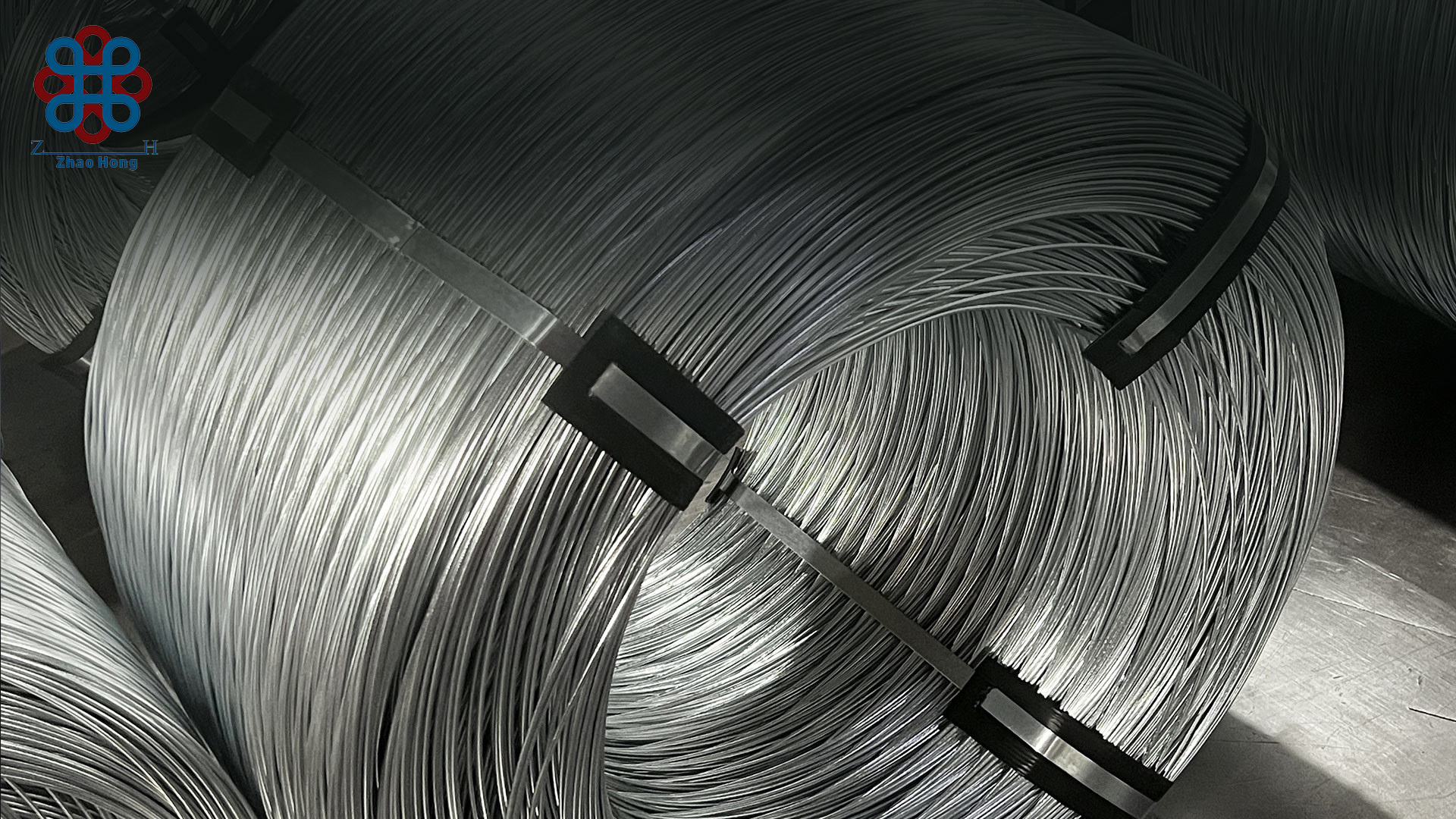
High-quality products apply professional hot-dip galvanizing and refined post-processing. The zinc layer bonds tightly with the steel substrate. It will not peel or warp under repeated bending or long-term outdoor exposure, maintaining stable protection all the time.
3. Steel Substrate Quality: The Underlying Foundation
Most people focus only on the outer zinc layer and ignore the inner steel wire. Inferior products use recycled steel with high impurities and tiny internal cracks. Even if the zinc coating stays intact, moisture seeps inside and causes hidden corrosion.
Durable galvanized wire is made of high-quality raw steel rod with pure composition and compact structure. The steel itself has strong resistance against corrosion and aging. Combined with qualified zinc coating, it achieves double protection and a much longer service life.
4. Annealing & Surface Treatment: Practicality and Durability
The hardness and toughness of the wire depend on the annealing process. Poorly annealed wire is either too hard or too brittle, and tends to break during construction. The broken section exposes the steel core and becomes a rust spot. Wires treated with precise low-temperature annealing have balanced hardness and flexibility, and will not break after repeated bending.
Besides, formal surface treatment removes burrs and excess zinc, keeping the coating smooth and uniform. Rough surfaces and zinc lumps on low-grade wires will also speed up corrosion.
Conclusion
Whether a galvanized wire lasts one year or ten years depends on internal craftsmanship rather than appearance. Ordinary wire is suitable for short-term indoor use. For long-term application in outdoor, coastal, humid and salt-rich areas, please choose products with thick zinc coating, qualified salt spray resistance and mature production technology. Though the initial cost is slightly higher, it saves frequent replacement and maintenance work, and brings better overall cost performance in the long run.

Keywords:
More information
Contact
Phone/WhatsApp:
E-mail:
Address:
Huangtai Industrial Park, Xiaozhan Town,
Jinnan District, Tianjin, 300353, China
Follow us

Inquiry