


Galvanized Wire Selection for Middle East Desert Projects — Key Indicators to Check
Release time:
2026-09-14
The Middle East desert features high temperatures, intense UV radiation, huge day-night temperature differences, wind-sand abrasion, and salt spray in some regions. Many buyers only focus on wire diameter and fall into the trap that thicker wire equals better corrosion resistance. When selecting galvanized wire, wire gauge is not the only factor. Below are the core technical indicators you must prioritize.
The Middle East desert features high temperatures, intense UV radiation, huge day-night temperature differences, wind-sand abrasion, and salt spray in some regions. Many buyers only focus on wire diameter and fall into the trap that thicker wire equals better corrosion resistance. When selecting galvanized wire, wire gauge is not the only factor. Below are the core technical indicators you must prioritize.
1. Zinc Coating Mass (Top Priority)
Do not only refer to coating thickness in micrometers. Prioritize zinc coating weight (g/㎡). Wind-blown sand continuously scours the zinc layer. Insufficient zinc mass will expose the base steel and cause rust quickly.
- Ordinary hot-dip galvanized wire: 40–60 g/㎡, only for short-term projects
- Long-term desert projects: ≥85 g/㎡ high zinc-coat hot-dip galvanized wire is recommended
Warning: Electro-galvanized wire has an extremely thin zinc layer. Even with a bright surface, it will rust within months under outdoor desert conditions and must NOT be used for exterior applications.
2. Base Rod Quality & Sandelin Effect Prevention
Some products pass zinc thickness testing yet peel or shed zinc powder during bending or mesh weaving. This is mainly caused by the Sandelin effect. Recycled wire rods with high silicon content will form brittle zinc-iron alloy layers during high-temperature galvanizing. Under desert vibration and thermal expansion & contraction, the zinc coating easily peels off.
✅ Procurement requirement: Use high-quality low-carbon virgin wire rods with controlled silicon content, avoid high-silicon raw materials. Perform small batch bending test upon arrival to check zinc powder shedding.
3. Mechanical Properties (Tensile Strength & Elongation)
Wire for desert site binding and mesh making bears repeated stress. Thermal expansion and contraction from extreme day-night temperature changes create continuous stress.
- Tensile strength: Keep within a reasonable range. Harder wire does not mean better performance; hard wire tends to crack under stress.
- Elongation: Ensure good ductility so the wire will not crack or snap during bending and processing.
Selection tip: Soft annealed galvanized wire is preferred for binding work; medium-strength galvanized wire suits protective mesh production.
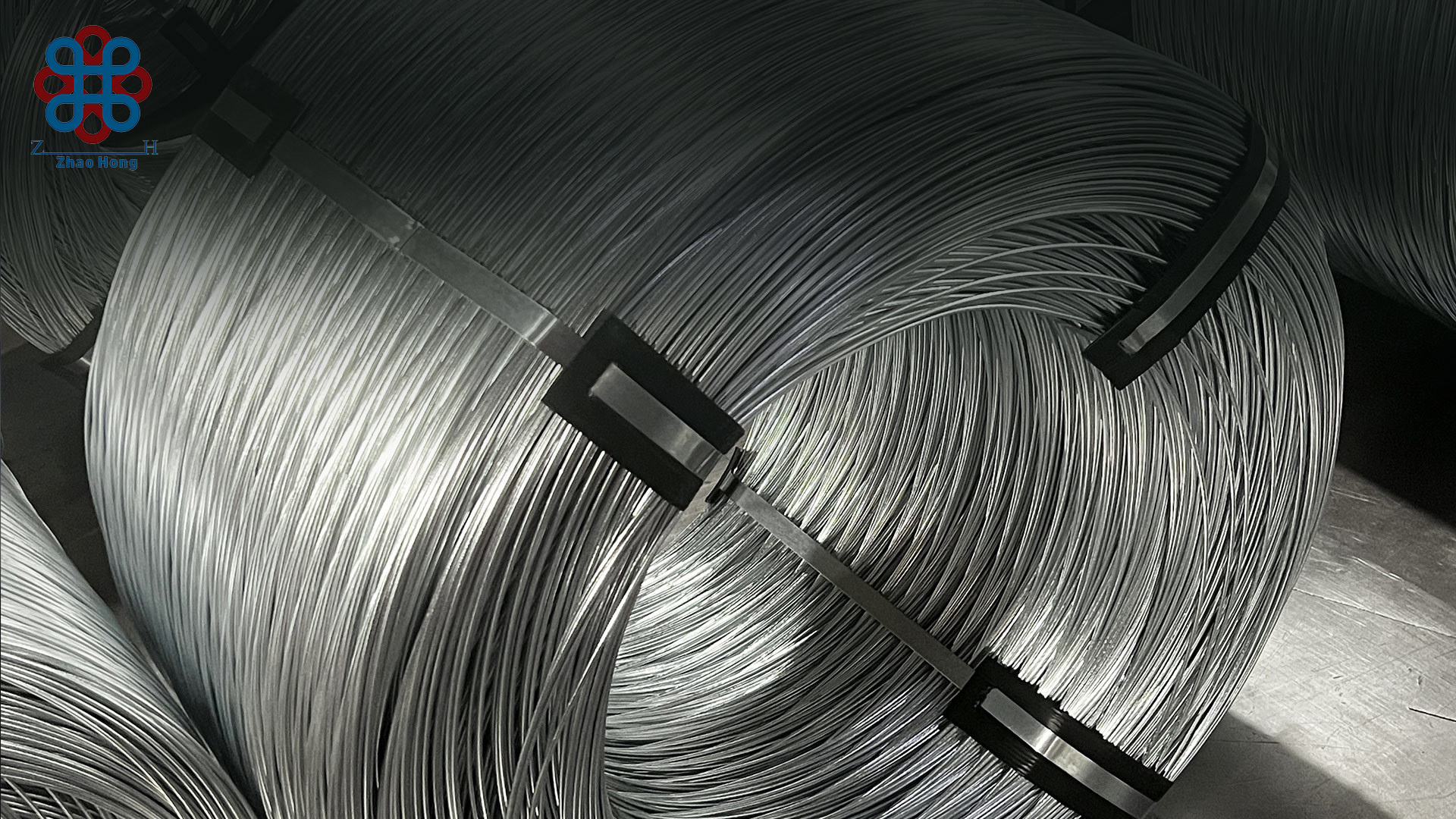
4. Passivation & Sealing Treatment (White Rust Resistance)
Large temperature swings in the desert lead to nighttime condensation, which easily triggers white rust (basic zinc oxide) on galvanized wire. Products without passivation will develop heavy white rust during ocean transportation and storage before arriving in the Middle East.
✅ Requirement: Apply chromium-free passivation plus sealing treatment after galvanizing. It improves storage stability, enhances initial corrosion protection and delays white rust formation.
5. Wire Diameter Tolerance
Windproof sand mesh and photovoltaic binding demand consistent wire diameter. Excessive tolerance will cause frequent wire breakage on weaving machines and reduce processing efficiency. For overseas projects, specify wire diameter tolerance controlled within ±0.03 mm to avoid uneven wire thickness across the whole shipment.
6. Packaging Standard (Ocean Shipment + Desert Storage)
Many qualified products get ruined by poor packaging. Ocean transit plus open-air desert storage makes broken packaging a major risk of moisture and rust.
✅ Requirement: Inner waterproof plastic film + tightly woven outer packaging with moisture-proof marks, secured on pallets.

Keywords:
More information


Contact
Phone/WhatsApp:
E-mail:
Address:
Huangtai Industrial Park, Xiaozhan Town,
Jinnan District, Tianjin, 300353, China
Follow us

Inquiry