


For Mountain PV Galvanized Wire, Check Coating Thickness, Not Surface Brightness
Release time:
2026-08-13
Mountain photovoltaic sites face harsh working conditions: intense high‑temperature sun exposure in daytime, sharp temperature drop and frost at night, huge day‑night temperature difference, together with UV radiation and dew corrosion.
Mountain photovoltaic sites face harsh working conditions: intense high‑temperature sun exposure in daytime, sharp temperature drop and frost at night, huge day‑night temperature difference, together with UV radiation and dew corrosion. Many buyers are misled by shiny‑looking wire and believe brighter surface means better anti‑corrosion performance.
Bright appearance does not equal long service life. Most bright shiny wires are electro‑galvanized wire with thin zinc coating. The glossy finish comes from passivation treatment. Under repeated thermal expansion and contraction in mountain areas, thin zinc layers easily develop micro‑cracks. Dew and frost penetrate through cracks to attack steel substrate, resulting in pitting rust and wire breakage shortly, threatening the safety of PV protection mesh, binding and grounding systems.
When selecting galvanized wire for mountain PV projects, zinc coating thickness matters far more than surface brightness.
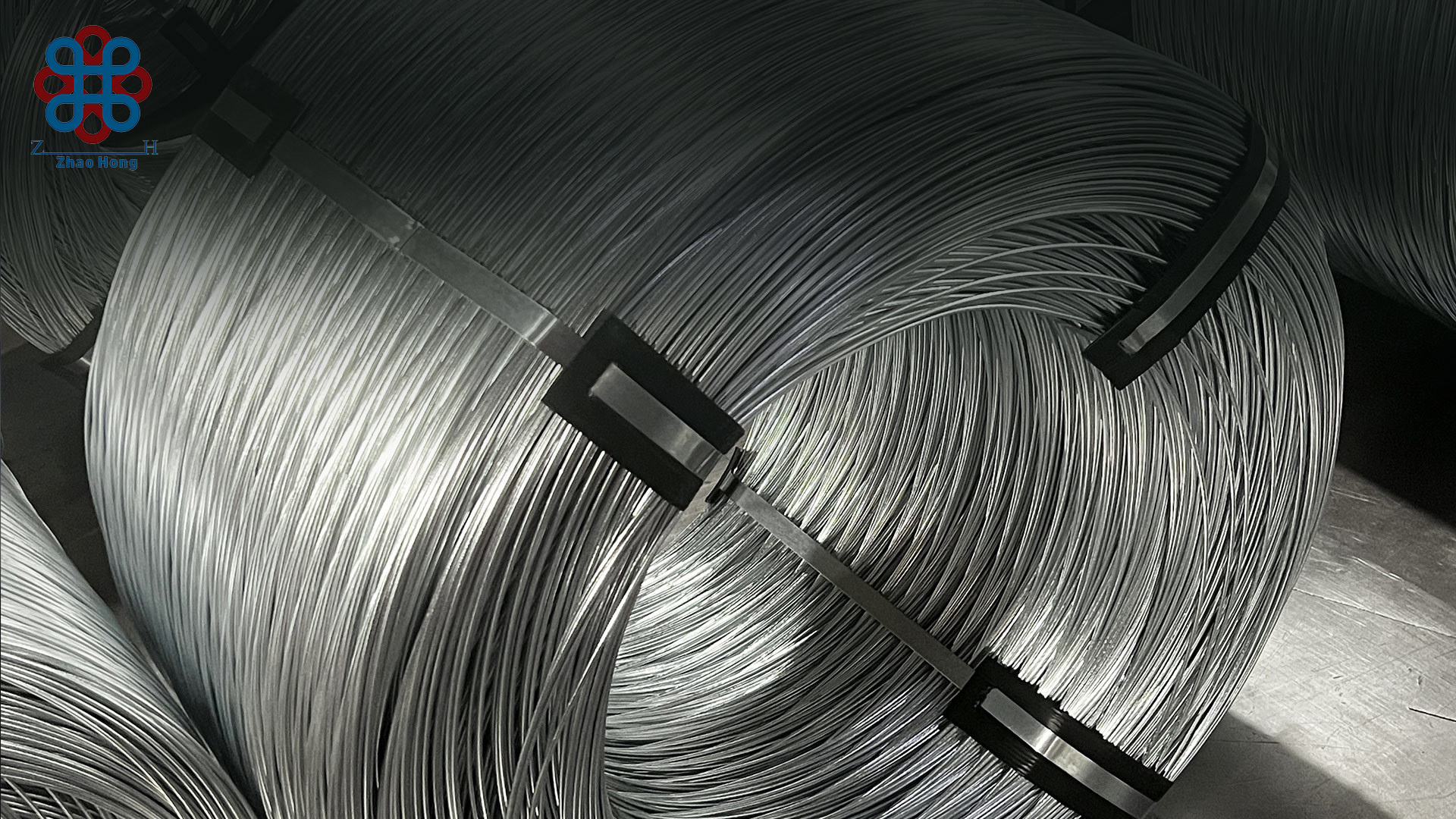
Hot‑dip galvanized wire is preferred. Its sufficient zinc thickness and metallurgically bonded zinc‑iron alloy layer resist cracking and peeling under cyclic sun‑frost temperature stress. Its matte surface is not fancy, yet abundant zinc reservoir provides continuous sacrificial anode protection for steel.
Key purchasing & acceptance tips
- Do not judge by brightness. Request zinc coating mass test report, prioritize high zinc coating grade.
- Pay attention to annealing quality: constant‑temperature annealed wire delivers good toughness and avoids brittle fracture under temperature cycling.
- Complete passivation & sealing treatment to slow down corrosion from dew and UV rays.
- Simple field test: bend sample wire; qualified coating shall not peel or shed zinc powder.
Common Misconceptions
❌ “Shiny wire looks neat on construction site.” Mountain PV requires long‑term outdoor performance. Nice appearance cannot resist sun and frost. Thin bright coating rusts and breaks quickly, causing much higher rework cost.
❌ “Thicker wire diameter can stand temperature change.” Thick steel substrate makes no difference if zinc coating is too thin. Once coating is perforated by corrosion, even thick steel will rust from inside out.
Conclusion: For mountain PV under repeated sun exposure and frost, prioritize zinc coating thickness and production process, not superficial brightness.

Keywords:
More information


Contact
Phone/WhatsApp:
E-mail:
Address:
Huangtai Industrial Park, Xiaozhan Town,
Jinnan District, Tianjin, 300353, China
Follow us

Inquiry