


Reject Thin Bright‑Finish Galvanized Wire for Large Day‑Night Temperature Difference
Release time:
2026-08-11
Mountain photovoltaic sites suffer severe working conditions, with day‑night temperature swings over 30℃.
Mountain photovoltaic sites suffer severe working conditions, with day‑night temperature swings over 30℃. High‑temperature solar exposure in daytime, rapid cooling at night, frost and ice in winter, plus mountain dew, dust and saline soil precipitation continuously attack metal fasteners.
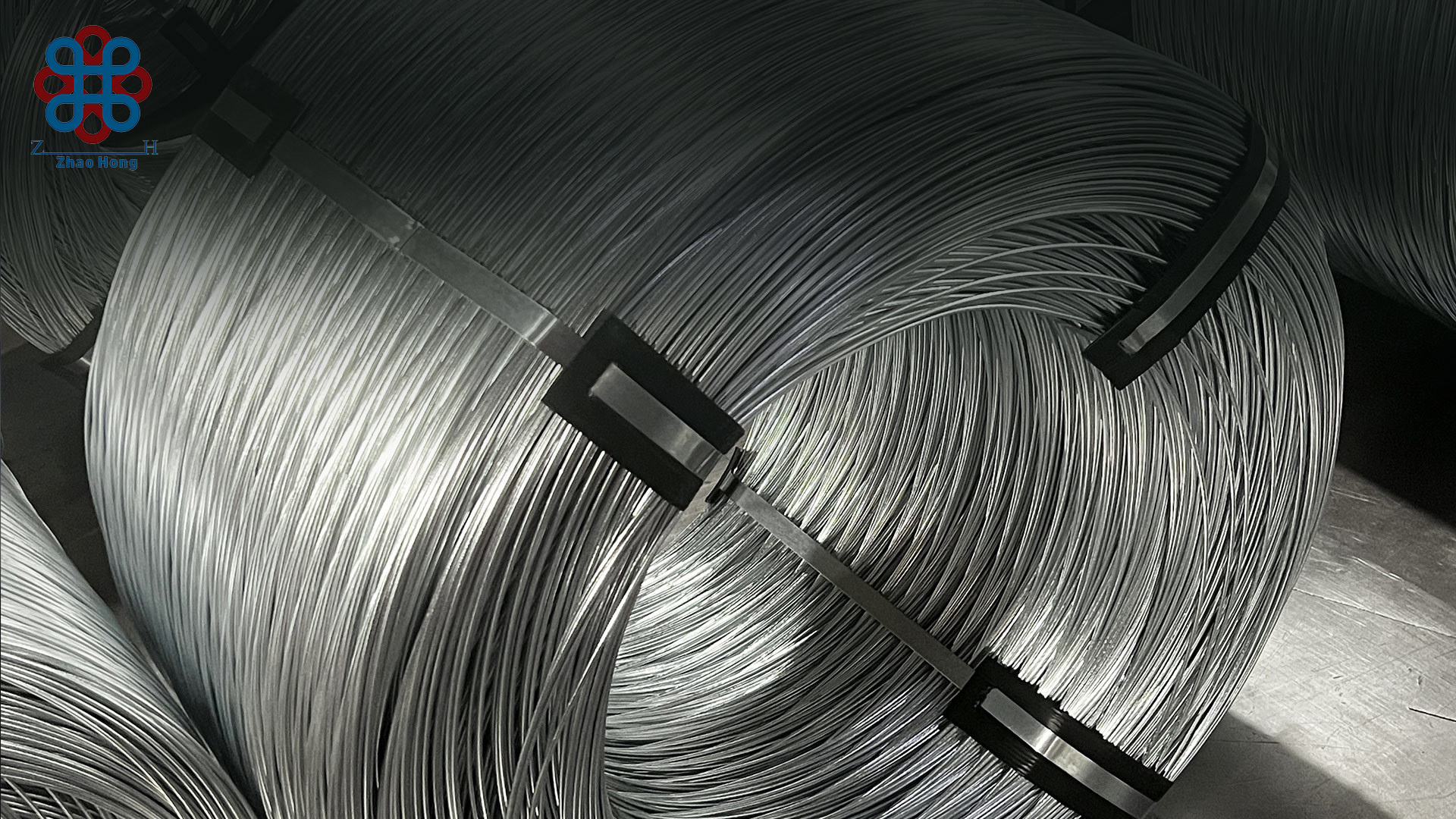
Many buyers are misled by shiny appearance. Bright electro‑galvanized wire looks nice, yet it is a hidden risk for mountain PV projects. Electro‑galvanized coating is merely physically deposited (8‑25 μm), without metallurgical alloy bonding with steel substrate. Under repeated thermal expansion and contraction, the thin coating generates internal stress, causing micro‑cracks and peeling. Once the steel base is exposed, rust develops rapidly within 1‑2 years, leading to wire breakage and loose bracket fixing, raising O&M risks for solar stations.
Hot‑dip galvanized wire with matte finish is the reliable option. It forms iron‑zinc alloy metallurgical bonding. Sufficient zinc coating resists thermal cycling without easy cracking. Sacrificial anode protection still works even with minor scratches on surface.
Key Selection Tips for Mountain PV Galvanized Wire
- Do not judge corrosion resistance by surface brightness. Super‑bright surface usually means thin electro‑plated layer. Qualified hot‑dip galvanized wire presents matte silver‑grey finish.
- Zinc coating requirement: Coating weight ≥180 g/m², coating thickness ≥60 μm. Passivation & sealing treatment is strongly recommended for longer service life in mountain sites.
- Adopt constant‑temperature annealed wire substrate for good ductility. No coating peeling when bending during installation.
- On‑site inspection: Measure thickness with magnetic thickness gauge; perform bending test to check coating adhesion.
Cost reminder: Saving cost by purchasing cheap bright thin‑coated wire will result in much higher re‑work and maintenance expense in later‑stage solar‑site operation. For mountain PV, coating thickness and metallurgical bonding matter far more than shiny appearance.

Keywords:
More information


Contact
Phone/WhatsApp:
E-mail:
Address:
Huangtai Industrial Park, Xiaozhan Town,
Jinnan District, Tianjin, 300353, China
Follow us

Inquiry