


Same Diameter Galvanized Wire: Why One Peels Zinc When Bent, The Other Remains Intact
Release time:
2026-07-20
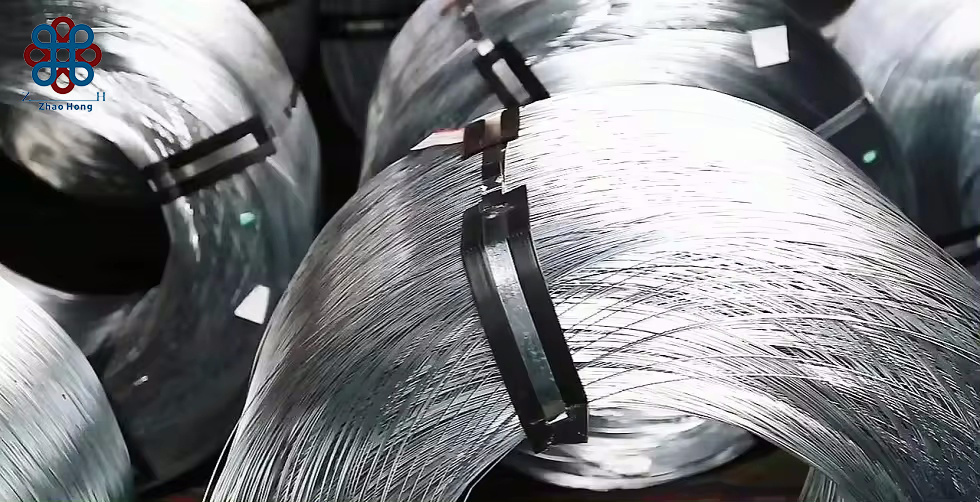
Even galvanized wire with identical gauge performs drastically different during bending. The gap has nothing to do with thickness, but four hidden production procedures.
Even galvanized wire with identical gauge performs drastically different during bending. The gap has nothing to do with thickness, but four hidden production procedures.
1. Continuous Zinc-iron Alloy Layer Is The Core Divider
- Zinc-peeling wire: Electroplated wire or fast hot-dipped wire without sufficient metallurgical reaction, no tough alloy bonding layer. Zinc film only attaches physically and tears under deformation.
- Intact wire: Long constant-temperature dipping forms integrated zinc-iron alloy transition layer to buffer bending stress, keeping coating seamless.
2. Complete 3-stage Pre-treatment Is Indispensable
Incomplete degreasing, pickling or undried flux creates isolation dirt, bubbles and ash layers between steel and zinc, resulting in weak floating coating that peels off easily when twisted.
3. Cooling Mode Controls Internal Coating Stress
Direct cold water quenching leaves massive invisible microcracks inside zinc layer, which expand and split coating during bending. Qualified wire adopts gradient slow cooling to synchronize shrinkage of steel and zinc and eliminate stress.
4. Annealing Determines Substrate Ductility
Under-annealed rigid wire retains drawing residual stress, tearing zinc coating violently when folded. Fully annealed flexible wire deforms gently without zinc shedding.
Quick Bending Test Standard
Fold wire tightly three times: Massive zinc powder & cracked coating = defective craft; smooth intact bend surface = full-process qualified wire for weaving and landscape shaping.

Keywords:
More information

Contact
Phone/WhatsApp:
E-mail:
Address:
Huangtai Industrial Park, Xiaozhan Town,
Jinnan District, Tianjin, 300353, China
Follow us

Inquiry