


What Is The Difference Between High Zinc Galvanized Wire And Ordinary Galvanized Wire?
Release time:
2026-06-10
Most purchasers only compare the unit price when selecting galvanized wire, ignoring huge gaps in coating thickness, corrosion resistance, service life and overall project cost.
Introduction
Most purchasers only compare the unit price when selecting galvanized wire, ignoring huge gaps in coating thickness, corrosion resistance, service life and overall project cost. In harsh working conditions such as coastal salt fog, open-air outdoor environments, rainy and humid areas, and mild acid-base corrosion, low-cost ordinary galvanized wire on the market will rust massively within only 6 to 12 months. It requires frequent wire replacement, delays construction schedules, generates extra labor and maintenance costs, and ultimately increases the overall project expenditure invisibly.
Our 300-350g/㎡ high zinc layer galvanized wire is an upgraded product optimized for conventional electro-galvanized wire and standard hot-dip galvanized wire. It solves common industry pain points including thin coating, uneven plating, easy zinc peeling, poor toughness and weak rust resistance. It presents comprehensive performance advantages over ordinary galvanized wire in actual engineering use, perfectly meeting the long-term material demands of high-standard and high-corrosion scenarios.
Core Difference 1: Zinc Coating Weight — The Fundamental Gap in Anti-corrosion Performance
The service life against rust of galvanized wire mainly depends on zinc coating thickness, which is the most critical performance dividing line.
Ordinary Galvanized Wire: The zinc coating weight is only 40-200g/㎡, with thin and uneven coating covered with tiny pinholes. Water vapor and salt fog can easily penetrate the protective layer and erode the internal steel wire substrate, resulting in rust spots and corrosion in a short time.
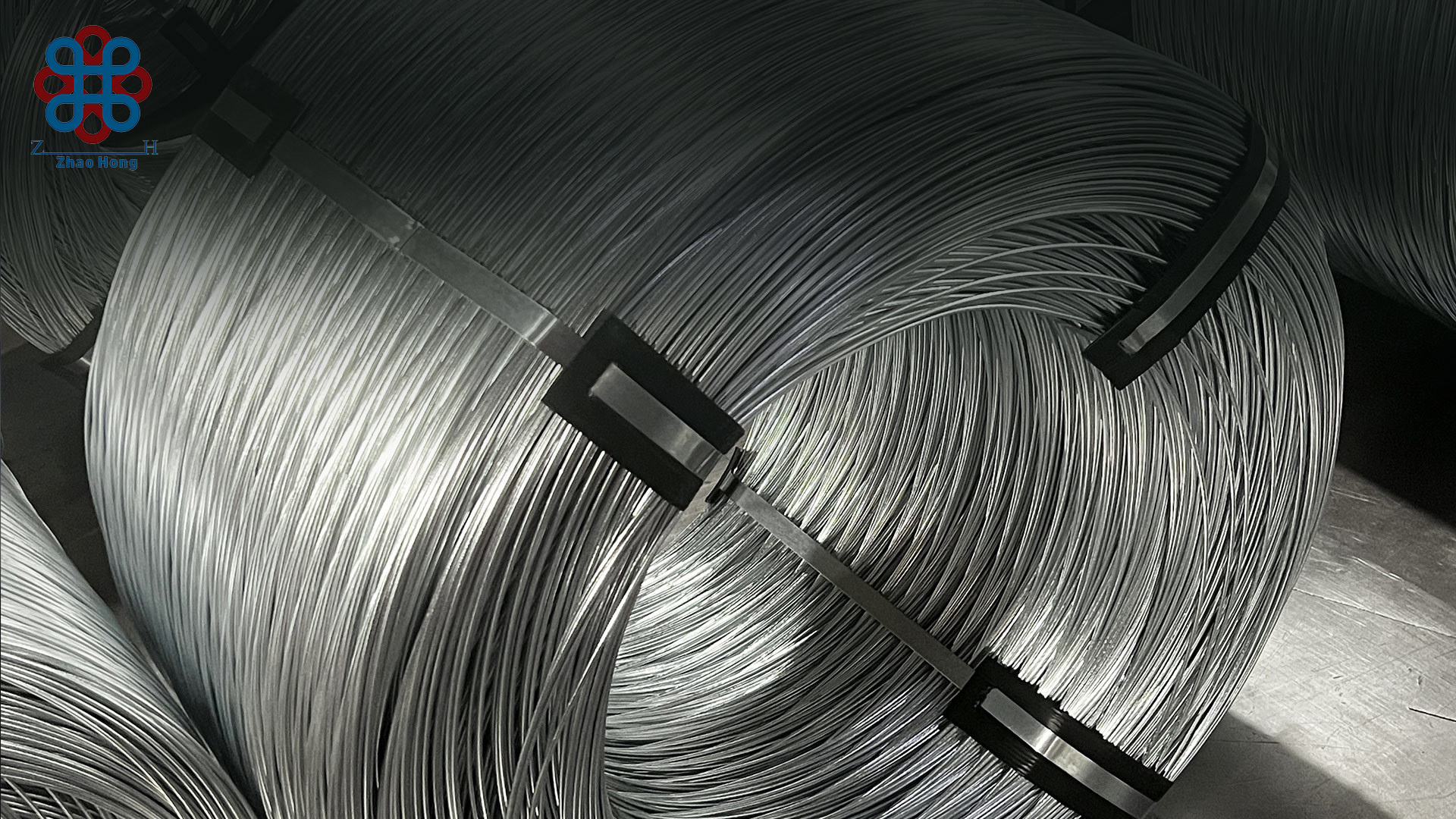
Differentiated High Zinc Galvanized Wire: It features a stable zinc coating of 300-350g/㎡, 2 to 7 times thicker than ordinary wire. The dense and gap-free zinc layer completely wraps the steel wire, blocks corrosive media thoroughly, and prevents substrate rust from the source.
This wire has no zinc lump or missing plating. The zinc coating will not crack or peel off during bending, binding and twisting. Every batch keeps consistent zinc content, ensuring stable long-term anti-corrosion performance.
Core Difference 2: Salt Spray Test Standard — Visible Adaptability to Harsh Environments
Salt spray test is the most authoritative standard to detect outdoor anti-corrosion capability, as well as the most intuitive data to distinguish high-end and ordinary galvanized wire.
Ordinary galvanized wire: Only passes 24h-48h salt spray test, and generates red rust quickly in coastal high-salt-fog areas, failing to support long-term outdoor application.
Upgraded high zinc galvanized wire: Passes 72-hour continuous salt spray test. No red rust or coating peeling occurs after long-term corrosion simulation, owning far better anti-corrosion performance than general market products.
Benefiting from this core advantage, this high zinc galvanized wire can serve harsh scenarios where ordinary wire cannot work for a long time, including coastal projects, offshore fences, breeding farms, outdoor garden facilities and rainy humid regions.
Core Difference 3: Wire Precision & Toughness — Optimized Construction and Processing Experience
Besides outstanding corrosion resistance, we also optimize the base material performance to differ from rough low-end galvanized wire, balancing anti-rust ability and practicality perfectly.
High-precision wire diameter tolerance: Wire diameter error is strictly controlled within ±0.02mm with uniform thickness. It avoids wire jamming and jumping during automatic weaving, and keeps accurate size during manual binding.
Annealing toughening process: Moderate hardness and toughness after precise debugging. The wire can withstand repeated bending, tight binding and twisting without breakage or crack, suitable for construction binding, wire mesh weaving and deep secondary processing.
Burr-free surface treatment: Fine post-processing removes surface burrs to prevent hand scratches during construction, and improve the appearance of finished hardware products.
Core Difference 4: Full-life Cycle Cost — Cost-saving in The Long Run
Many buyers choose low-price ordinary galvanized wire to cut initial procurement cost, but pay more hidden costs in the later period:
Regular wire replacement caused by rapid rust increases labor cost
Wire breakage during construction delays project progress and reduces overall engineering quality
Unstable batch quality leads to unqualified project inspection results
Although high zinc galvanized wire has a slightly higher unit price, its service life is 3 times longer than ordinary galvanized wire. It reduces later maintenance frequency, avoids rework risks and stabilizes material quality, cutting down comprehensive procurement and operation costs from the perspective of full life cycle.
Application Scenarios of Differentiated High Zinc Galvanized Wire
Coastal construction, bridge and port wharf anti-corrosion projects
Outdoor guardrails, garden supports and highway protection nets
Aquaculture cages and livestock breeding fences
Steel bar binding for construction projects
Hardware woven products and outdoor fixed hardware accessories
Conclusion
This differentiated galvanized wire has four core strengths: thickened high zinc coating, qualified 72-hour salt spray test, high dimensional precision and extended service life. We abandon low-price vicious competition, and focus on solving core industry pain points including easy rust, short service life and inconvenient construction for wires used in outdoor, coastal and high-corrosion environments.
If your project is located in coastal or humid open-air areas with strict requirements on anti-rust service life, this 300-350g/㎡ high zinc layer galvanized wire with 72-hour salt spray certification is your optimal long-term material selection solution balancing quality and cost.

Keywords:
More information


Contact
Phone/WhatsApp:
E-mail:
Address:
Huangtai Industrial Park, Xiaozhan Town,
Jinnan District, Tianjin, 300353, China
Follow us

Inquiry