


Understanding the Material Process Differences Between PVC Coated and PE Coated Wire
Release time:
2025-01-03
The main raw material is polyvinyl chloride (PVC). PVC is an amorphous thermoplastic with good plasticity, chemical corrosion resistance, and electrical insulation. It can be easily processed into various forms under appropriate temperature and pressure conditions.
I. Material Process Differences
A. Base Materials
-
-
The main raw material is polyvinyl chloride (PVC). PVC is an amorphous thermoplastic with good plasticity, chemical corrosion resistance, and electrical insulation. It can be easily processed into various forms under appropriate temperature and pressure conditions.
-
-
PE Coated Wire
-
It uses polyethylene (PE) as the main raw material. PE is a thermoplastic resin polymerized from ethylene monomers. Depending on the polymerization method and molecular structure, it can be divided into low - density polyethylene (LDPE), linear low - density polyethylene (LLDPE), and high - density polyethylene (HDPE). Each type has different degrees of flexibility, impact resistance, and chemical stability.
-
B. Production Processes
-
PVC Coated Wire
-
Immersion and Spraying: Commonly, the metal wire is pre - heated first. Then, through immersion or spraying methods, PVC plastic powder is evenly applied to the surface of the metal wire. After that, it undergoes high - temperature plasticization. During this process, the PVC powder melts and adheres tightly to the metal wire, forming a continuous coating. The immersion process usually results in a relatively thick coating, while the spraying process can produce a thinner but more uniform coating.
-
-
PE Coated Wire
-
Extrusion Coating: The polyethylene raw material is heated and melted in an extruder. Through a specific die, the molten polyethylene is evenly extruded and wrapped around the metal wire surface. At the same time, it is cooled and shaped to form the coating layer. This process can accurately control the thickness and uniformity of the coating, and has a relatively high production efficiency.
-
C. Performance Characteristics
-
-
Flexibility and Abrasion Resistance: The coating has good flexibility and abrasion resistance. It can withstand certain frictions and bending without being easily damaged.
-
Chemical Resistance: It has some resistance to chemicals, which allows it to be used in environments with a certain degree of chemical exposure.
-
Color Fastness and Insulation: The color is bright and not easy to fade, and it also has good electrical insulation performance. However, PVC may release harmful gases at high temperatures, and its flexibility will decrease in low - temperature environments.
-
-
PE Coated Wire
-
Weather Resistance: It has excellent weather resistance and can be used for a long time in various harsh natural environments without significant aging.
-
Chemical Corrosion Resistance: It has strong resistance to most acids, alkalis, salts, and other chemical substances.
-
Low - temperature Performance: It has good cold resistance, maintaining good flexibility and physical properties even in low - temperature environments. However, its surface hardness is relatively lower than that of PVC - coated wire.
-
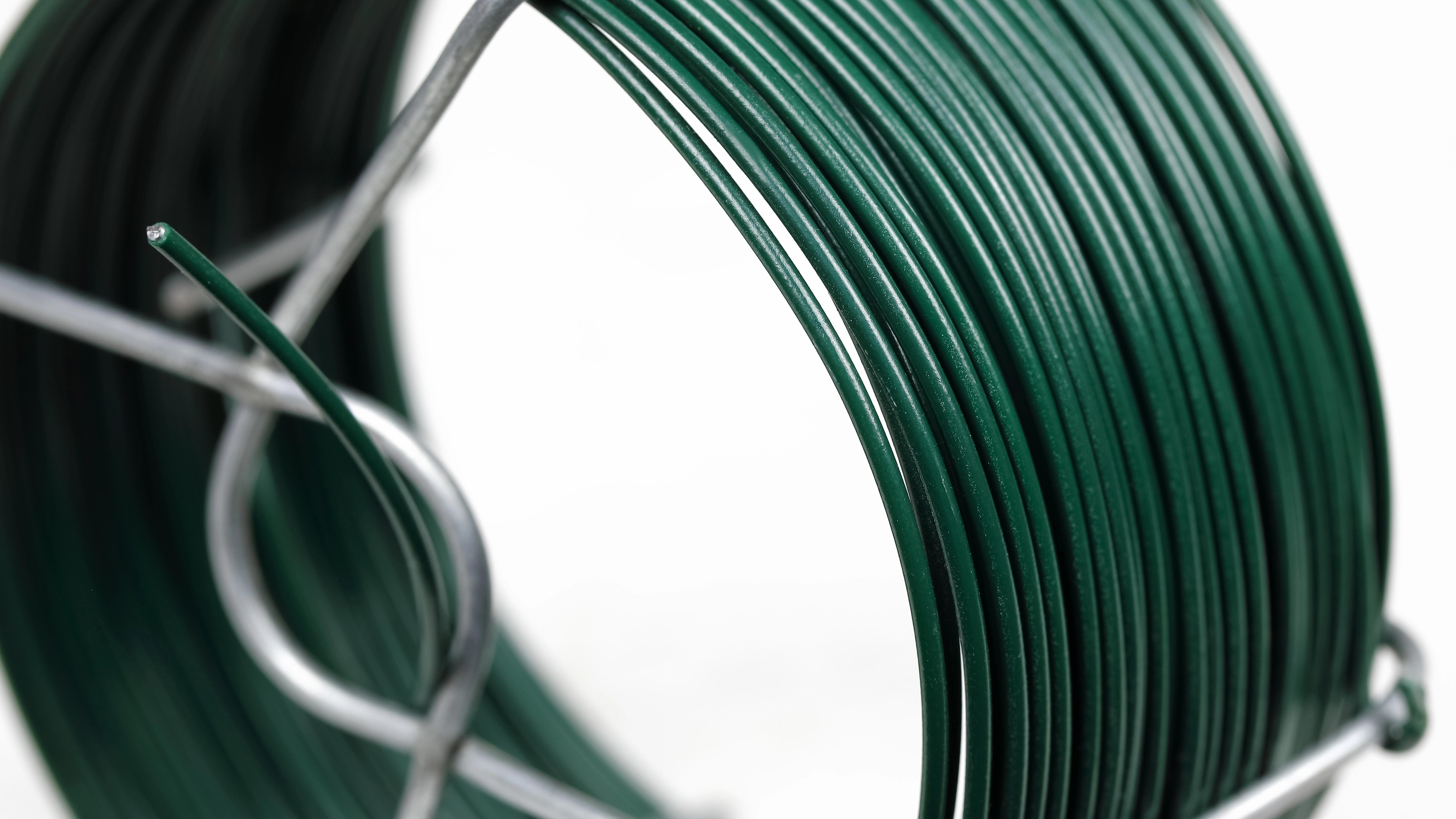
II. Different Application Scenarios
A. Application Scenarios of PVC Coated Wire
- Agricultural Field
- Greenhouse Film Fixing: It is often used to make the film - pressing lines for vegetable greenhouses. Its good flexibility and abrasion resistance can effectively fix the greenhouse film, resist external forces such as wind, and the bright color is convenient for identification and maintenance.
- Orchard Fencing: It can be used to make fences in orchards. It can not only play a protective role but also adapt to the outdoor environment and is not easy to rust.
- Construction Field
- Safety Nets: It can be used as a material for construction safety nets. Its insulation and certain strength can ensure the safety during the construction process.
- Temporary Construction Enclosures: It is also used to make some temporary construction enclosures, which have good warning effects and protective properties.
- Craftwork Production
- Due to its rich colors and good flexibility, it is suitable for making various handicrafts, such as iron - art flowers and decorative ornaments, adding color and texture to the handicrafts.
B. Application Scenarios of PE Coated Wire
- Animal Husbandry
- Livestock Fencing: It is widely used to make breeding fences. Its excellent weather resistance and corrosion resistance can enable it to be used for a long time in the humid and high - acid - alkali environment of farms. Its good flexibility and strength can effectively enclose livestock and protect them from scratches.
- Industrial Field
- In some chemical plants' factory area protection, mine isolation fences, etc., it is often applied. Relying on its excellent chemical corrosion resistance and high strength, it can withstand harsh industrial environments and ensure production safety.
- Municipal Engineering
- Road and Railway Protection: It is commonly used to make road isolation fences and railway protection nets. Its weather resistance and stability can adapt to long - term outdoor use, providing reliable safety protection for urban transportation and railway transportation.

Additional Resources
-
PP PVC PE Coated Wire Rope
-
PVC/PE Nylon Coated Stainless Steel Wire Cable
-
PVC Coated Wire manufacturers & supplier
-
Factory PVC Coated Wire Rope for Jump Rope
Keywords:
More information


Contact
Phone/WhatsApp:
E-mail:
Address:
Huangtai Industrial Park, Xiaozhan Town,
Jinnan District, Tianjin, 300353, China
Follow us

Inquiry