


Specifications and Processing Requirements of High Quality Stone Cage Mesh for High Zinc Galvanized Wire
Release time:
2025-01-02
The wire diameter generally ranges from 2.0 mm to 4.0 mm. For example, in some small - scale landscape projects or temporary protection works, a wire diameter of 2.0 - 2.5 mm might be sufficient. In large - scale hydraulic engineering and other projects with high - strength requirements, a diameter of 3.0 - 4.0 mm is often used. The tolerance of wire diameter is usually controlled within ±0.05 mm - ±0.08 mm.
Specifications of High - Zinc Galvanized Wire for High - Quality Stone Cage Mesh
-
Wire Diameter
-
The wire diameter generally ranges from 2.0 mm to 4.0 mm. For example, in some small - scale landscape projects or temporary protection works, a wire diameter of 2.0 - 2.5 mm might be sufficient. In large - scale hydraulic engineering and other projects with high - strength requirements, a diameter of 3.0 - 4.0 mm is often used. The tolerance of wire diameter is usually controlled within ±0.05 mm - ±0.08 mm.
-
-
Tensile Strength
-
The tensile strength of the wire should be no less than 380 MPa. This high tensile strength ensures that the stone cage mesh can withstand external forces such as water flow impact and soil pressure without easily deforming or breaking.
-
-
Zinc Coating
-
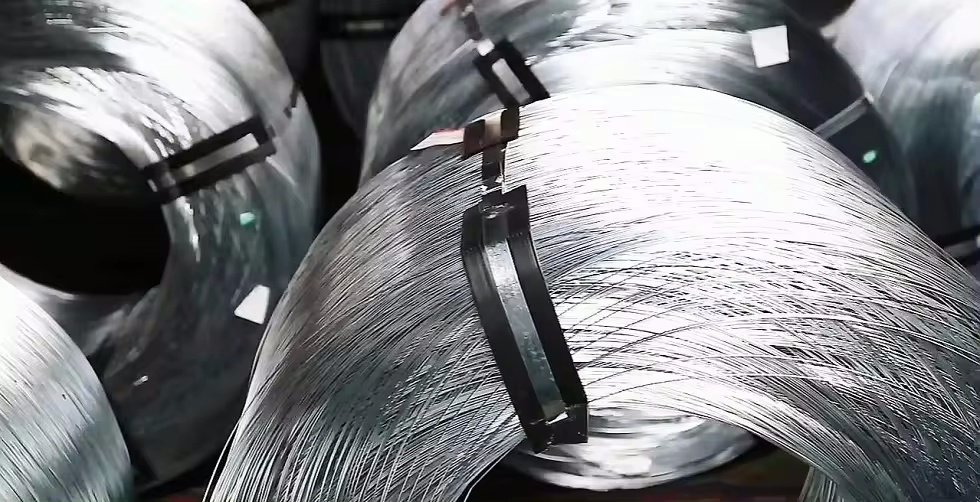
The zinc coating amount of high - zinc galvanized wire is usually more than 260 g/m². The thickness of the zinc coating is generally between 30 μm and 80 μm. In highly corrosive environments such as coastal areas and chemical - industrial zones, the thickness needs to reach 60 - 80 μm to provide better anti - corrosion protection.
-
Specific Processing Requirements
- Pretreatment
- The wire needs to be pickled to remove rust, grease, and dirt on the surface. This pretreatment process can improve the adhesion of the zinc coating and the quality of subsequent processing. The wire is usually immersed in an acid bath for a certain period of time, and then washed and dried.
- Cutting
- Use a wire - cutting machine to cut the wire into different lengths according to the design requirements. The cutting surface of the wire should be flat to ensure accurate dimensions and easy connection during the weaving process.
- Weaving
- Weaving Method: The hexagon double - twisted weaving process is commonly used. For example, double - twisted and triple - twisted or triple - twisted and five - twisted methods are adopted. This weaving method can ensure that the metal coating and PVC coating of the wire in the twisted part are not damaged, enhancing the overall strength and stability of the stone cage mesh.
- Mesh Size: The common mesh sizes are 6×8 cm, 8×10 cm, and 8×12 cm. The allowable tolerance is - 4 + 16%. The proper mesh size can effectively prevent the loss of filling materials such as stones and soil and also ensure good water permeability.
- Edge Wire Requirements: All edge wires of the mesh cage are made of thicker wires to enhance strength. The diameter of the edge wire is generally larger than that of the mesh wire. For example, if the diameter of the mesh wire is not less than 2 cm, the diameter of the edge wire is not less than 2.4 mm.
- Zinc Coating Adhesion Requirement
- When the galvanized wire is wound around a rod with a diameter 4 times that of the wire for 6 turns and then rubbed with fingers, there should be no peeling or cracking of the zinc coating. This ensures that the zinc coating can provide long - term anti - corrosion protection during the service life of the stone cage mesh.

Additioinal Resources
-
Best Detailed Specifications of Galvanized Wire
-
High Quality Galvanized Steel Wire 2.4mm
-
High Quality Galvanized Hexagonal Wire Mesh
-
High Quality Staple Wire and Stitching Wire
Keywords:
More information


Contact
Phone/WhatsApp:
E-mail:
Address:
Huangtai Industrial Park, Xiaozhan Town,
Jinnan District, Tianjin, 300353, China
Follow us

Inquiry