


Performance Breakdown: Galvanized Iron Wire vs. Galvanized Steel Wire
Release time:
2024-12-31
Generally made from low - carbon steel with a carbon content usually less than 0.25%. This low - carbon composition makes it relatively soft, endowing it with good toughness and ductility. It can be easily bent and shaped without breaking easily, which is suitable for applications that require flexibility.
Comparison of the Performance between Galvanized Iron Wire and Galvanized Steel Wire
1. Material Composition
- Galvanized Iron Wire:
- Generally made from low - carbon steel with a carbon content usually less than 0.25%. This low - carbon composition makes it relatively soft, endowing it with good toughness and ductility. It can be easily bent and shaped without breaking easily, which is suitable for applications that require flexibility.
- Galvanized Steel Wire:
- Commonly fabricated from medium - to high - carbon steel. The carbon content can range from 0.25% to 0.6% or even higher. The higher carbon content contributes to its increased hardness and strength. However, it is relatively more brittle compared to galvanized iron wire, and may fracture when subjected to excessive impact forces.
2. Manufacturing Process
- Galvanized Iron Wire:
- The manufacturing process is relatively straightforward. High - quality low - carbon steel wire rods are processed through steps such as wire drawing for shaping, pickling to remove rust, high - temperature annealing to improve the material's properties, and then hot - dip galvanizing or electro - galvanizing (cold - galvanizing). Finally, it is cooled to complete the production.
- Galvanized Steel Wire:
- Demands more complex heat - treatment and wire - drawing techniques. Initially, the medium - to high - carbon steel undergoes pre - treatment processes like pickling and phosphating. Subsequently, it is drawn multiple times to achieve the desired diameter and strength. After that, the galvanizing treatment is carried out. The complex process is aimed at achieving the high - performance requirements of galvanized steel wire.
3. Mechanical Properties
- Tensile Strength:
- Galvanized steel wire has a significantly higher tensile strength than galvanized iron wire. It can withstand much greater pulling forces without breaking. This property makes it suitable for applications where high - strength requirements are crucial, such as in prestressed concrete structures, where it provides the necessary reinforcement to resist the tensile stresses generated in the concrete. Another example is in the strengthening cores of power and communication cables, where the high - strength galvanized steel wire helps to support the cable's weight and withstand external forces.
- Hardness:
- Steel wire is generally harder than iron wire. This higher hardness makes it more wear - resistant. When subjected to friction or impacts, the zinc coating on the surface of galvanized steel wire is less likely to peel off or be damaged, thus better protecting the inner steel wire. This property is important in applications where the wire is in constant contact with other surfaces or is exposed to abrasive environments.
- Elasticity:
- Galvanized steel wire exhibits better elasticity. After being deformed under stress, it can recover its original shape to a large extent. This makes it ideal for manufacturing components that require good elastic properties, such as springs. In contrast, galvanized iron wire has relatively weaker elasticity.
- Fatigue Resistance:
- Due to its unique combination of strength and toughness, galvanized steel wire has better fatigue resistance compared to galvanized iron wire. It can endure repeated stress applications without easily breaking. This makes it suitable for applications such as bridge cables and wire ropes, where the wire is constantly subjected to cyclic loading.
4. Surface Quality
- Galvanized Iron Wire:
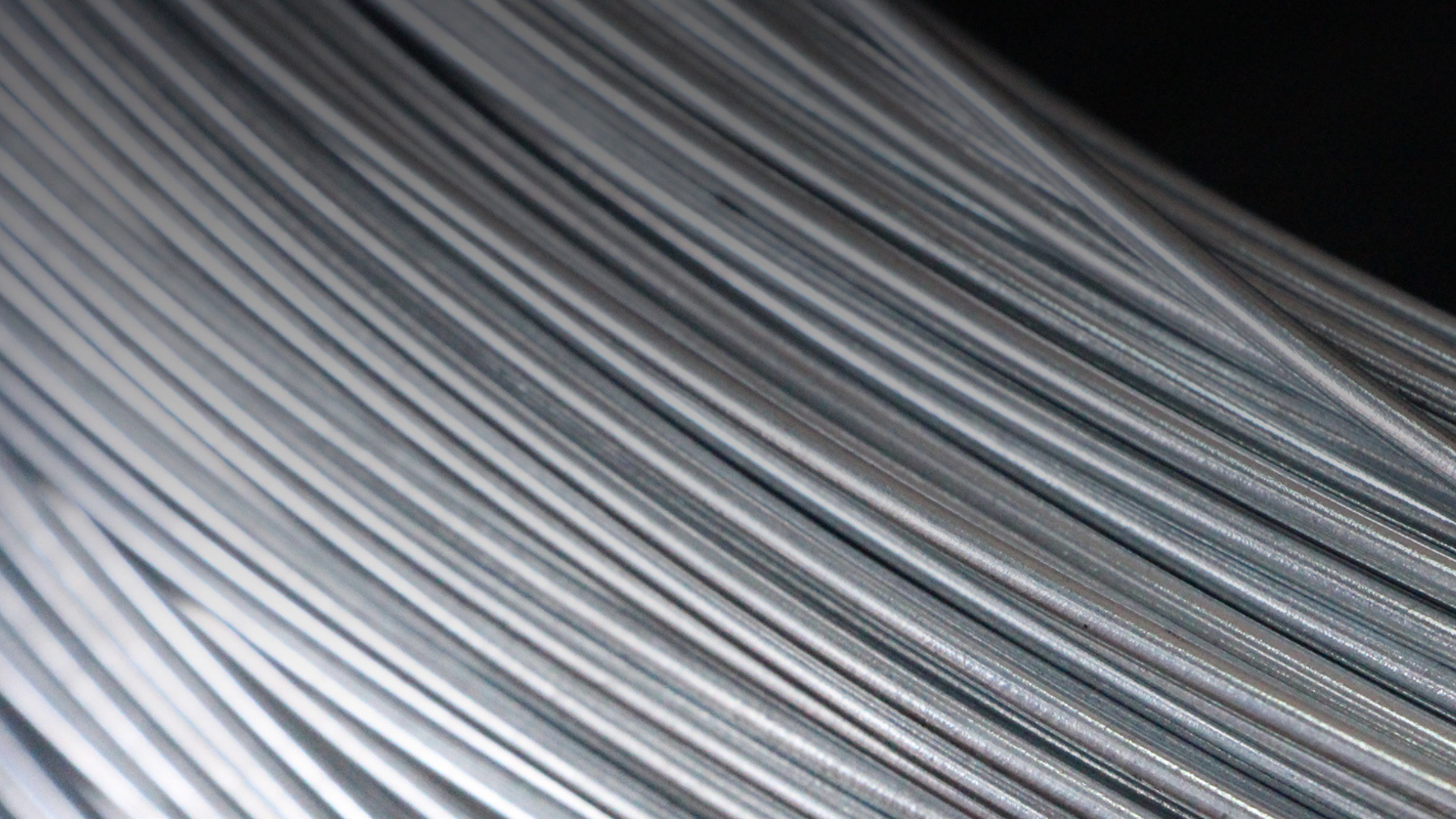
- For hot - dip galvanized iron wire, the zinc layer is relatively thick, and the surface may appear rougher, with some irregular patterns or unevenness. Electro - galvanized (cold - galvanized) iron wire, on the other hand, has a thinner and more uniform zinc layer, presenting a shiny appearance.
- Galvanized Steel Wire:
- Typically has a smoother and more uniform surface. The zinc coating on galvanized steel wire has better adhesion and quality. This ensures that the zinc layer does not easily peel off during use, effectively enhancing the corrosion - protection performance.
5. Corrosion Resistance
- Galvanized Iron Wire:
- Hot - dip galvanized iron wire offers good corrosion resistance. In outdoor environments, the hot - dip galvanized layer can protect the iron wire for several decades. However, electro - galvanized (cold - galvanized) iron wire has relatively poor corrosion resistance. It may start to rust within a few months in normal outdoor conditions.
- Galvanized Steel Wire:
- Also possesses good corrosion resistance. Given its use in important engineering structures and equipment, higher requirements are placed on the quality and thickness of the zinc coating to ensure a long service life. The better corrosion resistance of galvanized steel wire is crucial for maintaining the integrity and performance of structures and components in corrosive environments.
6. Cost
- Galvanized Iron Wire:
- Due to its relatively simple manufacturing process and lower - cost raw materials, the price of galvanized iron wire is usually lower than that of galvanized steel wire. This makes it a cost - effective option for applications where cost is a significant consideration, such as in general - purpose fencing, agricultural tying, and some simple handicraft works.
- Galvanized Steel Wire:
- Its higher cost is attributed to the complex manufacturing process, the need for high - quality raw materials and advanced production equipment, as well as stricter quality control measures. Despite the higher cost, its superior performance makes it the preferred choice for applications where high - performance and long - term reliability are essential.

Additional Resources
- Galvanized Steel Wire/Iron Wire/Binding Wire 1.25mm
- Galvanized steel wire 25kg 50kg hot dipped wire
- Galvanized Wire Bwg 12 Galvanized Wire 1008
- Galvanized Steel Wire Strand (GSW) ASTM A475, 7/2.64mm
Keywords:
More information


Contact
Phone/WhatsApp:
E-mail:
Address:
Huangtai Industrial Park, Xiaozhan Town,
Jinnan District, Tianjin, 300353, China
Follow us

Inquiry