


Comparison of Waterproof Performance Between Common Zinc Galvanized Wire and High Zinc Galvanized Wire
Release time:
2024-12-06
Zinc Coating Thickness and Its Impact
- Zinc Coating Thickness and Its Impact
- Common Zinc Galvanized Wire
- The zinc coating on common zinc galvanized wire is relatively thin. Typically, the zinc coating weight might range from around 30 - 100 grams per square meter. In a rainy environment, this thinner zinc layer will start to react with water and oxygen more quickly. As rainwater continuously washes over it, the zinc layer is gradually consumed. For example, in a long - term outdoor exposure test during the rainy season, after a few months, the zinc layer of common zinc galvanized wire may begin to show signs of thinning and pitting corrosion.
- Once the zinc layer is depleted in local areas due to scratches or other damage, the underlying iron wire is more likely to be exposed to rainwater and start to rust. The rate of rusting can accelerate as the protective zinc layer becomes less effective.
- High Zinc Galvanized Wire
- High zinc galvanized wire has a much thicker zinc coating. The zinc coating weight can reach 200 - 600 grams per square meter. The thick zinc layer acts as a more durable barrier against rainwater. It provides a longer - lasting protection for the underlying wire. In the same rainy environment, the high - zinc coating can withstand the erosive effects of rain for a much longer period.
- Even if there is some physical damage to the wire surface, such as minor scratches during installation or handling, the thick zinc layer still has enough material to continue to protect the wire. The remaining zinc can still act as a sacrificial anode to prevent the iron from rusting.
- Common Zinc Galvanized Wire
- Water Absorption and Corrosion Resistance
- Common Zinc Galvanized Wire
- Due to its thinner zinc layer, common zinc galvanized wire may have a relatively higher water absorption rate at the interface between the zinc layer and the iron substrate. Rainwater can penetrate through microscopic pores or defects in the zinc layer more easily. Once water reaches the iron surface, corrosion reactions can start. The corrosion products can further expand and cause the zinc layer to peel off, exacerbating the problem.
- In a humid and rainy climate, the service life of common zinc galvanized wire may be limited to a few years before significant rusting occurs, depending on the intensity of the rain and other environmental factors.
- High Zinc Galvanized Wire
- High zinc galvanized wire has a lower water absorption rate because of its thicker and more intact zinc layer. The zinc layer acts as a better sealant, preventing rainwater from reaching the iron core. The corrosion resistance of high - zinc galvanized wire is much stronger. It can maintain its integrity and anti - rust function for a decade or more in a normal rainy outdoor environment, provided that there are no severe mechanical damages.
- Common Zinc Galvanized Wire
- Performance Ratio (16:9)
- If we consider the ratio of 16:9 between the two types of wires, it might imply a certain comparison in terms of performance. For example, if we assume that the 16 represents the performance factor related to high - zinc galvanized wire and 9 represents that of common zinc galvanized wire in terms of waterproof performance, it shows that high - zinc galvanized wire has a significantly better performance.
- In practical applications, if a project requires a long - term waterproof solution and durability in a rainy environment, using high - zinc galvanized wire would be a more suitable choice. The ratio can also be used in a cost - benefit analysis. Although high - zinc galvanized wire may be more expensive due to its better quality and performance, considering its longer service life and better waterproof performance (represented by the higher ratio value), it may prove to be a more cost - effective option in the long run compared to common zinc galvanized wire.
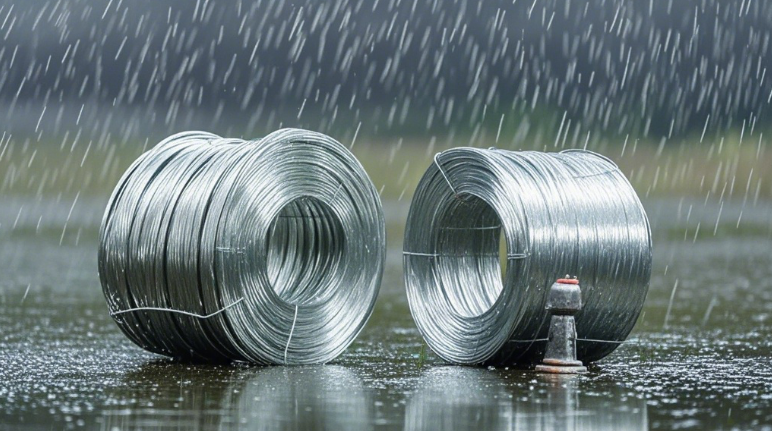
The waterproof performance of high zinc galvanized wire is more advantageous in the following specific environments:
Outdoor Exposure Environments
- Coastal Areas: In coastal regions, the air contains a high concentration of salt, which can accelerate the corrosion of metals. High zinc galvanized wire can form a thicker and more durable protective layer, effectively isolating the wire from the erosive effects of sea salt, thereby maintaining good waterproof and anticorrosive properties for a long time, and greatly extending its service life.
- Industrial Pollution Areas: In industrial areas, there are often a large number of pollutants such as sulfur dioxide, hydrogen sulfide, and acid rain in the air. These substances can cause serious corrosion to metal materials. The thick zinc layer of high zinc galvanized wire can act as a strong barrier to resist the erosion of these harmful substances, reducing the impact of industrial pollution on the wire and ensuring its waterproof performance.
High Humidity and Frequent Rainfall Environments
- Tropical Rainforest Areas: Tropical rainforest regions have high humidity and frequent rainfall throughout the year.
- Wetland and Swamp Areas: Wetlands and swamps have high water content and humidity in the air. High zinc galvanized wire used in such environments, such as for constructing fences or supporting structures, can maintain its integrity and waterproof function for a long time due to its excellent corrosion resistance, ensuring the durability and stability of the structures.
Underground and Buried Environments
- Soil with High Corrosivity: In some areas, the soil may have high acidity, alkalinity, or contain other corrosive substances. When the wire is buried in such soil, the thick zinc layer of high zinc galvanized wire can provide long-term protection, slowing down the corrosion rate of the wire caused by soil contact, and ensuring the normal operation and service life of underground facilities such as pipelines and cables protected by the wire.
- Underground Water Environments: In underground water-rich areas, the wire is constantly in contact with water, which puts high demands on its waterproof and anticorrosive properties. High zinc galvanized wire can effectively prevent water from penetrating into the wire and causing corrosion, making it suitable for use in underwater foundation reinforcement, groundwater monitoring well protection, and other projects.
Severe Weather and Harsh Climate Environments
- Areas Prone to Typhoons and Heavy Rainstorms: In areas frequently hit by typhoons and heavy rainstorms, the wire is often exposed to strong winds, heavy rain, and flying debris, which can cause physical damage to the wire surface. The thick zinc layer of high zinc galvanized wire can better withstand such mechanical damage and still maintain good waterproof performance after the surface is damaged, reducing the risk of rust and breakage of the wire.
- Cold and Freezing Environments: In cold regions, the wire may be affected by freeze-thaw cycles, which can cause cracks and damage to the protective layer of ordinary galvanized wire. High zinc galvanized wire has better resistance to cold and freezing, and its thick zinc layer can adapt to the volume changes of the wire during the freeze-thaw process, maintaining good integrity and waterproof performance, and is suitable for use in cold area construction, such as bridge anti-corrosion protection, snow fence construction, etc.

Additional Resourse
- Galvanized Mesh for Cage Heavy Duty
-
Galvanized Steel Wire for Agriculture Zinc Coating
-
Comparing Hot Dipped Galvanized Wire
-
Wire Hot Dipped Galvanized Wire Roll
Keywords:
More information


Contact
Phone/WhatsApp:
E-mail:
Address:
Huangtai Industrial Park, Xiaozhan Town,
Jinnan District, Tianjin, 300353, China
Follow us

Inquiry