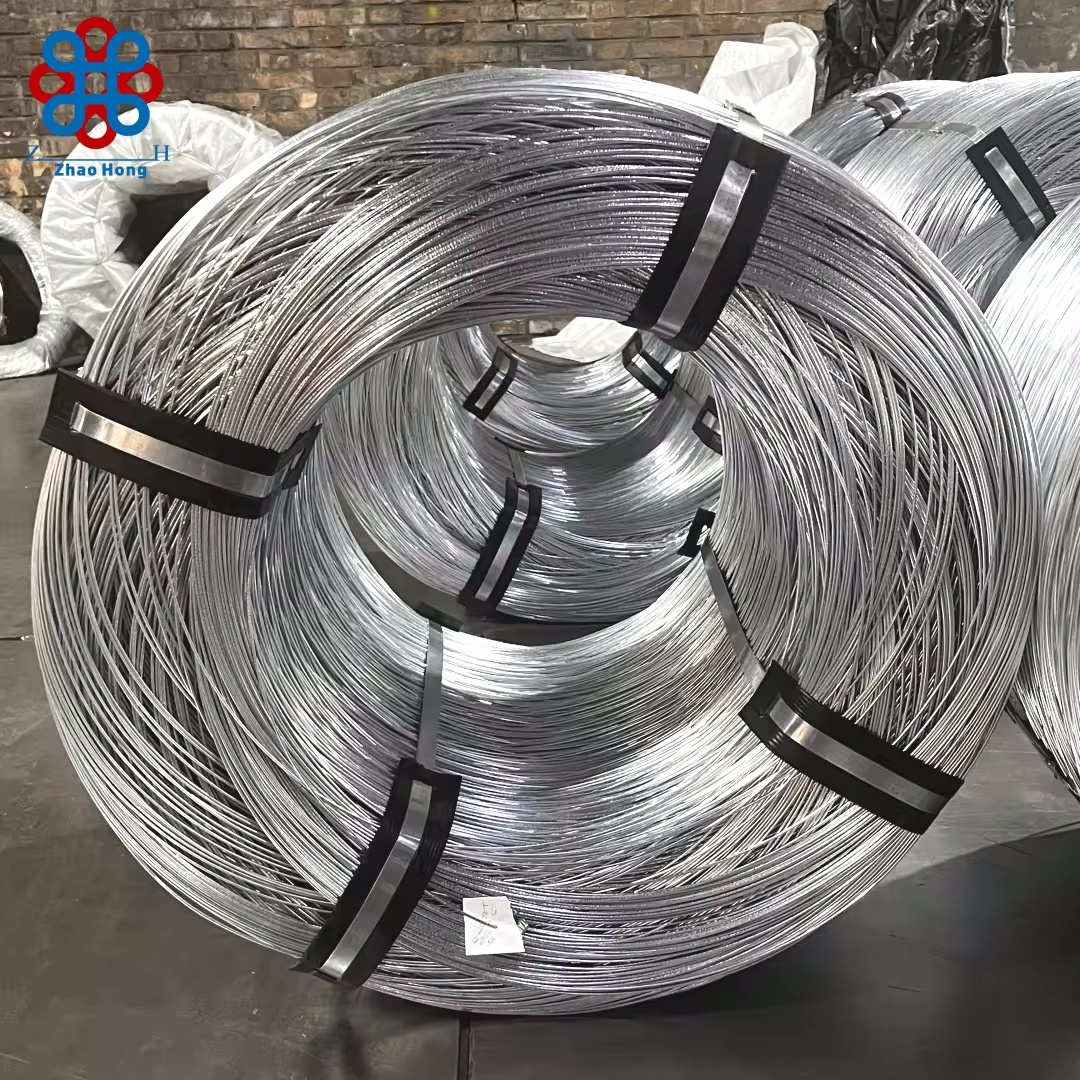
The following are common quality standards for galvanized wire:
The following are common quality standards for galvanized wire:
Galvanized layer requirements
Weight of zinc layer: There are specific requirements for the weight of the zinc layer according to different uses and specifications of galvanized wire. For example, for general galvanized wire, when the thickness of the plated part is 3 - 4 millimeters, the zinc adhesion amount should be less than 460 grams per meter, that is, the average thickness of the zinc layer should not be less than 65 micrometers; when the thickness of the plated part is greater than 4 millimeters, the zinc adhesion amount should not be less than 610 grams per meter, that is, the average thickness of the zinc layer should not be less than 86 micrometers.
Uniformity of zinc layer: The galvanized layer is required to be basically uniform. It can be tested by immersing it in copper sulfate solution for several times without exposing the iron substrate.
Adhesion of zinc layer: The zinc layer of the plated part should be firmly combined with the base metal, with sufficient adhesion strength. It should not fall off or bulge after the hammering test.
Appearance quality standards
The surface of the coating should be continuous and have a practical smoothness, without obvious defects such as missing plating, exposed iron, sagging, dripping or slag. Defects that are allowed include spots with a diameter of less than 0.5 millimeters for missing plating areas; for spots with a diameter of 0.5 - 1 millimeter for missing plating areas, there should be no more than 3 spots per square centimeter, and the total number of spots on the plated part should not exceed 10; sagging, dripping or slag with a height of no more than 1.5 millimeters in non-connected or non-contact areas; contact marks between the plated part and the hanger and operating tools, but without exposing the iron.
The surface should be free of burrs, rust, and obvious uneven color.
Dimension tolerance standards
The diameter of the galvanized wire should meet the requirements of the specified dimension tolerance. Different galvanized steel wires used in different industries have different allowable deviation standards for dimensions. For example, for hot-dip galvanized steel wire used in bridge cables, the allowable deviation of the nominal diameter is ±0.06 millimeters; for galvanized steel wire used for cotton baling, the allowable deviation of the nominal diameter of 2.5 millimeters is ±0.05 millimeters.
Mechanical property standards
Tensile strength: According to different materials and uses, galvanized wire has corresponding requirements for tensile strength. For example, the tensile strength of hot-dip galvanized steel wire is usually between 900 MPa and 2200 MPa.
Yield strength: It needs to meet the values specified in the corresponding standards to ensure that the galvanized wire will not undergo plastic deformation prematurely during use.
Elongation: Generally, galvanized wire is required to have a certain elongation to ensure that it has good toughness and plasticity when under force.
Torsion and bending performance standards
Torsion performance: It is used to detect the resistance to deformation of the steel wire during torsion. For example, the number of torsion times of hot-dip galvanized steel wire (with a diameter of 0.5 mm) is more than 20 times.
Bending performance: It examines the performance of the steel wire during the bending process and whether it is easy to break. For example, the hot-dip galvanized steel wire can be repeatedly bent more than 13 times.
Chemical composition standards
The main chemical components of the steel wire, such as carbon, silicon, and manganese, need to meet the requirements of the corresponding material standards to verify whether the material meets the regulations and ensure the basic properties of the galvanized wire.
The following are the quality differences between national standard galvanized wire and non-national standard galvanized wire:
Galvanized layer quality
National standard galvanized wire:
Zinc layer weight: Strictly complies with the regulations of national standards. For different specifications and applications of galvanized wire, there are clear and reasonable requirements for the weight of the zinc layer, which can ensure good anti-corrosion performance. For example, for certain specifications of national standard galvanized wire used for outdoor protection, the weight of the zinc layer is sufficient to resist the erosion of the external environment for a long time.
Zinc layer uniformity: There are strict test and inspection requirements to ensure that the zinc layer is basically uniform. For example, through tests such as immersing in copper sulfate solution for a specified number of times without exposing iron, all parts of the wire body can obtain relatively consistent anti-corrosion protection.
Zinc layer adhesion: It requires that the zinc layer is firmly combined with the base metal. Through inspection methods such as the hammering test, it is ensured that the zinc layer will not fall off or bulge easily during normal use and installation, maintaining a good protective effect.
Non-national standard galvanized wire:
Zinc layer weight: Often fails to meet the requirements of national standards. In order to save costs, the amount of zinc used may be reduced, resulting in a thinner zinc layer and greatly reduced anti-corrosion ability. In the same usage environment, it is more likely to rust and corrode.
Zinc layer uniformity: It is difficult to ensure uniformity. There may be areas with a too thin zinc layer or even missing plating. In actual use, these weak areas will be corroded first, which will then affect the service life of the entire galvanized wire.
Zinc layer adhesion: Due to problems such as process in some non-national standard products, the combination between the zinc layer and the base metal is not firm. When subjected to external impact, friction or simple bending, the zinc layer may fall off and cannot continuously and effectively play an anti-corrosion role.
Appearance quality
National standard galvanized wire:
The appearance requirements are detailed and standardized. The surface of the coating needs to be continuous and smooth, and there are clear limits on the allowed defects. For example, there are strict size and quantity requirements for missing plating areas, sagging, dripping or slag, etc. Overall, it looks relatively regular and beautiful without obvious flaws.
The surface is basically free of burrs, rust and serious uneven color, meeting the appearance requirements for normal use and installation.
Non-national standard galvanized wire:
The appearance may be rough, with many defects that do not meet the specifications. For example, the phenomenon of missing plating and sagging may exceed the allowable range of standards. There may also be obvious burrs on the surface that have not been cleaned up, which not only affects the aesthetics but also may cause damage to other parts in contact with it during the use process.
The uneven color situation may be more serious, and the uneven quality can be intuitively seen from the appearance, giving a feeling of lax process control.
Dimension tolerance
National standard galvanized wire:
There are precise tolerance range requirements for dimensions such as diameter. Different galvanized wires for various uses and specifications must strictly meet the corresponding standards, which ensures that they can be accurately matched in application scenarios such as assembly with matching parts. For example, in some mechanical processing and construction installation fields that require precise dimensions, it can well meet the requirements.
Non-national standard galvanized wire:
The control of dimension tolerance is relatively casual and often exceeds the reasonable deviation range. The diameter may be too large or too small. When in use, if the dimension deviation is too large, it may not be able to be smoothly installed into the corresponding slots, holes and other parts, or it may affect the stability of the overall structure due to the non-standard dimension during the use process.
Mechanical properties
National standard galvanized wire:
Tensile strength: According to the corresponding materials and uses, there are clear standard ranges, which can ensure that it will not break easily when subjected to the expected tensile force, ensuring the safety of use. For example, in some rope and cable structure applications that need to bear large tensile forces, reliable tensile strength is crucial.
Yield strength and elongation: There are also reasonable index requirements, so that the galvanized wire can maintain a certain strength while having appropriate toughness and plasticity during the force application process, and can adapt to the deformation requirements in different working conditions without failing prematurely.
Non-national standard galvanized wire:
Tensile strength: May not meet the standards and has a risk of breaking when facing normal tensile forces in actual use, unable to reliably bear the due load and is prone to causing safety accidents.
Yield strength and elongation: If they do not meet the requirements specified in the standards, the deformation situation after being subjected to force is difficult to predict. It may be too brittle and easy to break, or too soft to play the expected supporting, pulling and other roles.
Torsion and bending performance
National standard galvanized wire:
Torsion performance: There are corresponding standard requirements for the number of torsion times, etc., which can maintain good anti-deformation ability during the torsion operation and ensure that it will not be damaged during some scenarios where torsion installation and use are required.
Bending performance: There are specified indexes such as the number of repeated bending times, which ensure that it has sufficient toughness when bent for use and will not break easily. For example, when making some products that need to be bent and shaped, it can meet the process and use requirements.
Non-national standard galvanized wire:
Torsion performance: It is often poor and may break or have deformation that cannot be recovered after just a few torsions, limiting its application range.
Bending performance: It fails to meet the standard requirements and is easy to break during the bending process, and it is difficult to meet the application requirements where bending processing is needed or there will be bending force during use.
Chemical composition
National standard galvanized wire:
There are strict content limitations on the main chemical components such as carbon, silicon, and manganese in the steel wire, so as to ensure that the steel wire has the expected basic properties and the material quality is stable and reliable.
Non-national standard galvanized wire:
The chemical composition may not be standardized, and there may be situations where the content of impurities exceeds the standard or the content of key elements does not fall within a reasonable range. This will directly affect the overall performance of the galvanized wire, such as making its strength, toughness and other properties deviate from the normal standards, resulting in unstable quality and prone to various problems in use.
Additional Resources
galvanized wire fence,fence gates,wrought iron fence