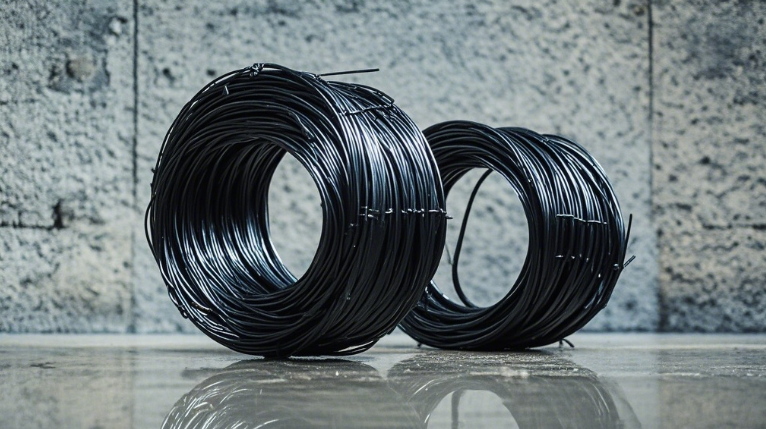
Keep it dry: Moisture is one of the key factors that cause rusting. Therefore, black annealed wire should be stored in a dry environment, such as in a warehouse or storage room indoors with good ventilation and low humidity. You can use dehumidifying equipment to control the environmental humidity and keep it in a relatively dry state all the time. Generally, it is best to control the relative air humidity below 60%.
Avoid contact with corrosive substances: Keep the wire away from strong acids, alkalis, and substances with high salt content that are corrosive. For example, don't place the wire near areas where chemical reagents or fertilizers are stored to prevent these corrosive substances from volatilizing and coming into contact with the wire, which would accelerate the rusting process.
Protective treatment
Painting: Apply anti-rust paint to the surface of the black annealed wire. The paint layer can form a barrier between the wire and the external environment, preventing oxygen, water vapor, etc. from contacting the wire and thus playing a role in anti-rust. When choosing paint, it should be determined according to the specific usage scenario. For example, for wire used outdoors, acrylic paint with good weather resistance can be selected; if it is wire used indoors, ordinary alkyd paint is usually sufficient. When painting, make sure that the paint layer is uniform, without omission, and reaches a certain thickness. Generally, it is recommended to apply 2 to 3 layers.
Oiling: Applying grease is also a commonly used anti-rust method. Vaseline, anti-rust oil, etc. can be used. Grease can isolate air and moisture and slow down the rusting speed of the wire. During operation, you can dip an appropriate amount of grease with a clean cloth and then evenly wipe it on the surface of the wire, or soak the wire in grease for a while and then take it out to dry, so that a thin grease protective film is formed on the surface of the wire. However, it should be noted that if the wire is used in some occasions with high cleanliness requirements later, such as for binding in food processing related uses, this oiling method is not very suitable.
Using anti-rust agents: There are special metal anti-rust agents on the market. The principle is to form a chemical protective film with anti-rust function on the surface of the wire. Spray or brush the anti-rust agent evenly on the wire according to the product instructions. Different anti-rust agents have different applicable environments and anti-rust durations. You should choose reasonably according to the actual situation. For example, some anti-rust agents are suitable for short-term anti-rust, while others can achieve a long anti-rust effect.
Packaging protection
Plastic film packaging: For black annealed wire that is not used temporarily or in small quantities, it can be wrapped with plastic film to isolate the wire from the outside air and water vapor. You can wrap multiple layers of plastic film to ensure that it is tightly wrapped, and regularly check whether the film is damaged. If it is damaged, replace the film and wrap it again in time.
Sealed bag packaging: Put the wire into a sealed bag, squeeze out the air and seal it well, which can also play a good isolation role. Some self-sealing plastic bags or special moisture-proof sealed bags can be used for this purpose, which is especially suitable for the preservation of small batches of wire, convenient and low cost.
Regular inspection and maintenance
Even if the above protective measures are taken, it is recommended to regularly inspect the stored black annealed wire to see if there are signs of rusting, such as whether there are rust spots on the surface or whether the color has changed. If slight rust is found in some parts, timely rust removal measures can be taken, such as gently grinding off the rust with sandpaper and then applying anti-rust paint, grease, etc. for further protection; if the rusting is relatively serious, consider whether this part of the wire can still be used to avoid affecting the subsequent use effect.
When the black annealed wire gets rusty, the following methods can be used to deal with it:
Physical rust removal methods
Sandpaper grinding:
Select sandpaper with an appropriate mesh number. For example, for the wire with light rust and a relatively flat surface, you can first use sandpaper with a finer mesh number (such as 200 - 400 mesh) to gently grind the rusty parts, wiping along the texture direction of the wire to gradually remove the rust layer until the original metallic luster of the wire is exposed. If the rust is more serious, you can first use sandpaper with a coarser mesh number (such as 80 - 160 mesh) to initially grind off the thicker rust layer, and then switch to fine-mesh sandpaper for fine grinding to make the surface smoother and reduce the impact on subsequent use or protection.
Wire brush cleaning:
For some long-strip black annealed wires with a large surface area and a lot of rust, it is more convenient to use a wire brush to remove rust. Hold the wire brush and repeatedly brush the rusty parts along the direction of the wire. Use the bristles of the wire brush to scrape off the rust layer. The hardness of the wire brush can effectively deal with stubborn rust, but during the operation, pay attention to controlling the strength to avoid scratching the wire surface too much due to excessive force, which will affect its strength and subsequent protection effect.
Mechanical grinding:
If there is a large amount of rusty black annealed wire that needs to be processed and high efficiency in rust removal is required, mechanical grinding equipment can be used for assistance, such as an electric angle grinder. Install an appropriate grinding disc (such as a grinding wheel disc or a wire wheel disc) for grinding. However, this method requires operators to have certain operating skills and safety protection awareness. They must operate in strict accordance with the equipment's operation instructions to prevent safety accidents caused by improper operation. At the same time, pay attention to avoiding excessive grinding that reduces the diameter and strength of the wire.
Chemical rust removal methods
Pickling for rust removal:
An appropriate amount of acidic solution can be prepared for rust removal. Commonly used acids include hydrochloric acid and sulfuric acid. For example, soak the wire in a dilute hydrochloric acid solution (generally, the concentration is controlled at about 5% - 15%) for a period of time (depending on the severity of the rust, it may range from a few minutes to dozens of minutes). The rust will react with hydrochloric acid and dissolve. Then take out the wire and rinse it thoroughly with clean water to ensure that the acid solution remaining on the wire surface is completely removed to prevent the acid solution from continuing to corrode the wire. When using sulfuric acid, it also needs to be diluted to an appropriate concentration (such as about 10%) before soaking for rust removal operations. However, special attention should be paid to the safety of chemical pickling. It should be carried out in a well-ventilated environment, and protective gloves, goggles and other protective articles should be worn to avoid contact between the acid solution and the skin and eyes.
Rust remover for rust removal:
There are special metal rust remover products on the market. Their components usually contain chemicals that can react with rust while minimizing the corrosion of the metal body itself. According to the instructions of the rust remover, spray or brush it evenly on the surface of the rusty black annealed wire, let the rust remover fully contact and react with the rust layer for a period of time, and then rinse it clean with clean water or wipe it clean with a clean cloth. This method is relatively convenient and safe, and it can have a good rust removal effect on some parts of the wire with complex shapes that are not easy to be completely removed by physical methods.
Follow-up protection measures
After removing the rust, in order to prevent the wire from rusting again, it is necessary to take effective protection measures in time, such as applying anti-rust paint to the wire, applying grease (such as vaseline, anti-rust oil, etc.) or using anti-rust agents. Refer to the relevant protection practices for avoiding rust on black annealed wire to fundamentally slow down the speed of the wire rusting again and extend its service life.
Additional Resources
Can I use a wire brush to remove rust from black annealed wire?
Are there any chemical rust removal agents suitable for black annealed wire?
How to prevent black annealed wire from rusting in the future?
Will using a wire brush damage the surface finish of the black annealed wire?