


Specifications and Applications of Galvanized Wire in Photovoltaic Power Generation
Release time:
2024-11-22
Specifications of Galvanized Wire in Photovoltaic Power Generation
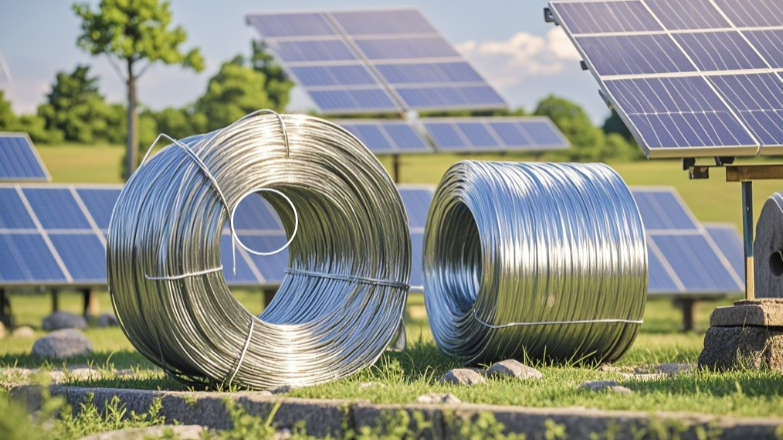
Specifications of Galvanized Wire in Photovoltaic Power Generation
Wire Diameter
- For photovoltaic binding wires, common diameters usually range from around 0.5 mm to 2 mm. For example, a wire diameter of about 0.8 mm is often used to bind the connecting wires and cables of photovoltaic modules neatly and firmly to prevent them from loosening or shifting due to external factors like wind.
- When it comes to the wire used for making fences around photovoltaic power stations, diameters typically fall within the range of 3 mm to 6 mm. For instance, a 4 mm diameter galvanized wire can be woven or welded into fence meshes for perimeter protection.
- In some cases of flexible photovoltaic support structures, the diameter of the galvanized wire used for load-bearing components can be relatively larger, such as 10 mm to 16 mm for high-strength galvanized steel strands used in certain large-scale photovoltaic projects.
Tensile Strength
- Galvanized wire for photovoltaic applications generally needs to have appropriate tensile strength. Binding wires usually require a tensile strength that can withstand the normal tension during installation and long-term use in the outdoor environment without breaking easily. It might typically have a tensile strength in the range of several hundred megapascals.
- For the wire used in structural supports like in flexible photovoltaic brackets, the tensile strength requirements are much higher. High-strength galvanized steel strands may have a tensile strength reaching over 1000 megapascals to bear the weight of photovoltaic modules and withstand various loads such as wind and snow loads.
Coating Quality
- The zinc coating on the galvanized wire plays a crucial role in corrosion resistance. The thickness of the zinc coating is usually specified. For common applications in photovoltaic power generation, the zinc coating thickness may be around 10 μm to 100 μm depending on the specific usage environment and durability requirements. A thicker coating is often preferred for long-term outdoor exposure in harsh environments to ensure better protection against rust and corrosion.
Length and Packaging
- The length of galvanized wire can vary greatly. Binding wires are usually sold in rolls, with lengths like 100 meters, 200 meters, or even longer per roll to meet the needs of different installation scales.
- For wire used in fencing or structural components, they may be supplied in longer lengths or cut according to specific project requirements. Packaging is usually designed to protect the wire from damage during transportation and storage, such as being wound on reels or packaged in bundles.
Applications of Galvanized Wire in Photovoltaic Power Generation
Binding Photovoltaic Components and Wires
- Galvanized binding wires are widely used to secure the connecting wires between photovoltaic modules. They ensure that the electrical connections are stable and that the wires are neatly arranged, which is important for the normal operation and maintenance of the photovoltaic power generation system. For example, in a rooftop photovoltaic installation, these binding wires help keep the cable layout in order.
- They are also used to fix the photovoltaic modules to the mounting racks. By properly binding the modules at designated positions, it prevents them from being displaced by wind or other external forces, maintaining the integrity of the overall installation.
Fencing for Photovoltaic Power Stations
- Galvanized wire is commonly woven or welded into fence meshes to form the perimeter fencing of photovoltaic power stations. This fencing serves multiple purposes. It can prevent unauthorized access by people or animals, protecting the valuable photovoltaic equipment and ensuring the safety of the power station. Different fence styles like chain-link fences or welded wire mesh fences made from galvanized wire can be chosen based on specific design and security requirements.
- The fencing also helps in demarcating the boundary of the power station area, making it clear where the installation is located in a larger landscape.
Structural Components in Photovoltaic Support Systems
- In flexible photovoltaic support structures, galvanized steel strands are used as key load-bearing elements. For example, in some large ground-mounted photovoltaic projects with complex terrain, flexible support systems using galvanized wire can better adapt to the uneven ground. The wire strands act as the main components to bear the weight of the photovoltaic modules and transfer the loads to the foundation or anchoring points, ensuring the stability and reliability of the entire photovoltaic installation.
- In some cases, galvanized wire is also used in the connection parts of traditional fixed photovoltaic support racks to enhance the structural strength and durability of the connection nodes, making the support system more robust and able to withstand long-term outdoor environmental impacts.

Additional Resources
- Photovoltaic | Hook Up Wire | PV0830 | Alpha Wire
- High Quality Staple Wire and Stitching Wire
- Grid-Connected Photovoltaic Power Station
- Screw Pile (Galvanized with Flange, HDG, Ground Screw
Keywords:
More information


Contact
Phone/WhatsApp:
E-mail:
Address:
Huangtai Industrial Park, Xiaozhan Town,
Jinnan District, Tianjin, 300353, China
Follow us

Inquiry