


Why Should Iron Wire be Galvanized?
Release time:
2024-11-20
Iron wire is galvanized for several reasons, mainly including the following aspects:
Iron wire is galvanized for several reasons, mainly including the following aspects:
Corrosion resistance
- Formation of a protective film: Zinc is a relatively reactive metal. In the air, zinc will react with oxygen, water, etc. first, and a dense zinc oxide film will form on its surface. This film can effectively block the further contact of corrosive substances such as moisture and oxygen in the outside world with the iron wire substrate, thereby slowing down the corrosion speed of the iron wire and greatly extending its service life. For example, for outdoor fence wires and clothes drying wires that are often exposed to wind, rain, and sunlight, galvanizing can better resist the corrosive effects brought by these natural environmental factors.
- Sacrificial anode protection: When the galvanized layer on the surface of the galvanized iron wire is damaged for some reasons, exposing the iron wire substrate to the corrosive environment, since the metal activity of zinc is stronger than that of iron, zinc will be preferentially corroded as an anode, continuously providing electrons to iron, thereby inhibiting the oxidation reaction of iron and playing a role in sacrificing itself to protect the iron wire substrate, further ensuring the overall corrosion resistance of the iron wire.
Aesthetics
After being galvanized, the iron wire has a bright and uniform color. Compared with untreated black iron wire, it looks more beautiful and tidy visually. It can be used in some occasions where there are certain requirements for appearance. For example, for decorative iron wire products, after galvanizing treatment, they look more ornamental and more refined.
Processing performance
- Improvement of lubricity: The galvanized layer on the surface of the iron wire is equivalent to a natural lubricant. During subsequent processing operations such as bending and winding of the iron wire, it can reduce the friction between the iron wire and processing equipment and molds, making the processing process smoother, helping to improve production efficiency and reducing the probability of damage to the surface of the iron wire during processing.
- Good adhesion for subsequent coating and other treatments: If the iron wire needs to undergo further surface treatment processes such as painting in the future, the galvanized layer can provide a good adhesion base, enabling the paint layer and so on to adhere better to the surface of the iron wire and ensuring the quality and effect of subsequent treatments.
Economy
Although the galvanizing treatment will increase a certain cost, considering that it can greatly extend the service life of the iron wire and reduce the frequency of replacing iron wire products in general, it is cost-effective in the long run. For example, in some scenarios where a large amount of iron wire is used, such as large building protective nets and industrial binding iron wires, galvanized iron wire can reduce the waste of human, material and other resources caused by frequent replacement due to corrosion and reduce the overall use cost.
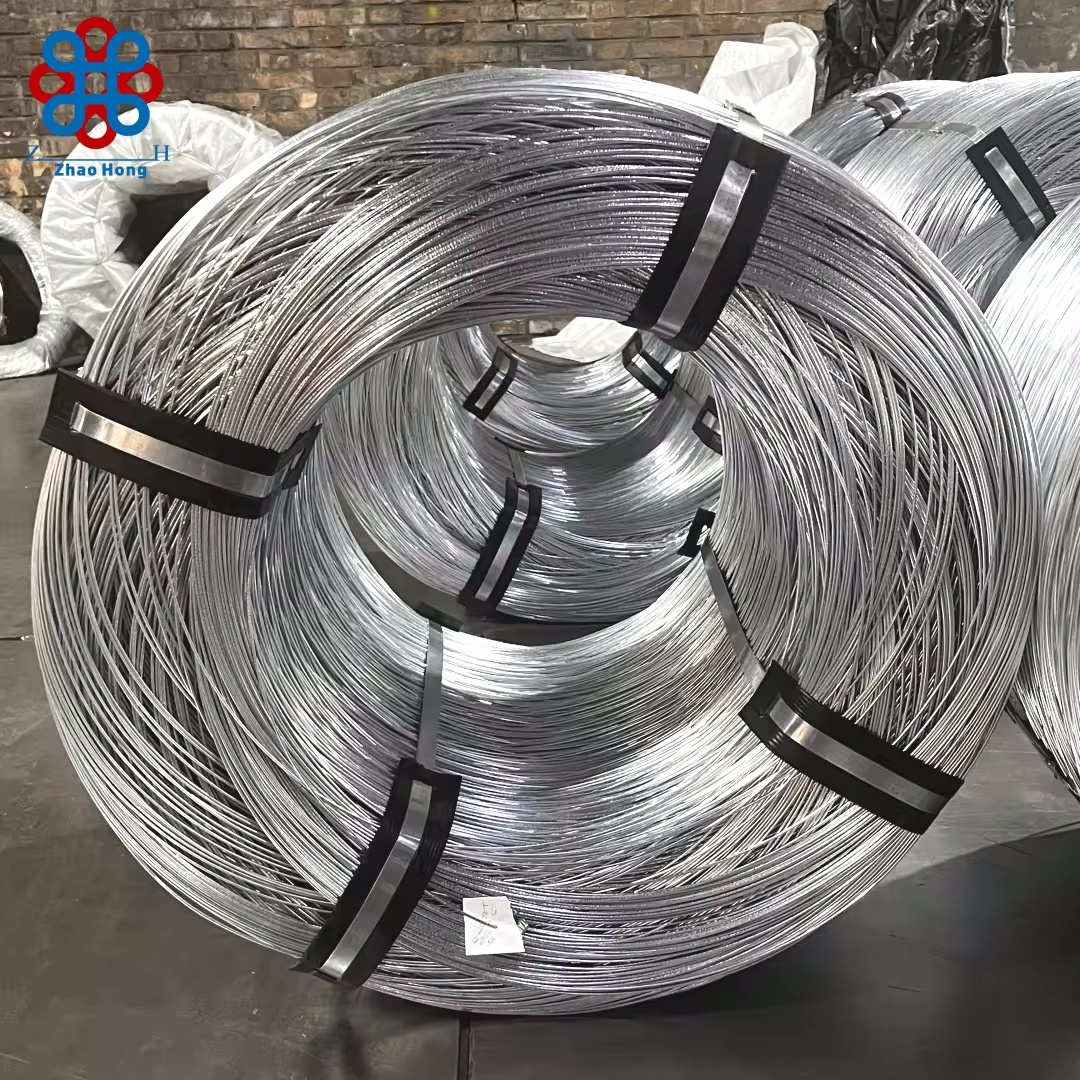
Iron wire is galvanized for several reasons, mainly including the following aspects:
Corrosion resistance
- Formation of a protective film: Zinc is a relatively reactive metal. In the air, zinc will react with oxygen, water, etc. first, and a dense zinc oxide film will form on its surface. This film can effectively block the further contact of corrosive substances such as moisture and oxygen in the outside world with the iron wire substrate, thereby slowing down the corrosion speed of the iron wire and greatly extending its service life. For example, for outdoor fence wires and clothes drying wires that are often exposed to wind, rain, and sunlight, galvanizing can better resist the corrosive effects brought by these natural environmental factors.
- Sacrificial anode protection: When the galvanized layer on the surface of the galvanized iron wire is damaged for some reasons, exposing the iron wire substrate to the corrosive environment, since the metal activity of zinc is stronger than that of iron, zinc will be preferentially corroded as an anode, continuously providing electrons to iron, thereby inhibiting the oxidation reaction of iron and playing a role in sacrificing itself to protect the iron wire substrate, further ensuring the overall corrosion resistance of the iron wire.
Aesthetics
After being galvanized, the iron wire has a bright and uniform color. Compared with untreated black iron wire, it looks more beautiful and tidy visually. It can be used in some occasions where there are certain requirements for appearance. For example, for decorative iron wire products, after galvanizing treatment, they look more ornamental and more refined.
Processing performance
- Improvement of lubricity: The galvanized layer on the surface of the iron wire is equivalent to a natural lubricant. During subsequent processing operations such as bending and winding of the iron wire, it can reduce the friction between the iron wire and processing equipment and molds, making the processing process smoother, helping to improve production efficiency and reducing the probability of damage to the surface of the iron wire during processing.
- Good adhesion for subsequent coating and other treatments: If the iron wire needs to undergo further surface treatment processes such as painting in the future, the galvanized layer can provide a good adhesion base, enabling the paint layer and so on to adhere better to the surface of the iron wire and ensuring the quality and effect of subsequent treatments.
Economy
Although the galvanizing treatment will increase a certain cost, considering that it can greatly extend the service life of the iron wire and reduce the frequency of replacing iron wire products in general, it is cost-effective in the long run. For example, in some scenarios where a large amount of iron wire is used, such as large building protective nets and industrial binding iron wires, galvanized iron wire can reduce the waste of human, material and other resources caused by frequent replacement due to corrosion and reduce the overall use cost.
What are the ways to determine whether the galvanized layer of the wire is damaged?
The following are some ways to determine whether the galvanized layer of wire is damaged:
Visual inspection method
- Direct visual inspection:
- Carefully examine the surface of the wire with the naked eye. If there are obvious black spots, yellow spots, rust spots or other spots or patches with a color different from the original bright color of the galvanized layer, it is likely that the galvanized layer has been damaged and the iron substrate has started to rust. For example, if reddish-brown rust is seen on a local part of the wire, it can be basically determined that the galvanized layer at this place has been damaged and the iron has reacted with the external environment.
- Check whether there are scratch marks or damage marks caused by bumps on the surface of the wire. Sometimes, during the handling and use of the wire, it may be scratched by sharp objects, etc. By carefully observing whether there are such linear or irregular damage marks on the surface to judge.
- Inspection with magnifying glass or microscope:
For some subtle changes that are difficult to distinguish clearly with the naked eye, you can use a magnifying glass (generally with a magnification of several times to dozens of times) or an optical microscope (with a higher magnification) to observe the surface of the wire. If you see that the galvanized layer is peeling off, flaking, or there are tiny holes or cracks, it indicates that the galvanized layer has been damaged. Even if it is only a small area of such phenomena, it also means that the protective effect at this place has been affected.
Chemical testing method
- Copper sulfate solution immersion test:
- Prepare an appropriate amount of copper sulfate solution (usually configured at a suitable concentration according to relevant standards), and immerse the wire sample to be tested in the copper sulfate solution for a certain period of time (the specific duration is based on the corresponding testing specifications). If the galvanized layer on the surface of the wire is intact, because the metal activity of zinc is stronger than that of copper, zinc will displace copper in the copper sulfate solution, and a red copper layer will gradually adhere to the surface of the wire; however, if the galvanized layer is damaged, iron will preferentially react with the copper sulfate solution, and loose, darker copper deposits may appear at the damaged parts, and at the same time, other phenomena may occur in the solution (such as color changes due to the entry of iron ions into the solution). Judge whether the galvanized layer is damaged by observing these reaction phenomena.
- However, after this method is operated, there will be chemical reaction residues on the surface of the wire. If the wire needs to be used for other purposes, it may need to be cleaned accordingly.
- Hydrochloric acid reaction detection:
Carefully put the wire sample into dilute hydrochloric acid solution (it is necessary to control the appropriate concentration to avoid excessive reaction and danger), and observe the reaction phenomenon. If the galvanized layer is intact, zinc will react with hydrochloric acid at the beginning, producing hydrogen gas, and you can see that bubbles are continuously and steadily emerging; when it is found that the rate of bubble generation suddenly accelerates, becomes violent, and at the same time, the color of the solution may change (due to the entry of iron ions into the solution), etc., it can be basically judged that after the galvanized layer is damaged, iron begins to participate in the reaction, and thus it can be determined that the galvanized layer has been damaged. However, using hydrochloric acid for detection is somewhat dangerous and should be operated in a well-ventilated environment with proper protective measures.
Physical testing method
- Conductivity detection:
Use professional conductivity testing instruments (such as micro-ohmmeters) to detect the conductivity of the wire. Under normal circumstances, the conductivity of galvanized wire will be different from that of pure iron due to the existence of the galvanized layer. When the galvanized layer is damaged, the detected conductivity parameters will change (usually closer to the conductivity value of pure iron). By comparing the conductivity data of standard, intact galvanized wire and the preset qualified range, etc., judge whether the galvanized layer of the tested wire is damaged. However, this method requires relatively accurate testing equipment and corresponding reference standard data for comparison. - Coating thickness detection (indirect judgment):
Use a coating thickness gauge (common ones include magnetic thickness gauges, eddy current thickness gauges, etc., and choose the appropriate type according to the material of the wire, etc.) to measure the thickness of the galvanized layer of the wire. If the thickness of the galvanized layer detected at different parts of the wire is obviously uneven, especially if the thickness at some parts is significantly lower than the normal standard value or even the thickness of the galvanized layer cannot be detected, then it is very likely that the galvanized layer is damaged at these parts, such as local shedding or serious wear leading to abnormal changes in thickness, so as to indirectly judge the integrity of the galvanized layer.

Additional Resources
- Galvanized Iron Wire /Galvanized Binding Wire
-
Galvanized Iron Wire/ Gi. I. Wire/ Binding Wire
-
Galvanized Steel - an overview | ScienceDirect Topics
-
What is Galvanized Iron Wire Cold Drawm Steel Wire
Keywords:
More information


Contact
Phone/WhatsApp:
E-mail:
Address:
Huangtai Industrial Park, Xiaozhan Town,
Jinnan District, Tianjin, 300353, China
Follow us

Inquiry