


Specifications and Application Details of the Barbed Wire
Release time:
2024-11-18
Low Carbon Steel Wire: Commonly used due to its good balance of strength and flexibility, providing the necessary robustness for fencing purposes.
Specifications of Barbed Wire
- Material
- Low Carbon Steel Wire: Commonly used due to its good balance of strength and flexibility, providing the necessary robustness for fencing purposes.
- Stainless Steel Wire: Offers excellent corrosion resistance, making it ideal for applications in harsh environments like coastal areas, industrial zones with chemical exposure, or anywhere where long-term durability against rust is crucial.
- Galvanized Steel Wire: Coated with zinc through either electro-galvanizing or hot-dip galvanizing processes. Hot-dip galvanized wire has better corrosion protection and is often preferred for outdoor installations that need to withstand the elements over an extended period.
- Wire Diameter
Typical wire diameters range from around 1.5mm to 3.0mm. For example, a 1.8mm diameter wire is often used in moderately demanding applications, while a 2.5mm or thicker wire might be chosen for high-security or areas where greater strength is required to resist forces like animal impact or attempts at forced entry. - Barb Spacing
Barb spacing can vary widely. Common intervals include 3 inches (approximately 76mm), 4 inches (about 102mm), 5 inches (around 127mm), and 6 inches (nearly 152mm). Closer barb spacing, such as 3 inches, results in a denser arrangement of barbs, enhancing the deterrent and protective effect but also increasing manufacturing complexity and cost. - Barb Length
Barb lengths usually fall within the range of 10mm to 25mm. Longer barbs, say 20mm or 25mm, pose a more significant deterrent and are better at preventing climbing or intrusion compared to shorter ones. - Twisting Method
- Single Twist: Involves twisting two wires together to form the base wire strand, and then attaching the barbs to it. This creates a simple yet effective structure for basic fencing needs.
- Double Twist: Two strands of wire are twisted together first, and then the barbs are added and further twisted to secure them in place. It offers increased strength and stability compared to the single twist method.
Application Details of Barbed Wire
- Agricultural Applications
- Farm Fencing: Used to enclose livestock areas to keep animals like cows, sheep, and horses within a designated area and prevent them from straying. It also helps keep wild animals out of cultivated fields to protect crops.
- Orchard Protection: Installed around orchards to safeguard fruit trees from being damaged by animals that might try to access the fruits or damage the trees themselves.
- Industrial and Commercial Applications
- Factory Perimeter Security: Placed on the perimeter fences of factories, warehouses, and industrial compounds to deter unauthorized entry and protect valuable equipment, materials, and products from theft or vandalism.
- Construction Site Security: Temporarily installed around construction sites to keep out trespassers and safeguard construction materials and machinery during the building process.
- Residential and Institutional Applications
- Residential Security: Some homeowners may choose to install barbed wire on top of boundary walls or fences in areas with higher crime rates to enhance home security and deter burglars from attempting to climb over.
- Institutional Protection: Prisons, military bases, and other high-security institutions use barbed wire as an additional layer of security on their perimeter fences to prevent escapes and unauthorized access.
- Road and Infrastructure Applications
- Highway Median Barriers: Sometimes used in the median of highways to separate opposing traffic lanes and prevent vehicles from crossing over into oncoming traffic in case of accidents or erratic driving.
- Railway Protection: Installed along railway tracks to keep people and animals away from the tracks, reducing the risk of accidents and ensuring the smooth operation of trains.
It's important to note that when using barbed wire, appropriate safety signs should be installed to warn people of its presence, and local regulations regarding its installation and use must be followed to ensure it is done legally and safely.
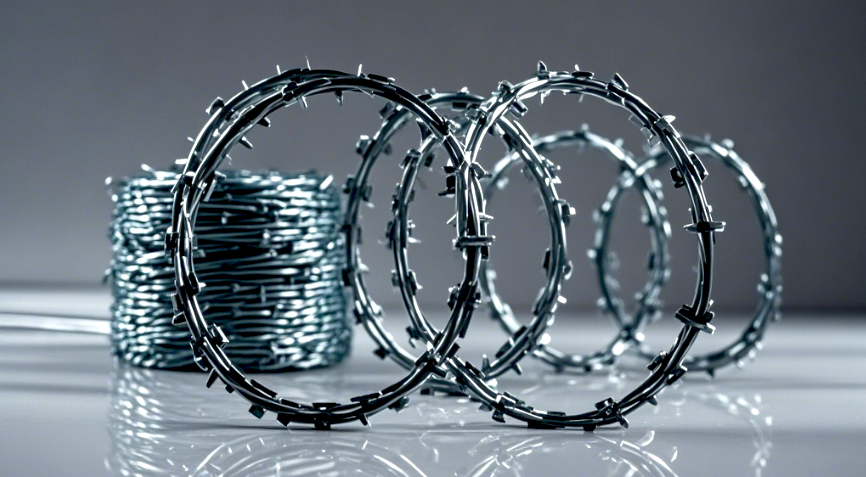
Here are the common installation methods for barbed wire:
Preparation before Installation
-
Gather Materials and Tools: You will need the barbed wire itself, suitable posts (such as wooden posts, metal posts or concrete posts depending on the application), wire cutters, fencing pliers, staples (if attaching to wooden posts), bolts or clips (for metal posts), and possibly a tensioning device.
-
Plan the Layout: Determine the perimeter or area where the barbed wire will be installed. Mark the positions of the posts at appropriate intervals. The post spacing usually ranges from 2 to 5 meters depending on the type of terrain, the height of the fence, and the intended use. For example, in relatively flat areas with normal security requirements, a spacing of around 3 meters might be sufficient.
Installation Steps
-
Install the Posts
-
Dig Post Holes: Dig holes at the marked positions. The depth of the holes should be about one-third to half of the length of the post for proper stability. For example, if you have a 2-meter post, the hole depth could be around 0.6 to 1 meter.
-
Set the Posts: Place the posts in the holes and make sure they are vertical. Use concrete (for concrete posts) or backfill with soil and tamp it firmly around the posts (for wooden or metal posts) to secure them in place. Let the concrete set if applicable.
-
-
Attach the Barbed Wire
-
Starting the Installation: Begin at one end of the fence line. Unroll the barbed wire and secure one end of it to the first post. If it's a wooden post, you can use fencing staples driven into the post with a hammer or staple gun. For metal posts, use clips or bolts designed for this purpose.
-
Stretching the Wire: Slowly unroll the barbed wire along the line of posts. Use a tensioning device (such as a wire stretcher) to pull the wire taut. This helps ensure the fence is firm and effective. Tension should be applied evenly to avoid over-stretching or creating slack areas. The amount of tension depends on the wire diameter and the overall length of the fence section but generally should be enough to keep the wire from sagging significantly.
-
Securing the Wire to Intermediate Posts: As you stretch the wire along, attach it to each intermediate post in the same way as you did with the first post. Make sure the wire is properly seated and secured at each post to maintain its position and tension.
-
Connecting Multiple Rolls: If you need to use multiple rolls of barbed wire to cover a long fence line, carefully splice the ends together. This can be done by twisting the wires together or using specialized wire connectors to create a seamless connection.
-
Finishing the Installation: Once you reach the last post at the other end of the fence line, secure the wire to that post as well. Trim any excess wire neatly.
-
Safety Precautions during Installation
-
Wear Protective Gear: Always wear thick gloves to protect your hands from the barbs. Safety glasses are also recommended to prevent any flying debris or wire fragments from getting into your eyes when cutting or working with the wire.
-
Handle Tools Properly: Use wire cutters and fencing pliers correctly to avoid accidents. Keep tools in good working condition to ensure efficient and safe installation.
-
Be Aware of Surroundings: Make sure the installation area is clear of people and obstacles to prevent tripping hazards or accidental injuries while stretching and securing the wire.
Remember to follow local regulations and obtain any necessary permits before installing barbed wire, especially in residential or public areas.

Additional Resources
- Barbwire - definition of barbwire by The Free Dictionary
- Barbed Wire Fencing Systems for Beginners!
- Wire Netting Products | Barbed Wires | Chain Link Fence
- Installation of barbed wire and ladders, changing
Keywords:
More information


Contact
Phone/WhatsApp:
E-mail:
Address:
Huangtai Industrial Park, Xiaozhan Town,
Jinnan District, Tianjin, 300353, China
Follow us

Inquiry