


Best Black Wire Detailed Specification Parameters List
Release time:
2024-11-15
Here is a detailed list of the specification parameters for black wire:
Here is a detailed list of the specification parameters for black wire:
Wire Diameter
- Black wire is available in a variety of wire diameters, commonly expressed in millimeters. For example:
- 0.5mm wire is often used for some delicate handicrafts or light-duty binding tasks where a thin wire is required.
- 1.0mm wire has relatively more strength and is suitable for applications like making simple wire mesh or for some basic binding in light industrial settings.
- 1.6mm wire can be used for tasks such as binding building materials like reinforcing bars in smaller construction projects or for making more sturdy wire structures in handicrafts.
- 2.0mm wire is frequently applied in fencing work for agricultural fields or in some industrial equipment binding scenarios that need better durability.
- 3.0mm wire has higher strength and is often chosen for larger-scale construction, like binding the main structure of bridges or large building frameworks.
Tensile Strength
- The tensile strength of black wire varies depending on its material and manufacturing process. Generally:
- Low-carbon steel black wire usually has a tensile strength in the range of 300 - 500 MPa. This allows it to withstand certain pulling forces without breaking easily during normal use in applications like binding and fixing.
- For some high-quality black wire made with improved production techniques or special alloying elements added to enhance its performance, the tensile strength can reach up to around 600 MPa or more, enabling it to be used in more demanding industrial environments where higher strength is needed.
Material Grade
- Most black wire is made from low-carbon steel materials, mainly including grades like Q195 and Q235:
- Q195 black wire has relatively lower carbon content, which makes it have good plasticity and easy processing properties. It is widely used in general binding and simple structural making in daily life and some small-scale construction or handicraft production.
- Q235 black wire contains a bit more carbon compared to Q195. It has higher strength and better weldability, so it is often used in construction projects that require higher structural strength and in some industrial manufacturing where welding may be involved in the subsequent processing.
Surface Condition
- The surface of black wire is usually in its natural state after being drawn or processed from raw materials, without additional coatings like galvanizing:
- It has a dark, matte appearance characteristic of the original steel surface. This may make it more prone to rusting over time if not properly protected in humid or corrosive environments.
- However, its uncoated surface also provides good adhesion for subsequent surface treatment if needed, such as painting or applying anti-rust agents to improve its corrosion resistance according to specific usage requirements.
Packaging Specifications
- Black wire is typically packaged in rolls or bundles:
- Rolls are common for thinner wire diameters. The weight of each roll can vary, usually ranging from a few kilograms to dozens of kilograms. For example, a roll of 0.5mm black wire might weigh around 5 - 10 kilograms, while a roll of 1.6mm wire could weigh around 20 - 30 kilograms.
- Bundles are often used for thicker wire diameters. The weight of each bundle can be much larger, sometimes reaching hundreds of kilograms. For instance, a bundle of 3.0mm black wire might weigh around 100 - 500 kilograms. Packaging materials usually include plastic film wraps to prevent tangling and outer packaging like woven bags or kraft paper bags for protection and easy handling.
Elongation Rate
- The elongation rate of black wire reflects its ability to stretch before breaking under tension. Generally:
- For common low-carbon steel black wire, the elongation rate is usually around 20% - 30%. This property ensures that it can have a certain degree of flexibility during use, such as when being bent or pulled during binding operations without breaking too easily.
- In some special applications where higher flexibility is required, manufacturers may adjust the production process to increase the elongation rate to a higher level, say around 35% - 40%.
These are the main detailed specification parameters for black wire, and different applications will choose the appropriate type of black wire according to these parameters.
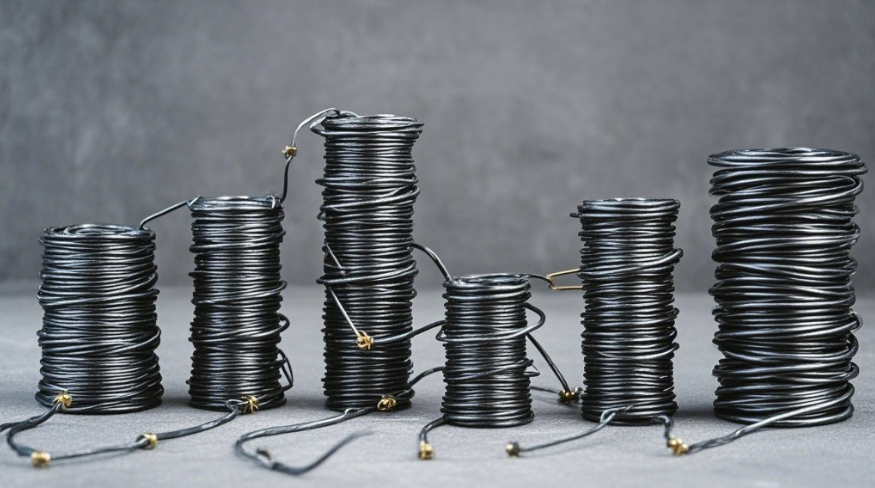
Black wire has several common uses, including:
- In the construction industry:
- Binding reinforcement bars: It is widely used for tying and fastening steel bars in construction projects such as buildings, bridges, and infrastructure. This helps to hold the reinforcement bars in place, ensuring the structural integrity of the concrete structure134.
- Building temporary structures: Black wire can be used to assemble and secure temporary structures on construction sites, such as scaffolding, formwork, and shoring.
- Making wire mesh: It is used to create wire mesh for reinforcement in concrete slabs, walls, and other construction elements. The wire mesh provides additional strength and stability to the structure.
- In agriculture:
- Fencing: Black wire is used to construct fences around farms, orchards, and fields to keep livestock in and prevent the intrusion of wild animals. It can be used to make wire fences of various heights and designs to suit different agricultural needs5.
- Supporting plants: In horticulture, black wire can be used to support climbing plants such as tomatoes, cucumbers, and beans. It provides a structure for the plants to grow along, improving their growth and yield.
- Baling hay and straw: In some agricultural operations, black wire is used for baling hay and straw to make them easier to handle, store, and transport.
- In the industrial sector:
- Binding and fastening: In factories and workshops, black wire is used for binding and fastening various items, such as pipes, cables, and machinery parts. It helps to keep things in place during transportation, installation, and storage.
- Making springs and wire products: Black wire can be processed into springs, wire forms, and other wire products for use in industrial machinery, automotive parts, and household appliances.
- Welding and soldering: It is used as a welding wire or soldering wire in some welding and soldering processes, providing a connection between metal parts.
- In handicrafts and DIY projects:
- Art and sculpture: Black wire can be bent and shaped to create art pieces, sculptures, and decorative items. Its malleability allows artists and DIY enthusiasts to create unique and intricate designs5.
- Jewelry making: It is used in making simple jewelry items such as wire-wrapped rings, bracelets, and necklaces. The wire can be combined with beads, stones, and other materials to create beautiful and personalized jewelry.
- In packaging:
- Bundling and tying packages: Black wire is used to bundle and tie packages, especially for items that are difficult to package using other means. It provides a secure and reliable way to keep the packages together during transportation and storage.
- Sealing bags and sacks: It can be used to seal bags and sacks, such as those used for packaging grains, fertilizers, and other bulk materials. The wire is twisted or tied to close the opening of the bag, preventing the contents from spilling out.

Additional Resources
-
Black Annealed Binding Wire, Twist Wire
-
Electrical Cable Types, Sizes, and Installation
-
Guide to Understanding the Wire Color Code
-
House Electrical Wiring: What You Need to Know
Keywords:
More information


Contact
Phone/WhatsApp:
E-mail:
Address:
Huangtai Industrial Park, Xiaozhan Town,
Jinnan District, Tianjin, 300353, China
Follow us

Inquiry