


Best Specification and Soft Hard Degree Analysis of Black Annealed Wire
Release time:
2024-11-01
Best Specification of Black Annealed Wire
-
Diameter Specifications:
-
Black annealed wire comes in a range of diameters to suit various applications. Commonly, the diameter can vary from as fine as 0.1 mm (used in delicate crafts or for intricate binding work) to around 4.5 mm (suitable for heavier-duty tasks like binding large construction rebars). For example, in jewelry making, a diameter of around 0.2 - 0.3 mm might be preferred for its flexibility and ease of shaping. In contrast, for bundling heavy industrial equipment, a diameter of 2 - 4 mm could be more appropriate to ensure sufficient strength.
-
The choice of diameter depends on the specific task requirements, such as the weight and size of the objects to be bound or the level of detail needed in a crafted item.
-
-
Length Specifications:
-
The length of black annealed wire is often customizable. There are two main options: fixed-length and non-fixed-length. Fixed lengths like 1 meter, 2 meters, etc., are convenient for standard applications where a specific length is regularly needed. Non-fixed lengths, on the other hand, allow for greater flexibility as the wire can be cut to the exact length required for a particular project. This is especially useful in situations where the usage length varies from one task to another.
-
-
Packaging Specifications:
-
Packaging plays a crucial role in protecting the black annealed wire during transportation and storage. The inner packaging is typically a plastic film that helps prevent rust by keeping the air and moisture away from the wire surface. The outer packaging usually consists of woven bags or hemp bags for added protection and ease of handling. A common packaging format might have a weight capacity of 10 - 25 kg per roll, but this can be adjusted according to customer requirements.
-
Soft and Hard Degree Analysis of Black Annealed Wire
-
Effect of Annealing Process on Softness and Hardness:
-
The annealing process is key to determining the softness and hardness of black annealed wire. During annealing, the wire is heated to a specific temperature and then cooled at an appropriate rate. This process alters the internal crystal structure of the wire, eliminating residual stresses. As a result, the wire becomes softer and more pliable compared to unannealed wire. For example, if regular black wire has a relatively high hardness and is difficult to bend without breaking, after annealing, it can be bent easily into various shapes.
-
The extent of softening can be controlled during the annealing process. A more thorough annealing treatment will lead to a softer wire, which is ideal for applications requiring high flexibility like crafting. A less intensive annealing treatment may leave the wire with some residual hardness, which could be suitable for tasks where a bit of rigidity is still needed, such as in some types of light construction work.
-
-
Influence of Material on Softness and Hardness:
-
The material used to make black annealed wire, typically Q195 wire rod, has an impact on its softness and hardness. Q195 has a certain level of plasticity on its own, and after annealing, its softness is further enhanced. However, if the material composition changes, for example, if the carbon content varies, it can affect the softening effect during annealing. A higher carbon content might result in a relatively harder wire after annealing compared to a lower carbon content material.
-
Additionally, the purity of the material also matters. A higher purity material with fewer impurities will generally produce a wire with more consistent softness and hardness properties, making it more reliable for various applications.
-
-
Practical Performance of Softness and Hardness:
-
Black annealed wire in its softened state is highly flexible and can be easily bent and shaped without breaking. This makes it suitable for a wide range of applications such as binding, weaving, and creating detailed shapes in handicrafts or industrial packaging. For example, in a handicraft project, it can be bent into complex geometric shapes to form an attractive design. In industrial packaging, it can be used to tightly bind packages without causing damage to the contents.
-
The wire also has good resilience. After being bent or stretched to a certain extent, it can return to its original shape, which is beneficial for applications where repeated use or shape changes are involved, such as in some types of reusable packaging or in the creation of adjustable wire structures.
-
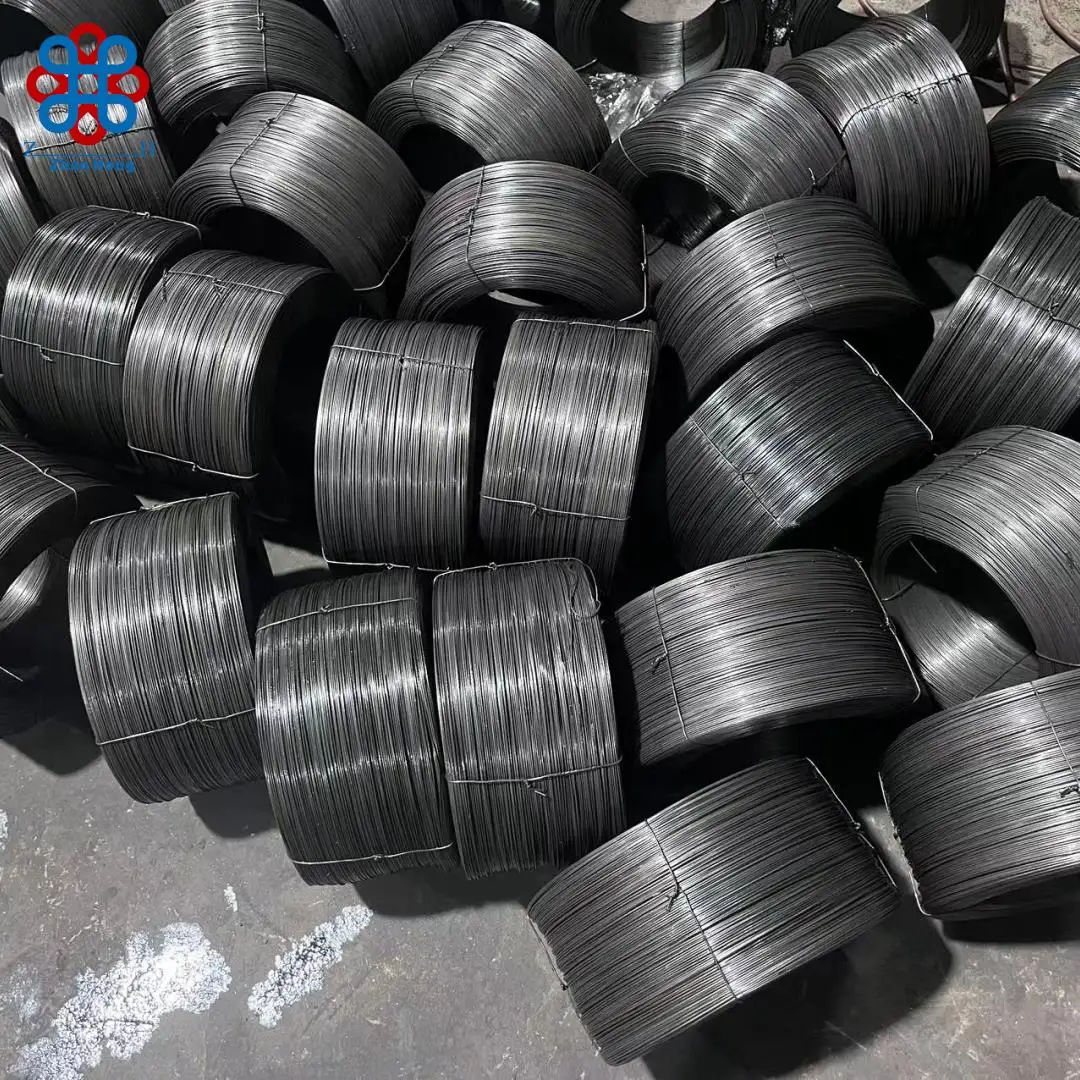
When choosing the right black annealing wire for your specific needs, you can consider the following aspects:
1. Purpose of Use
- For Construction:
- If you are using it in the construction industry, such as for binding rebars, you'll need a relatively thick and strong black annealing wire. Usually, wires with a diameter in the range of 1.5 mm to 4.0 mm are commonly used. They can provide sufficient tensile strength to ensure the stability of the building structure during the construction process.
- For example, in large-scale building projects, thicker wires are essential to withstand the forces exerted on the rebars when concrete is poured.
- For Handicrafts:
- When it comes to making handicrafts like jewelry, models, or decorative items, you'll want a thinner and more flexible black annealing wire. Wires with a diameter between 0.1 mm and 1.0 mm are often preferred. These thinner wires allow for intricate bending and shaping to create detailed and delicate designs.
- For instance, in jewelry making, a very fine wire like 0.2 - 0.3 mm can be easily twisted and formed into unique patterns.
- For Industrial Packaging:
- In industrial packaging applications, where the wire is used to bind packages or secure goods, a medium-sized diameter wire is usually a good choice. Wires with a diameter of around 1.0 mm to 2.0 mm are commonly used. They offer a balance between strength and flexibility, enabling them to hold packages firmly without being too difficult to handle.
- For example, when packing boxes of products in a factory, this size of wire can be used to tie them together neatly and securely.
2. Material Quality
- Base Material:
- The most common base material for black annealing wire is Q195 wire rod. It has a suitable level of plasticity and toughness. However, you can also look for other materials if you have specific requirements. For example, if you need higher strength, you might consider wires made from materials with a different alloy composition.
- Some specialty wires might be made from materials that offer enhanced corrosion resistance, which could be beneficial if the wire will be exposed to moisture or other corrosive environments.
- Impurity Content:
- Check the impurity content of the wire. High-quality black annealing wire should have low impurity levels. Impurities can affect the wire's performance, such as its strength, flexibility, and resistance to rust.
- You can usually tell by observing the wire's surface. If it has a smooth and uniform appearance, it's likely to have fewer impurities. If there are visible blemishes or unevenness, it could indicate higher impurity content.
3. Wire Diameter
- The diameter of black annealing wire varies widely, typically ranging from about 0.1 mm to 4.5 mm.
- Consider the specific requirements of your task. If you need to bear a large amount of tensile force, such as in heavy-duty construction work, choose a thicker wire diameter. On the other hand, if you are working on something that requires finesse and lightness, like delicate handicrafts, a thinner wire diameter will be more appropriate.
- For example, if you're making a large wire sculpture that needs to stand on its own, you might use a 2 - 3 mm diameter wire for the main structure to provide enough support. But for adding detailed embellishments to the sculpture, you could switch to a 0.2 - 0.3 mm diameter wire.
4. Softness and Hardness
- Annealing Degree:
- The annealing process affects the softness and hardness of the wire. If you need a wire that is easy to bend and shape, look for one that has been thoroughly annealed. A well-annealed wire will be softer and more pliable.
- However, if you require some degree of rigidity in the wire, for example, in certain light construction tasks where it needs to hold a shape without being too flexible, you can choose a wire that has been annealed to a lesser extent or has undergone a special treatment to retain some hardness.
- Testing by Hand:
- Before purchasing, you can test the softness and hardness of the wire by hand. Simply take a sample of the wire and try to bend it. If it bends easily without snapping, it's likely to be suitable for applications that require flexibility. If it's a bit more resistant to bending but still manageable, it might be better for tasks where some hardness is needed.
5. Packaging
- Inner Packaging:
- The inner packaging of black annealing wire is usually a plastic film. This helps prevent rust by keeping the wire away from moisture and air. Make sure the plastic film is intact and seals the wire properly.
- If the plastic film is damaged, the wire may be exposed to the elements and start to rust, which can affect its quality and performance.
- Outer Packaging:
- The outer packaging is typically a woven bag or a hemp bag. It provides protection during transportation and storage. Consider the durability of the outer packaging, especially if you need to store the wire for a long time or transport it over long distances.
- A sturdy outer packaging can prevent the wire from getting damaged during handling and ensure its integrity when it reaches its destination.
6. Supplier Reputation
- Production Qualifications:
- Choose a supplier with proper production qualifications. Look for suppliers who have advanced production equipment and follow standardized production processes. This ensures that the black annealing wire you receive meets quality standards.
- You can ask the supplier to provide relevant certificates or visit their production facilities if possible to assess their production capabilities.
- Customer Reviews:
- Check customer reviews and feedback about the supplier. You can find these on online platforms, industry forums, or by asking other users who have experience with the supplier. Good customer reviews indicate that the supplier provides quality products, reliable delivery times, and satisfactory after-sales service.
- If a supplier has a lot of negative reviews regarding product quality or delivery issues, it's probably best to avoid them.

Additional Resources
- Black Annealed Wire Cut Into U Type Wire for Southeast
- Black Iron Wire, Black Annealed Binding Wire
- Black Annealed Iron Wire From China Iron Wire Binding
- Black Annealing/Iron/Carbon Steel Wire Drawing Machine
More information


Contact
Phone/WhatsApp:
E-mail:
Address:
Huangtai Industrial Park, Xiaozhan Town,
Jinnan District, Tianjin, 300353, China
Follow us

Inquiry