


Galvanized Wire vs. Ordinary Iron Wire: What are the Advantages?
Release time:
2024-10-29
Galvanized wire has several advantages over ordinary iron wire, which are mainly presented as follows:
Galvanized wire has several advantages over ordinary iron wire, which are mainly presented as follows:
1. Superior Anti-corrosion and Rust Resistance
- Ordinary iron wire is prone to rusting in humid environments. However, galvanized wire is covered with a layer of zinc on its surface. This zinc layer can form a dense protective film, effectively isolating the iron wire from contact with air, moisture, and other corrosive substances, preventing the iron wire from undergoing oxidation reactions and thus avoiding rust and corrosion. The anti-rust advantage of galvanized wire is particularly evident in outdoor or humid and highly corrosive environments. For example, on outdoor construction sites, galvanized wire used for binding steel bars can maintain a good condition for a long time, while ordinary iron wire will quickly rust and corrode.
2. Longer Service Life
- Due to the protective effect of the zinc layer, the service life of galvanized wire is longer than that of ordinary iron wire. Once ordinary iron wire gets rusty, its strength and toughness will gradually decrease, and it is prone to breakage, making it unable to be used continuously. In contrast, galvanized wire can maintain relatively good mechanical properties for a long time even in harsh environments, reducing the frequency and cost of replacement.
3. More Attractive Appearance
- The surface of galvanized wire presents a silver-white color and has a relatively bright luster, with good appearance decoration. Ordinary iron wire is generally black or gray, and its appearance is relatively dull. In some occasions where appearance requirements are relatively high, such as handicraft making and decoration, the appearance advantage of galvanized wire makes it more popular.
4. Stronger Applicability
- The anti-rust property of galvanized wire enables it to be applied in more situations. Besides the general occasions suitable for ordinary iron wire, it is especially suitable for use in humid environments with corrosive media, such as marine environments and chemical enterprises. Ordinary iron wire has a relatively poor performance in these harsh environments.
5. Good Strength and Toughness
- After the galvanizing process, the strength and toughness of the wire may be improved to a certain extent. During the production process, some treatment steps in the galvanizing process, such as drawing and annealing, may improve the internal structure of the wire, making it possess better mechanical properties and be less prone to breakage. However, this also depends on the material of the wire itself and the specific manufacturing process
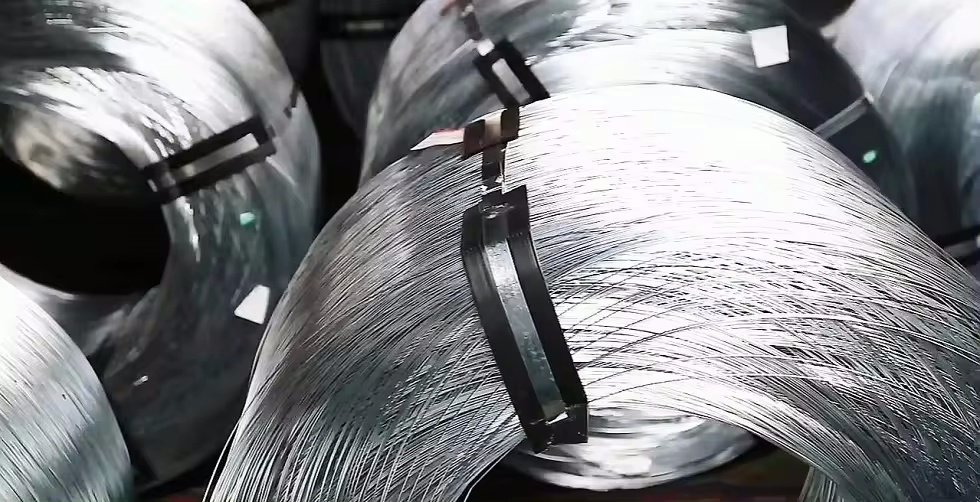
Here are some ways to distinguish galvanized wire from ordinary wire:
1. Appearance
- Color: Galvanized wire usually has a silver-white color due to the zinc coating on its surface, and it has a certain metallic luster, looking relatively bright. Ordinary wire is generally black or gray and has a duller appearance. However, cold-galvanized wire may have a brighter color than hot-galvanized wire. If the galvanized wire has been used for a long time or worn, the internal wire color may be exposed, but the traces of the zinc coating on the surface can still be seen.
- Surface Smoothness: The surface of galvanized wire is relatively smooth and flat because of the zinc layer covering it. But the zinc layer of hot-galvanized wire is relatively thick, so there may be some irregular patterns or bumps. Ordinary wire may have some fine scratches, rust marks, or an uneven surface.
2. Physical Properties
- Weight: Under the same specifications and length, galvanized wire will be slightly heavier than ordinary wire because of the zinc layer on its surface. However, this difference may be relatively small and requires relatively precise weighing tools to be clearly distinguished.
- Flexibility: The flexibility of the two may be different. Ordinary wire may be relatively softer and easier to bend. Galvanized wire, due to the galvanizing treatment, may affect its flexibility to a certain extent, but the specific difference also depends on the material of the wire and the manufacturing process.
3. Chemical Properties
- Corrosion Resistance: Place the two types of wires separately in a humid environment or a solution containing certain corrosive substances and observe after a period of time. Ordinary wire will rust quickly, with rust appearing on the surface. Due to the protective effect of zinc, galvanized wire will rust at a significantly slower speed than ordinary wire and may even not rust for a long time.
4. Magnetic Properties
- Generally, the magnetic difference between galvanized wire and ordinary wire is not significant. But if using high-precision magnetic detection equipment, it may be found that due to the existence of the zinc layer, the magnetic property of galvanized wire is slightly lower than that of ordinary wire. However, this method is not commonly used in practical applications, and the judgment of magnetic differences requires professional equipment and experience.
5. Price
- The production process of galvanized wire is relatively complex, and the cost is higher, so the price is usually higher than that of ordinary wire. If the price is found to be too low when purchasing, it is likely that ordinary wire is being passed off as galvanized wire.

Additional Reousrces
-
China Galvanized Wire Manufacturers, Galvanized Pipe
-
How to distinguish stainless steel filter screen?
-
Wire Galvanized Iron Wire - Barb Wire and Galvanize
-
To investigate how the piece of resistance wire
Keywords:
More information


Contact
Phone/WhatsApp:
E-mail:
Address:
Huangtai Industrial Park, Xiaozhan Town,
Jinnan District, Tianjin, 300353, China
Follow us

Inquiry