


Detailed Explanation of the Quality and Application Between High Zinc and General Galvanized Wire
Release time:
2024-10-24
Here are some ways to judge the quality of high - zinc and general - zinc galvanized wires:
-
Quality Difference
-
Zinc Coating Thickness
-
High - Zinc Galvanized Wire: It has a relatively thick zinc coating. Usually, the weight of the zinc coating of high - zinc galvanized wire can reach around 200 - 500g/m². This is because during the galvanizing process, special techniques are used or the galvanizing time is extended, so that more zinc adheres to the wire surface. For example, high - zinc galvanized wire used in an environment with severe conditions such as high humidity and high salinity (such as the seaside environment) can better protect the wire from rusting.
-
General - Zinc Galvanized Wire: The zinc coating is thinner, and the weight of the zinc coating is usually around 30 - 100g/m². This thickness of the zinc coating can provide a certain anti - corrosion ability in a general environment, but its protection performance is weaker than that of high - zinc galvanized wire.
-
-
Corrosion Resistance
-
High - Zinc Galvanized Wire: Due to the thick zinc coating, it has excellent corrosion resistance. In an industrial environment containing corrosive gases such as sulfur dioxide and carbon dioxide or in an area with acid rain, high - zinc galvanized wire can maintain its metallic properties for a long time and effectively resist corrosion. For example, when making fences in some chemical factories, using high - zinc galvanized wire can extend the service life of the fence to 10 - 15 years or even longer.
-
General - Zinc Galvanized Wire: The corrosion resistance is relatively weak. In the same harsh environment, the general - zinc galvanized wire may show obvious rusting after 3 - 5 years. However, in an indoor environment or a dry and less - polluted outdoor environment, the general - zinc galvanized wire can also meet the basic anti - rust requirements.
-
-
Appearance Quality
-
High - Zinc Galvanized Wire: The surface is usually smooth, and the color is uniform and bright. This is because the thick zinc coating forms a relatively regular crystal structure during the cooling and solidification process, and after galvanizing, some surface - treatment processes may be carried out to make its appearance more beautiful.
-
General - Zinc Galvanized Wire: The appearance quality is slightly worse, and the surface may have some non - uniform zinc coating conditions, such as a thinner zinc coating in some parts or slight zinc nodules and other defects. This is because its galvanizing process is relatively simple, and the control of the zinc coating is not as precise as that of high - zinc galvanized wire.
-
-
-
Application Difference
-
Construction Industry
-
High - Zinc Galvanized Wire: It is used to make protective nets outside buildings and the support structure of curtain walls. For example, in seaside buildings, due to the high - salt corrosiveness of seawater, high - zinc galvanized wire - made protective nets are needed to prevent rusting and ensure the safety and aesthetics of the building. At the same time, in the reinforcement materials of some steel - structure buildings that are exposed to the outdoor environment for a long time, high - zinc galvanized wire can also play a good anti - rust role.
-
General - Zinc Galvanized Wire: It can be used for some simple wire meshes inside buildings, such as the reinforcement wire mesh of indoor partition walls. Because the indoor environment is relatively stable, the general - zinc galvanized wire can meet the basic use requirements, and the cost is relatively low.
-
-
Agricultural Field
-
High - Zinc Galvanized Wire: It is used to make protective fences in orchards and fences in livestock farms. In orchards, high - zinc galvanized wire fences can resist wind, rain, and the erosion of chemical substances such as pesticides, protecting the growth environment of fruit trees. In livestock farms, high - zinc galvanized wire can withstand the collision and friction of livestock and maintain good anti - rust performance for a long time, ensuring the stability and service life of the fence.
-
General - Zinc Galvanized Wire: It can be used for some agricultural facilities for short - term use, such as the temporary support net racks of small - scale vegetable gardens. The use cycle of these facilities is short, and the anti - rust performance of the general - zinc galvanized wire can meet the requirements during use, and the cost is low.
-
-
Industrial Production
-
High - Zinc Galvanized Wire: In the wire and cable industry, it is used as the shielding layer or the reinforcing core material. For example, in some communication cables, high - zinc galvanized wire can prevent external electromagnetic interference, and its good corrosion resistance can ensure that the cable can work stably in different environmental conditions for a long time. In the automobile manufacturing industry, high - zinc galvanized wire is used for the production of automobile parts, such as seat springs, to improve the corrosion resistance of parts.
-
General - Zinc Galvanized Wire: It is used in some industrial packaging fields with low requirements for corrosion resistance, such as ordinary product binding wires. During the short - distance transportation and short - term storage of products, the anti - rust performance of the general - zinc galvanized wire can meet the basic binding requirements.
-
-
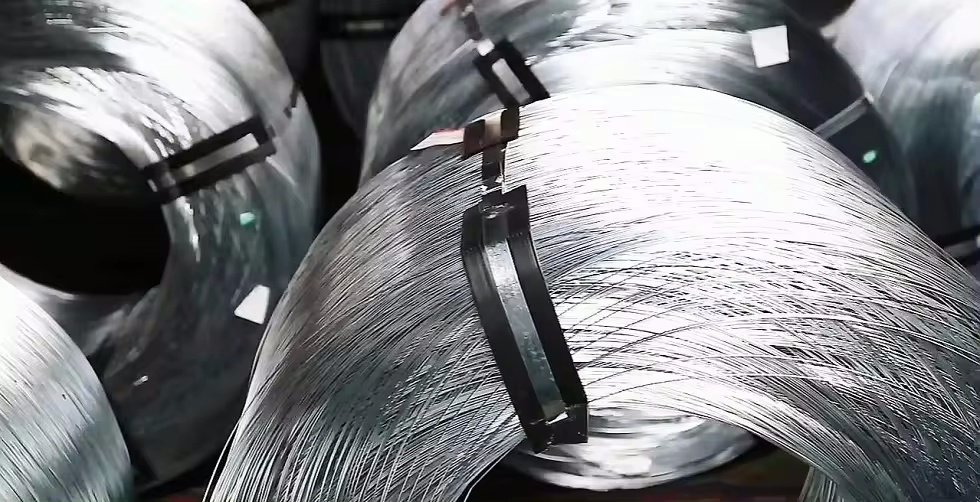
Here are some ways to judge the quality of high - zinc and general - zinc galvanized wires:
1. Zinc Coating Thickness and Weight
- Measurement and Comparison:
- Generally, the weight of the zinc coating of general - zinc galvanized wire is about 30 - 150g/m², while that of high - zinc galvanized wire is 150 - 400g/m² or more. Professional measuring tools or chemical analysis methods can be used to determine the weight of the zinc coating. The closer the zinc coating weight is to the theoretical value and in line with the corresponding standards, the better the quality. For example, a high - precision electronic scale can be used to weigh a certain length of galvanized wire, and then the weight of the zinc coating per unit area can be calculated according to its surface area.
- Visual Observation: Without professional measuring tools, the high - zinc galvanized wire generally has a thicker zinc coating and looks more "dense", with a more complete zinc - layer coverage on the surface. In contrast, the general - zinc galvanized wire has a relatively thinner zinc coating and may expose the internal wire matrix at some bent or edge parts.
2. Uniformity of the Zinc Coating
- Visual Inspection:
- For galvanized wires of good quality, whether high - zinc or general - zinc, the zinc coating on the wire surface should be evenly distributed. Carefully observe the surface of the galvanized wire to see if there are local thickening, thinning, or missed - plating of the zinc coating. If there are obvious non - uniform phenomena of the zinc coating, such as striped or spotted differences in the distribution of the zinc coating, or no zinc - layer coverage in some parts, the quality of the galvanized wire is poor.
- Copper Sulfate Test: A simple copper sulfate solution test can be carried out. Immerse the galvanized wire in a copper sulfate solution for a period of time and then take it out. If the zinc coating is not uniform, the place where the zinc layer is thin will react with copper sulfate first, and the replaced copper will adhere to the surface. For a high - quality galvanized wire, there will be no iron - exposure situation after a certain number of times (such as five times) of immersion in the copper sulfate solution.
3. Adhesion of the Zinc Coating
- Cross - Cut Test:
- Use a sharp object (such as a blade or a needle tip) to scratch a small square on the surface of the galvanized wire, and then observe whether the zinc coating is easily peeled off from the wire matrix. If the zinc coating at the scratched area can firmly adhere to the wire without large - area peeling, it indicates that the adhesion of the zinc coating is good; on the contrary, if the zinc coating peels off in large quantities with a light scratch, the quality is not up to standard.
- Bending Test: Bend the galvanized wire moderately, for example, around a round bar of a certain diameter, and then check whether the zinc coating at the bent part has cracks, peeling, and other situations. For high - quality galvanized wire, the zinc coating can still maintain good integrity after bending and is closely combined with the wire matrix; while for low - quality galvanized wire, the zinc coating is prone to cracking and peeling during bending.
4. Appearance Quality
- Surface Defects:
- The surface of high - quality galvanized wire should be smooth and flat, without scratches, burrs, black spots, rust spots, and other defects. If these problems exist, it will not only affect the aesthetics but also may reduce the corrosion - resistance performance and service life of the galvanized wire.
- Color Uniformity: Both high - quality high - zinc and general - zinc galvanized wires should have relatively uniform colors. The color of high - zinc galvanized wire is usually darker, and that of general - zinc galvanized wire is relatively clear. In any case, there should be no uneven color shades.
5. Wire Material and Mechanical Properties
- Material Composition:
- Check whether the material composition of the wire meets the relevant standards. Generally, high - quality galvanized wire is made of low - carbon steel, and the content of elements such as carbon, silicon, and manganese is within the specified range. Professional chemical composition analysis equipment can be used for detection, or the material test report provided by the manufacturer can be checked.
- Mechanical Properties:
- Mechanical properties include tensile strength, yield strength, elongation, and other indicators. A universal testing machine and other equipment can be used to carry out a tensile test on the galvanized wire to check whether its mechanical properties meet the use requirements. For example, in the construction field, the galvanized wire used needs to have sufficient tensile strength to withstand a certain amount of tension and pressure.
6. Packaging and Labeling
- Packaging Integrity:
- Good packaging can protect the galvanized wire from damage during transportation and storage. Check whether the packaging is complete and whether there is any damage or dampness. If the packaging is not good, the zinc coating on the surface of the galvanized wire may be damaged, affecting the quality.
- Label Clarity:
- Galvanized wire produced by regular manufacturers should have clear labels, including product model, specification, manufacturer, production date, quality grade, and other information. Products with clear and complete labels generally have more guaranteed quality.

Additional Resources
- Galvanised Wire, Galvanized Iron Wire
- High Quality Galvanized Steel Electro Galvanized Wire
- High Quality Galvanized Outdoor Dog Pen
- High Quality Galvanized Steel Wire 14 Gauge Low Price
Keywords:
More information


Contact
Phone/WhatsApp:
E-mail:
Address:
Huangtai Industrial Park, Xiaozhan Town,
Jinnan District, Tianjin, 300353, China
Follow us

Inquiry