


Galvanized Wire in Wire and Cable: Best Application and Specification Analysis
Release time:
2024-10-22
Application of galvanized wire in wire and cable:
Application of galvanized wire in wire and cable:
-
As armor material:
- Enhancing mechanical strength: During the laying and use of wire and cable, they may be subjected to external forces such as tension, bending, and compression. Galvanized wire wrapped as an armor layer on the outer layer of the cable can effectively enhance the tensile strength, compressive strength, and bending resistance of the cable, protecting the internal conductor and insulation layer from damage. For example, in some occasions where cables need to be frequently moved or are subject to mechanical stress, such as for the cables of cranes and conveyors, using galvanized wire armor can increase the service life of the cable.
- Improving corrosion resistance: Cables are usually used in various environments, such as humid and corrosive harsh environments. Galvanized wire has good corrosion resistance and can resist the erosion of the external environment on the cable to a certain extent, preventing the cable from being damaged due to corrosion and ensuring the normal operation of the cable. Especially in some corrosive environments such as chemical industry and ocean, cables with galvanized wire armor have obvious advantages.
-
As a supporting and reinforcing structure: In some special wire and cable structures, galvanized wire can be used as a supporting and reinforcing structure to fix and support the internal components of the cable. For example, in some multi-core cables, galvanized wire can be used to separate and fix different core wires to prevent mutual interference and friction between the core wires; in some coaxial cables, galvanized wire can be used as the supporting structure of the outer conductor to improve the electrical performance and mechanical stability of the cable.
Specification analysis of galvanized wire in wire and cable:
-
Diameter: The diameter of galvanized wire is an important specification parameter. Common diameter specifications include 1.6mm, 2.0mm, 2.5mm, 3.15mm, 4.0mm, 5.0mm, 6.0mm, etc. Different diameters of galvanized wire are suitable for different specifications and requirements of wire and cable. Generally speaking, the larger the outer diameter of the cable and the higher the required mechanical strength, the larger the diameter of the galvanized wire used.
-
Zinc coating quality:
- Zinc coating thickness: The thickness of the zinc coating directly affects the corrosion resistance of galvanized wire. According to national standards, the zinc coating thickness of galvanized wire should meet certain requirements. For example, for galvanized wire used for cable armor, the zinc coating quality is divided into group I and group II. The zinc coating quality of group I is relatively low and suitable for general environments; the zinc coating quality of group II is thicker and has better corrosion resistance and can be used for cable armor in environments with severe corrosion.
- Zinc coating uniformity: The uniformity of the zinc coating is also an important indicator for measuring the quality of galvanized wire. A uniform zinc coating can ensure that the galvanized wire has the same corrosion resistance at different parts and improve the overall service life of the cable.
-
Mechanical properties:
- Tensile strength: Tensile strength refers to the maximum stress that galvanized wire can withstand during the tensile process. Galvanized wire for wire and cable needs to have sufficient tensile strength to ensure that it will not break due to external forces during the laying and use of the cable. Different diameters of galvanized wire have different tensile strength requirements, generally ranging from 250MPa to 490MPa.
- Elongation: Elongation refers to the ratio of the elongated length to the original length of galvanized wire after tensile fracture. Elongation reflects the toughness and plasticity of galvanized wire. For wire and cable that needs to be bent and processed, galvanized wire should have a certain elongation to ensure that it will not break or be damaged during the processing.
-
Coil weight: Coil weight refers to the weight of each coil of galvanized wire, usually in kilograms. The size of the coil weight will affect the production efficiency and cost of the cable. Generally speaking, the larger the coil weight, the fewer the number of coil changes during the production process, and the higher the production efficiency. However, it will also increase the difficulty of transportation and storage.
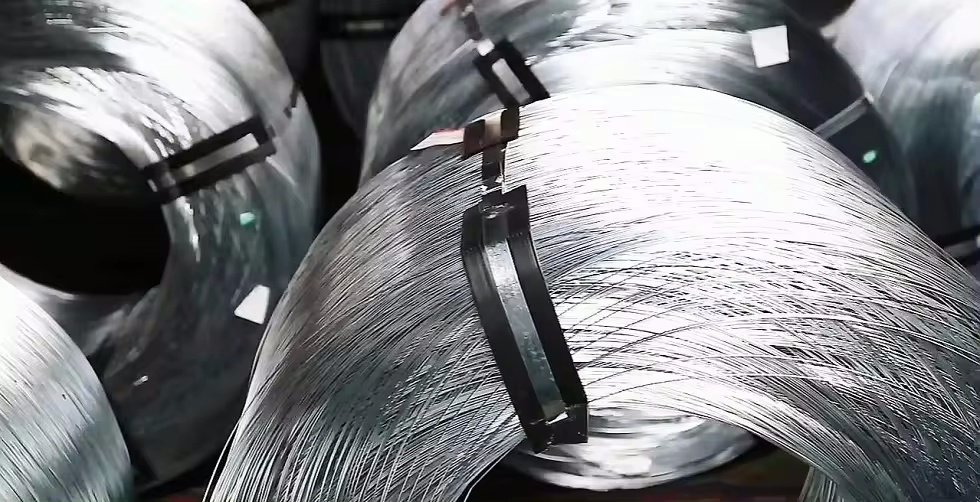
The material of galvanized wire for wire and cable is mainly low-carbon steel. Low-carbon steel has a carbon content generally below 0.25%. This kind of material is chosen for several reasons:
- Good formability: It is easy to be processed into various specifications of galvanized wire through processes such as drawing, which can meet the different needs of wire and cable production.
- Satisfactory mechanical properties: After proper processing, it has appropriate tensile strength and toughness. In the cable, it can bear certain mechanical forces such as tension, compression, and bending as an armor layer or a supporting structure to protect the internal conductor and insulation layer of the cable2.
- Good corrosion resistance after galvanization: The surface of the low-carbon steel wire is coated with a layer of zinc through the galvanizing process, which can effectively prevent the wire from being corroded by the external environment, improving the service life of the wire and cable.

Addtional Resources
- Galvanized Wire/Galvanized Iron Wire/Binding Wire
- ACSR Wire Electrical Cable - Galvanized Steel Wire
- Specification Stainless Metal wire/ Galvanized wire
- Factory direct hot dipped galvanized iron wire for binding
Keywords:
More information


Contact
Phone/WhatsApp:
E-mail:
Address:
Huangtai Industrial Park, Xiaozhan Town,
Jinnan District, Tianjin, 300353, China
Follow us

Inquiry