


Exploring the Detailed Process Requirements and Specifications of Galvanized Redrawn Wire
Release time:
2024-10-21
Process Requirements of Galvanized Redrawn Wire:
Process Requirements of Galvanized Redrawn Wire:
- Material Preparation:
- Base Material Selection: Use high-quality low-carbon steel wire as the raw material. The carbon content of low-carbon steel is low, ensuring good toughness and plasticity, which are essential for the processing of galvanized redrawn wire. For example, materials with consistent quality and appropriate chemical compositions are preferred to guarantee the uniformity of the final product.
- Surface Cleaning: The surface of the wire must be thoroughly cleaned to remove impurities such as oil stains, rust, and dust. This can be achieved through processes like pickling or mechanical cleaning. If the surface is not clean, it may affect the adhesion of the zinc coating and the quality of the subsequent drawing process.
- Heating of Billets:
- Temperature Control: Heat the prepared low-carbon steel wire billets to an appropriate temperature. The heating temperature should be accurately controlled based on the material properties and diameter of the wire. Generally, the temperature is within a certain range to ensure that the wire acquires sufficient plasticity for the drawing process without causing overheating or burning. Overheating can damage the microstructure of the wire and affect its mechanical properties.
- Heating Uniformity: Ensure the heating is uniform throughout the wire billet to avoid uneven plasticity, which may lead to problems such as non-uniform deformation during drawing and inconsistent quality of the final product.
- Drawing:
- Drawing Equipment: Use high-precision wire drawing machines with stable performance. The drawing dies used in the machine should be of high quality and wear-resistant to ensure the accuracy of the drawn wire diameter and the surface quality of the wire.
- Drawing Process Control: Under the traction of the wire drawing machine, draw the heated wire through the die hole of the drawing die to reduce its cross-section and change its shape to the required size. The drawing speed, drawing force, and reduction ratio in each pass need to be precisely controlled. A proper reduction ratio in each pass is usually around 70% to 90% to ensure the wire can be smoothly drawn without excessive stress and damage.
- Intermediate Treatment: Due to the work hardening effect during the cold drawing process, when the deformation degree of the wire reaches a certain value, its cold processing performance significantly declines. Therefore, intermediate heat treatment may be required to restore its plasticity and processability before further drawing.
- Galvanizing:
- Galvanizing Method Selection: There are two main galvanizing methods for galvanized redrawn wire, namely hot-dip galvanizing and electro-galvanizing. Hot-dip galvanizing results in a thicker zinc coating with better corrosion resistance but may have a relatively rougher surface. Electro-galvanizing provides a more uniform and smooth zinc coating but the coating thickness is relatively thinner. The choice of galvanizing method depends on the specific requirements of the product.
- Galvanizing Process Control: During galvanizing, control parameters such as the zinc bath temperature, immersion time, and withdrawal speed to ensure the quality of the zinc coating. The zinc coating should be uniform, dense, and have a sufficient thickness to provide good corrosion protection to the wire.
- Quality Inspection:
- Dimensional Inspection: Use precision measuring tools such as micrometers and calipers to measure the diameter, length, and other dimensions of the galvanized redrawn wire to ensure they meet the specified requirements. For example, the diameter tolerance of the wire should be within a certain range to ensure its compatibility with subsequent processing and use.
- Mechanical Property Testing: Conduct tensile strength, hardness, and elongation tests on the wire to verify that its mechanical properties meet the standards. High-quality galvanized redrawn wire should have appropriate tensile strength, hardness, and elongation to ensure its performance in various applications.
- Surface Quality Inspection: Inspect the surface of the wire for defects such as scratches, pits, and uneven zinc coating. The surface of the wire should be smooth, shiny, and free of obvious defects to ensure its aesthetic appearance and corrosion resistance.
Specifications of Galvanized Redrawn Wire:
- Diameter: The diameter of galvanized redrawn wire can vary widely, usually ranging from 0.20 mm to 4.5 mm. Different applications require different wire diameters. For example, thinner wires are used in the production of small handicrafts and electronic components, while thicker wires are used in the construction of wire mesh and reinforcement structures.
- Zinc Coating Thickness: The zinc coating thickness is an important specification that affects the corrosion resistance of the wire. Generally, the zinc coating thickness can be expressed in grams per square meter (g/m²). The required zinc coating thickness depends on the specific application environment and the expected service life of the product. For example, in harsh corrosive environments, a thicker zinc coating is required.
- Tensile Strength: The tensile strength of galvanized redrawn wire is an important mechanical property index, which usually ranges from 550 MPa to 750 MPa. Different applications have different requirements for tensile strength. For example, in the construction of high-strength wire mesh, wires with higher tensile strength are required.
- Elongation: The elongation of the wire reflects its ductility. Appropriate elongation is necessary to ensure that the wire can withstand certain deformation during use without breaking. Generally, the elongation of galvanized redrawn wire is within a certain percentage range, which is related to the material and processing technology of the wire.
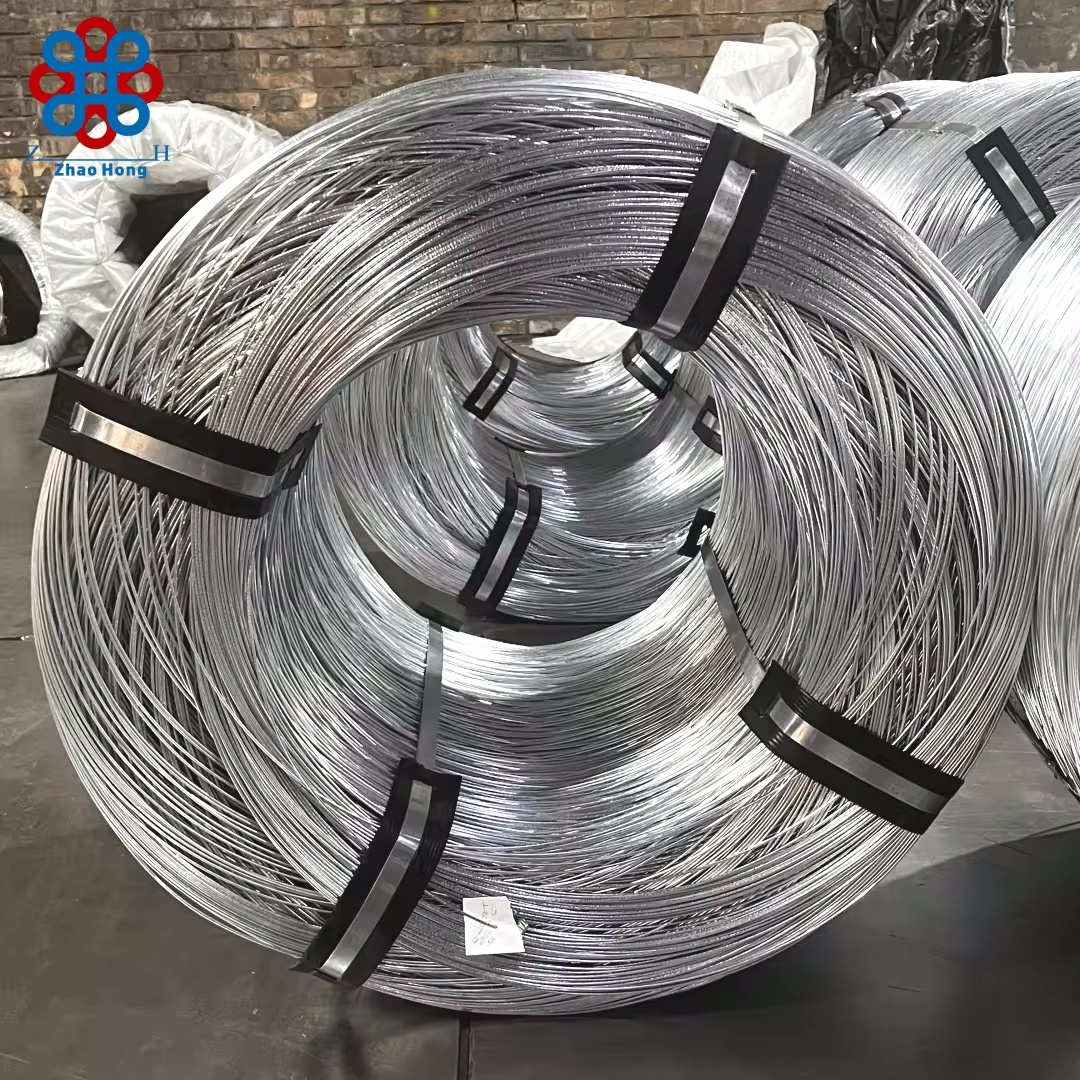
- Packaging: Galvanized redrawn wire is usually packaged in coils or bundles. The packaging should ensure that the wire is protected from damage during transportation and storage. Inner plastic and outer woven packaging or inner plastic and outer hemp packaging are commonly used methods. The weight of each bundle can range from 50 kilograms to 600 kilograms, depending on the specific requirements.
To ensure the quality of galvanized redrawn wire, the following measures can be taken:
I. Raw Material Control
- Select high-quality low-carbon steel wire as the base material. Ensure that the steel wire has consistent chemical composition and mechanical properties. For example, check for appropriate carbon content to guarantee good ductility and strength.
- Inspect the surface quality of the raw wire. It should be free from defects such as cracks, pits, and excessive rust. Any impurities on the surface can affect the adhesion of the galvanized coating and the quality of the final product.
II. Galvanizing Process Optimization
- Galvanizing Method Selection:
- For better corrosion resistance and thicker coating, hot-dip galvanizing can be preferred. Ensure that the zinc bath temperature is precisely controlled to achieve a uniform and dense coating.
- Electro-galvanizing can provide a more uniform and smooth coating for applications where surface finish is crucial. Monitor the electrical parameters to ensure consistent coating thickness.
- Coating Thickness Control:
- Use appropriate measurement methods, such as X-ray fluorescence or magnetic thickness gauges, to regularly check the zinc coating thickness. Adjust the galvanizing process parameters to maintain the coating within the specified range.
- A proper coating thickness ensures long-term corrosion protection without being excessive, which can lead to brittleness.
III. Drawing Process Precision
- Use advanced wire drawing equipment with high precision and stability. The drawing dies should be made of high-quality materials to resist wear and ensure accurate wire diameter reduction.
- Control the drawing speed and reduction ratio in each pass. Excessive speed or too large a reduction ratio can cause internal stress and damage to the wire, affecting its mechanical properties.
- Conduct regular inspections of the drawn wire's diameter and surface quality. Any deviations from the specified dimensions should be corrected promptly.
IV. Quality Inspection and Testing
- Dimensional Inspection:
- Measure the diameter, length, and straightness of the galvanized redrawn wire using accurate measuring tools. Ensure that these dimensions meet the design requirements and tolerances.
- Mechanical Property Testing:
- Perform tensile strength, hardness, and elongation tests on samples of the wire. These tests help ensure that the wire has the required strength and ductility for its intended application.
- Use standardized testing methods and equipment to obtain reliable results.
- Corrosion Resistance Testing:
- Conduct salt spray tests or other corrosion resistance tests to evaluate the effectiveness of the galvanized coating. This helps determine if the wire can withstand the expected environmental conditions.
V. Storage and Handling
- Store the galvanized redrawn wire in a dry and clean environment to prevent moisture and contaminants from affecting the quality. Avoid contact with chemicals or substances that can damage the coating.
- Handle the wire carefully during transportation and storage to avoid scratches and mechanical damage. Use proper packaging materials to protect the wire from impacts and abrasions.
By implementing these measures, the quality of galvanized redrawn wire can be effectively ensured, meeting the requirements of various applications.

Additional Resources
- Wire Drawing with Wire Galvanizing Plant
- Comprehensive Guide to Galvanized Wire
- Design and manufacture of a wire drawing
- Galvanized to wire drawing: How to choose the right material?
Keywords:
More information


Contact
Phone/WhatsApp:
E-mail:
Address:
Huangtai Industrial Park, Xiaozhan Town,
Jinnan District, Tianjin, 300353, China
Follow us

Inquiry