


The Best Analysis of Quality Characteristics of Single Loop Bale Tie
Release time:
2024-10-09
The following is a specific analysis of the quality characteristics of single - loop bale ties:
The following is a specific analysis of the quality characteristics of single - loop bale ties:
I. Physical characteristics
- Wire diameter
- Dimensional accuracy
- The dimensional accuracy of the wire diameter of single - loop bale ties is crucial. If the wire diameter is too large, it may not be able to pass through components such as wire - guiding holes in the baling machine during the baling process, resulting in equipment failure or the inability to carry out the baling operation smoothly. For example, in some automated baling production lines, a wire diameter deviation of more than ±0.05mm may cause wire - jamming in the equipment.
- If the wire diameter is too small, the strength of the bale tie may not meet the requirements and it is prone to breakage when subjected to the baling tension. For example, when bundling heavy goods such as large - scale mechanical equipment for transportation packaging, bale ties with a too - small wire diameter cannot provide sufficient fastening force.
- Uniformity
- The uniformity of the wire diameter along the length of the single - loop bale tie affects its overall performance. Uneven wire diameter will cause uneven stress distribution when the bale tie is under force, and the areas with excessive local stress are prone to deformation or breakage first. For example, during use, a bale tie with an uneven wire diameter may break first at the thinner part when being tightened for baling, thus affecting the integrity of the baling.
- Dimensional accuracy
- Length
- Accuracy of nominal length
- The nominal length of the single - loop bale tie needs to be consistent with the actual length. If the actual length is shorter than the nominal length, it may be unable to complete the expected number of baling loops during the baling process, affecting the firmness of the baling. For example, when bundling logs, if the bale tie is too short, the logs may not be tightly bound, and are likely to come loose during transportation.
- An overly long bale tie will cause material waste, increase costs, and may get tangled in the equipment during the baling operation, affecting the operation efficiency.
- Length consistency
- The length consistency of single - loop bale ties in the same batch should be good. For baling operations in large - scale production, such as baling a large number of cartons, if the lengths of bale ties are inconsistent, the baling effects will vary, some packages may be too loose, and some may have extra wire segments that affect the appearance.
- Accuracy of nominal length
- Hardness
- Appropriate hardness range
- Single - loop bale ties need to have an appropriate hardness. If it is too hard, it is easy to break during the process of being bent into a single loop, and may also scratch the surface of the items to be baled during the baling operation. For example, when baling some precision instruments, a too - hard bale tie may scratch the instrument housing.
- If the hardness is insufficient, the bale tie is easy to deform when subjected to external forces, unable to maintain its original ring shape and provide sufficient fastening force. When baling some heavy metal products, a bale tie with insufficient hardness may be deformed by pressure, resulting in loose baling.
- Appropriate hardness range
II. Chemical characteristics
- Material composition
- Purity
- The purity of the material of single - loop bale ties affects its performance. For example, for iron wire bale ties, if the purity of iron is not high and there are many impurities, its corrosion resistance will decrease. In a humid environment, impure iron wire bale ties are prone to rust, reducing their service life, and at the same time, the rust may contaminate the items to be baled.
- Alloy composition (if it is an alloy material)
- If the single - loop bale tie is an alloy material, such as stainless steel wire, its alloy composition determines its performance. For example, stainless steel bale ties containing chromium, nickel and other elements have good corrosion resistance, which is suitable for baling items stored or transported in harsh environments, such as goods in seaside warehouses or chemical raw materials. Different alloy ratios will affect the strength, toughness and temperature resistance of the bale tie.
- Purity
- Corrosion resistance
- Performance in different environments
- In a humid environment, single - loop bale ties need to have good corrosion resistance. For example, in marine transportation, bale ties should be able to resist the erosion of seawater and high - humidity air. If the corrosion resistance is poor, the bale tie will quickly rust or be corroded, resulting in baling failure.
- In an environment where chemical substances exist, such as in the packaging of chemical products, bale ties should be able to tolerate acids, alkalis and other chemical substances that may be contacted. If the corrosion resistance is insufficient, chemical substances will react with the bale tie, destroying its structure and thus affecting the safety of baling.
- Performance in different environments
III. Mechanical characteristics
- Tensile strength
- Meeting baling requirements
- Single - loop bale ties need to have sufficient tensile strength to withstand the tension during the baling process. When bundling heavy objects, such as large - scale building materials, bale ties with low tensile strength will break during the tightening process. Tensile strength is usually measured by the maximum tensile force that can be borne per unit cross - sectional area. For example, the tensile strength of single - loop bale ties generally used for ordinary goods baling should not be less than 300MPa.
- Strength uniformity
- The uniformity of tensile strength along the length of the bale tie is important. If there is a weak point in strength, this part will break first during baling. During the production process, it is necessary to ensure that the processing technology can make the tensile strength of the bale tie uniform.
- Meeting baling requirements
- Bending performance
- Bendability
- Single - loop bale ties should be able to be easily bent into a ring shape, which requires good bendability. If the bendability is poor, cracks or breaks may occur during the process of making a single loop. For example, some bale ties made of high - strength but brittle materials may have problems when being bent.
- Shape - retaining ability after bending
- After being bent into a single loop, the bale tie needs to maintain its shape so that it can be stably placed on the goods and provide fastening force during the baling process. If the shape - retaining ability after bending is poor, the ring shape may be deformed during the baling process, affecting the baling effect.
- Bendability
IV. Appearance characteristics
- Surface finish
- Benefits of a smooth surface
- A single - loop bale tie with a good surface finish is not easy to get stuck with components of the baling machine during the baling operation. For example, on a high - speed baling machine, a smooth bale tie can pass through various wire - guiding devices smoothly. Moreover, a smooth surface can also reduce scratches on the surface of the items to be baled.
- Influence of roughness
- If the surface is rough, on the one hand, it will affect the appearance quality of the bale tie, and on the other hand, it may hook other items during use. For example, in an automated production line, a bale tie with a rough surface may hook labels or other small parts, resulting in production failures.
- Benefits of a smooth surface
- Color uniformity
- Aesthetic requirements
- From the appearance point of view, better color uniformity of single - loop bale ties will make the overall appearance of the baled goods more beautiful. For example, when baling some high - end gift boxes, bale ties with uniform color will enhance the overall grade of the packaging.
- Relationship between color and quality
- Uneven color may imply quality problems in the production process of bale ties, such as uneven material mixing or unstable processing technology. For example, when galvanizing iron wire, if the galvanizing is uneven, it will lead to uneven color, and at the same time may also affect the corrosion resistance of the bale tie.
- Aesthetic requirements
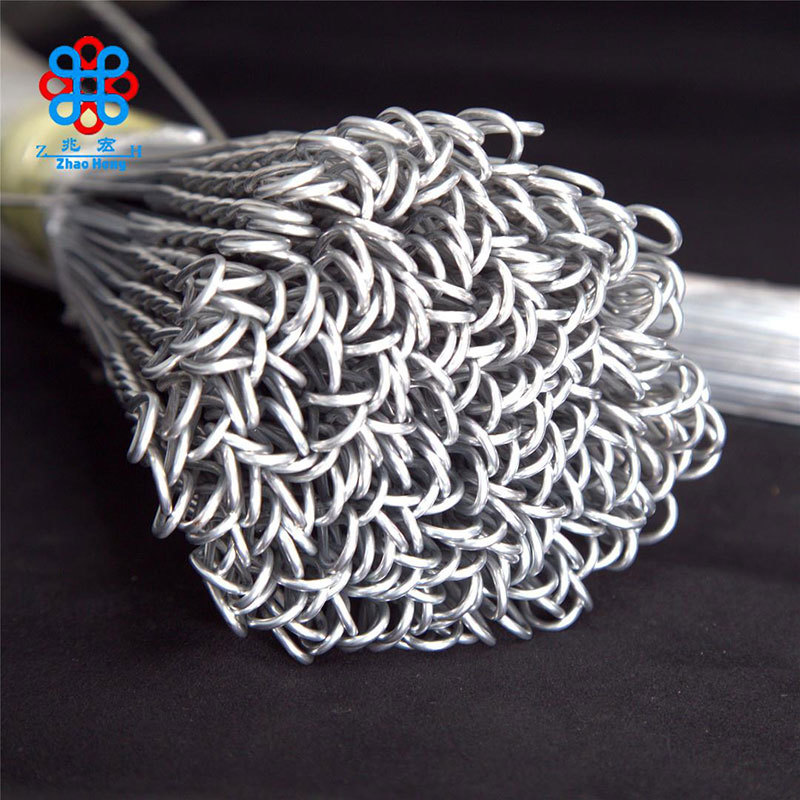
The physical characteristics of single - loop bale ties have the following effects on their quality:
I. Wire diameter
- Dimensional accuracy
- Equipment compatibility:
- If the wire diameter lacks dimensional accuracy, an oversized wire diameter may not fit with components such as wire - guiding holes and wire - winding wheels in the baling machine. For example, in automated baling equipment, the wire - guiding holes are designed based on the standard wire diameter. If the wire diameter exceeds the allowable range, wire - jamming will occur, preventing the normal operation of the equipment and affecting the continuity of the baling operation.
- Baling effect:
- A wire diameter that is too small cannot provide sufficient strength to withstand the baling tension. When bundling heavy goods like bundles of steel, a bale tie with a too - small wire diameter is prone to breakage, resulting in loose baling. As a result, the goods may become loose during transportation or storage, failing to achieve effective baling.
- Equipment compatibility:
- Uniformity
- Stress distribution uniformity:
- Uneven wire diameter will lead to uneven stress distribution when the bale tie is under force. During the baling process, when tension is applied, the thinner parts will bear greater stress and are more likely to deform or break first. For example, when baling bagged goods, a bale tie with an uneven wire diameter may break at the thinner part during the tightening process, affecting the firmness of the entire baling.
- Stress distribution uniformity:
II. Length
- Accuracy of nominal length
- Baling integrity:
- If the actual length is shorter than the nominal length, the expected number of baling loops cannot be completed during the baling process. For example, when baling wood, if the bale tie is too short, the wood cannot be tightly bound according to the standard method, reducing the stability of the wood bundling and increasing the risk of the wood scattering during transportation.
- Cost and efficiency:
- An overly long bale tie not only causes material waste and increased costs but also may get tangled in the baling equipment. This reduces the baling efficiency and may even cause equipment failures, such as getting tangled around the motor shaft and affecting the normal operation of the motor.
- Baling integrity:
- Length consistency
- Consistency of baling quality:
- Inconsistent lengths of bale ties in the same batch will result in uneven baling quality. In large - scale production baling operations, such as baling a large number of cartons, different - length bale ties will cause some cartons to be too loose and some too tight, affecting the stability of the overall baling quality.
- Consistency of baling quality:
III. Hardness
- Appropriate hardness range
- Forming and operation:
- If the bale tie is too hard, it is easy to break when being bent into a single loop, and may also scratch the surface of the items to be baled during the baling operation. For example, when baling electronic devices, a too - hard bale tie may scratch the device housing, affecting the product appearance and quality.
- Retention of fastening force:
- If the hardness is insufficient, the bale tie is easy to deform when subjected to external forces, unable to maintain its original ring shape and provide sufficient fastening force. For example, when baling block - shaped stones, a bale tie with insufficient hardness may be deformed by the weight of the stones, resulting in loose baling and a risk of the stones falling.
- Forming and operation:

Addtional Resources
- Galvanized Vs. Black Annealed Auto Tie Wire
- Baling Wire 16 Foot Long 12 Gauge 125 Piece Bundle
- Single Loop Bale Ties – Black Annealed & Galvanized
- The effects of social isolation stress and discrimination
Keywords:
More information


Contact
Phone/WhatsApp:
E-mail:
Address:
Huangtai Industrial Park, Xiaozhan Town,
Jinnan District, Tianjin, 300353, China
Follow us

Inquiry