


Best Analysis of the Difference Between Annealed and Non-annealed Properties of Annealed Wire
Release time:
2024-10-08
Annealed wire and non-annealed wire have the following differences in properties:
- Hardness:
- Annealed wire: The annealing process relieves internal stress and makes the metal's crystal structure more stable and uniform. As a result, the hardness of annealed wire is lower. It is easier to bend, twist, and process, which is beneficial for applications that require further processing or shaping.
- Non-annealed wire: Without the annealing process, the wire retains a higher degree of internal stress and work hardening. This leads to a relatively higher hardness, making it more difficult to deform and process. Non-annealed wire is often used in applications where high hardness and strength are required, such as in some structural components or as a reinforcing material.
- Toughness (ductility and malleability):
- Annealed wire: Annealing improves the toughness of the wire. The metal's ductility is enhanced, meaning it can be stretched into a wire without breaking more easily. Additionally, its malleability is also improved, allowing it to be flattened or shaped under pressure without cracking. This makes annealed wire suitable for applications that require bending, such as in the production of wire mesh, handicrafts, or spring manufacturing.
- Non-annealed wire: Generally, the toughness of non-annealed wire is lower. The internal stress and work hardening make the wire more brittle, and it is more prone to fracture or cracking when subjected to deformation or bending. However, in some cases where high stiffness and resistance to deformation are needed, non-annealed wire may be preferred.
- Residual stress:
- Annealed wire: The annealing process effectively eliminates or reduces the residual stress within the wire. Residual stress is generated during the wire drawing or other processing steps. If not eliminated, it can cause deformation, cracking, or a decrease in the service life of the wire over time. Annealed wire has a more stable structure and is less likely to experience such problems.
- Non-annealed wire: Non-annealed wire retains a significant amount of residual stress. This can affect the dimensional stability and mechanical performance of the wire, making it more susceptible to stress concentration and potential failure under certain loading conditions.
- Electrical conductivity:
- Annealed wire: Annealing can improve the electrical conductivity of the wire to some extent. A more regular crystal structure and reduced internal defects after annealing allow electrons to move more freely, resulting in better electrical conductivity. This is important for applications where the wire is used for electrical transmission or in the electronics industry.
- Non-annealed wire: The electrical conductivity of non-annealed wire may be slightly lower due to the presence of internal stress, crystal defects, and a less ordered structure, which can interfere with the movement of electrons. However, the difference in electrical conductivity between annealed and non-annealed wire may not be very significant in some cases, depending on the specific material and processing conditions.
- Corrosion resistance:
- Annealed wire: Annealing can have a positive impact on the corrosion resistance of some metals. By improving the uniformity of the metal structure and reducing internal stress, the susceptibility to corrosion is reduced. For example, in stainless steel wire, annealing can help form a more stable passive film on the surface, enhancing its corrosion resistance.
- Non-annealed wire: Non-annealed wire may have a slightly higher risk of corrosion due to the presence of residual stress and a less homogeneous structure. However, for some metals with high corrosion resistance, such as certain grades of stainless steel, the difference in corrosion resistance between annealed and non-annealed wire may not be significant under normal environmental conditions.
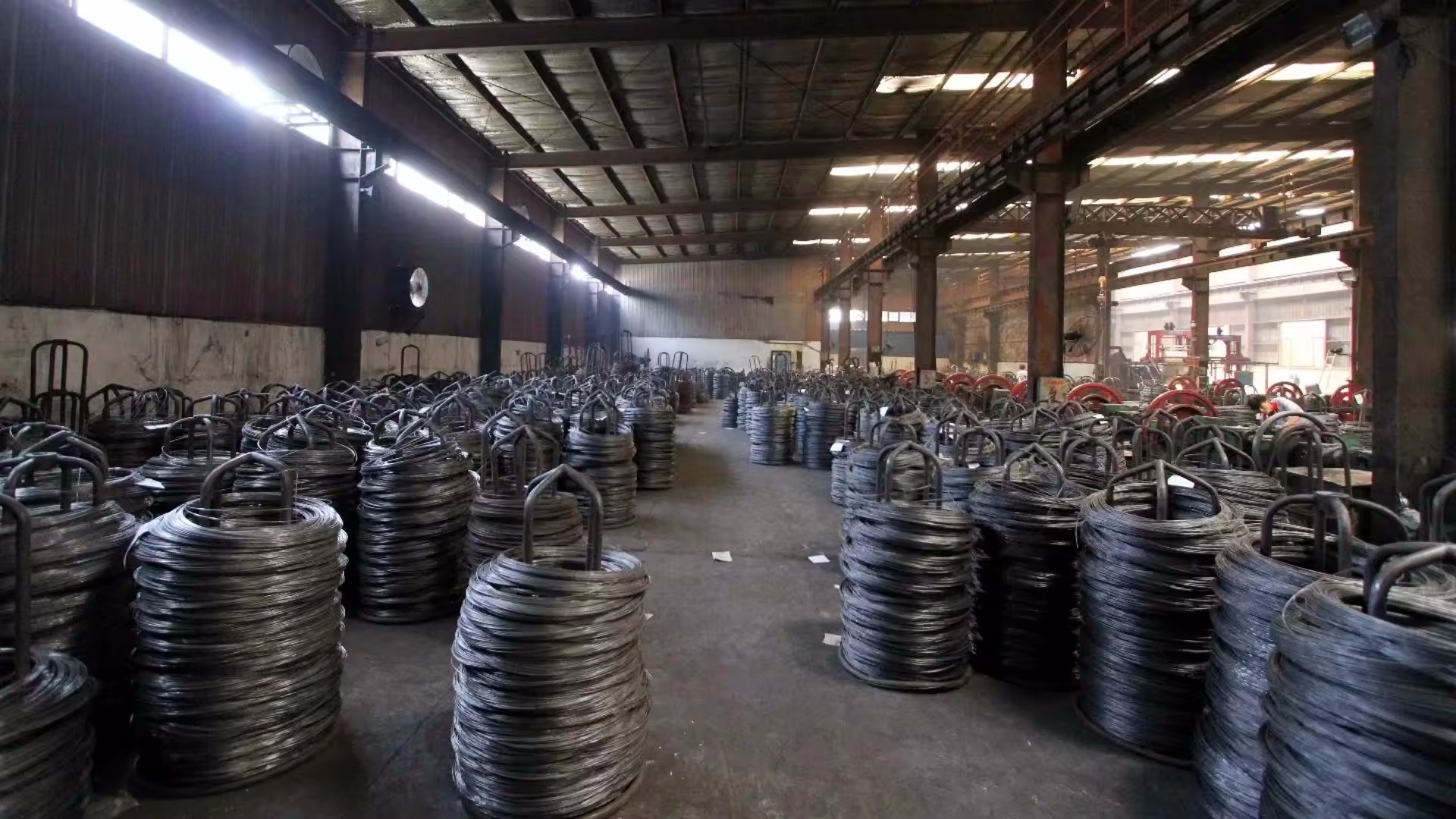
The following methods can be used to test the properties of annealed wire:
- Hardness testing:
- Rockwell hardness test: By pressing a indenter (such as a diamond cone or a steel ball) into the surface of the annealed wire under specified conditions, the hardness value is determined based on the indentation depth. Different Rockwell scales (e.g., HRA, HRB, HRC) can be selected according to the approximate hardness range of the annealed wire.
- Brinell hardness test: A certain diameter of a hard alloy ball is pressed into the surface of the annealed wire under a specified test force, and after a certain period of time, the diameter of the indentation is measured to calculate the Brinell hardness value according to a formula. This method is suitable for testing the surface hardness of annealed wire when the wire has a relatively low hardness and a large size, and requires high test result accuracy.
- Toughness testing:
- Impact test: A pendulum is used to impact a specimen of the annealed wire to make it fracture. The toughness of the annealed wire is measured by the energy difference before and after the pendulum impact. For example, in the Charpy impact test, there are U-notch and V-notch specimen types.
- Bending test: The annealed wire is bent around a mandrel of a specified diameter to observe whether cracks or fractures occur. The bending angle and number of times can be set according to relevant standards. This is a simple and quick way to judge the toughness of the annealed wire in a bending deformation situation.
- Elongation testing: A tensile testing machine is used to measure the percentage elongation of the annealed wire after fracture. A specimen of a specific gauge length is fixed in the tensile testing machine, and a tensile stress is applied gradually until the specimen fractures. The elongation is measured on the gauge length after the fractured ends are fitted together, which is an important indicator to evaluate the ductility of the annealed wire.
- Conductivity testing:
- Conductivity meter measurement: A conductivity meter directly measures the conductivity of the annealed wire. By applying an alternating voltage of a certain frequency and amplitude at both ends of the annealed wire, the current passing through the wire is measured, and the conductivity is calculated according to Ohm's law1.
- Resistance measurement: A resistance measuring instrument such as a multimeter is used to measure the resistance value of the annealed wire. According to the resistance law (R = ρL/A, where R is the resistance, ρ is the resistivity, L is the length, and A is the cross-sectional area), the resistivity can be calculated when the length and cross-sectional area of the annealed wire are known, thereby evaluating its conductivity.
- Annealing degree testing:
- Online detection method: There are online detection devices that utilize the principle that metal wires with different annealing degrees will produce different magnitudes of stress under the same micro tensile deformation. An induction component is used to measure the stress generated when the wire passes through it to form a stress measurement curve for the wire's annealing degree, which can be used to judge the annealing condition of the wire without the need for cutting and sampling1.
- Magnetic property testing (if applicable for certain materials):
- Magnetometer measurement: A magnetometer can measure the magnetic field strength around the annealed wire. By measuring the change in the magnetic field strength of the wire under different magnetization states, magnetic parameters such as magnetic permeability and magnetization intensity can be analyzed.
- Measurement of hysteresis loop: A specialized magnetic measurement device is used to make the annealed wire undergo repeated magnetization processes, and a hysteresis loop is drawn. Important magnetic parameters such as remanence and coercivity can be obtained from the hysteresis loop, which can comprehensively reflect the magnetic characteristics of the annealed wire.

Additional Resources
-
Ways to Assess the Quality of Black Annealed Wire
-
How to Test the Quality of MS Wire (Mild Steel Wire)
-
How does annealing affect hardness in wires?
-
Annealing: What Is It And How It Works
More information


Contact
Phone/WhatsApp:
E-mail:
Address:
Huangtai Industrial Park, Xiaozhan Town,
Jinnan District, Tianjin, 300353, China
Follow us

Inquiry