


Comparative Analysis of Quality Advantages of Galvanized Wire and PVC Coated Wire
Release time:
2024-09-19
The main differences in weather resistance between PVC coated wire and galvanized wire are as follows:
Corrosion Resistance
-
Galvanized wire
-
Mechanism: Forms a zinc coating on the surface of the wire. Zinc reacts with oxygen and moisture in the air to form a dense zinc oxide layer, which acts as a barrier to prevent further corrosion of the underlying metal. For example, hot-dip galvanized wire has a thick zinc layer that provides excellent corrosion resistance and can withstand harsh outdoor environments for a long time.
-
Limitations: In highly corrosive environments with strong acids, alkalis, or high salt concentrations, the zinc layer may gradually be corroded over time. Cold-galvanized wire has a thinner zinc layer and relatively poorer corrosion resistance, and is more prone to rusting.
-
-
PVC coated wire
-
Mechanism: The plastic coating acts as a physical barrier that isolates the metal wire from the surrounding environment, preventing oxygen, moisture, and corrosive substances from coming into contact with the wire. This provides superior protection against a wide range of corrosive agents.
-
Advantages: It has excellent resistance to chemicals, acids, alkalis, and salt. The coating can be customized with additives to enhance its corrosion resistance properties, making it suitable for use in various harsh environments such as coastal areas or industrial settings with corrosive fumes.
-
Durability
-
Galvanized wire
-
Hot-dip galvanized wire: Due to the thick and firmly adhered zinc layer, it has good durability and can maintain its protective function for a relatively long time. However, in areas with high mechanical stress or frequent abrasion, the zinc layer may be damaged, exposing the underlying metal to corrosion.
-
Cold-galvanized wire: The thinner zinc layer is more susceptible to wear and damage, resulting in a shorter service life compared to hot-dip galvanized wire.
-
-
PVC coated wire
-
Plastic coating: The plastic coating has good flexibility and abrasion resistance, which can withstand certain mechanical impacts and friction. It is less likely to crack or peel off, ensuring the long-term durability of the wire. Additionally, the plastic material itself has a relatively long lifespan and does not degrade easily under normal environmental conditions.
-
Weather Resistance
-
Galvanized wire
-
UV resistance: Zinc is relatively weak in resisting ultraviolet (UV) radiation. Prolonged exposure to sunlight can cause the zinc layer to oxidize and lose its luster, gradually reducing its protective effect. Over time, the wire may start to rust and deteriorate.
-
Temperature effects: In extreme cold temperatures, the zinc layer may become brittle and more prone to cracking. In high-temperature environments, the oxidation rate of zinc increases, accelerating the corrosion process.
-
-
PVC coated wire
-
UV stability: The plastic coating can be formulated with UV stabilizers to resist the harmful effects of sunlight. This helps to prevent fading, cracking, and degradation of the coating, maintaining its appearance and performance over time.
-
Temperature tolerance: The plastic coating has better temperature resistance than the zinc layer. It can withstand a wide range of temperatures without significant deformation or degradation. However, at extremely high temperatures, the plastic may soften, but this usually occurs at temperatures far beyond normal environmental conditions.
-
Appearance and Aesthetics
-
-
Color and finish: Galvanized wire typically has a shiny metallic appearance, with a silver-gray color. However, the surface may have some unevenness or zinc deposits, especially in hot-dip galvanized products.
-
Oxidation and discoloration: Over time, the zinc layer may oxidize and develop a patina, which can change the wire's appearance. In some cases, this can be considered a desirable aesthetic effect for certain applications, such as rustic or antique-looking designs.
-
-
PVC coated wire
-
Color options: PVC coated wire offers a wide range of color choices, which can be customized according to specific requirements. This makes it suitable for applications where color coordination or aesthetic appeal is important, such as in decorative fencing or landscaping.
-
Smooth and uniform finish: The plastic coating provides a smooth and uniform surface finish, giving the wire a more polished and consistent appearance.
-
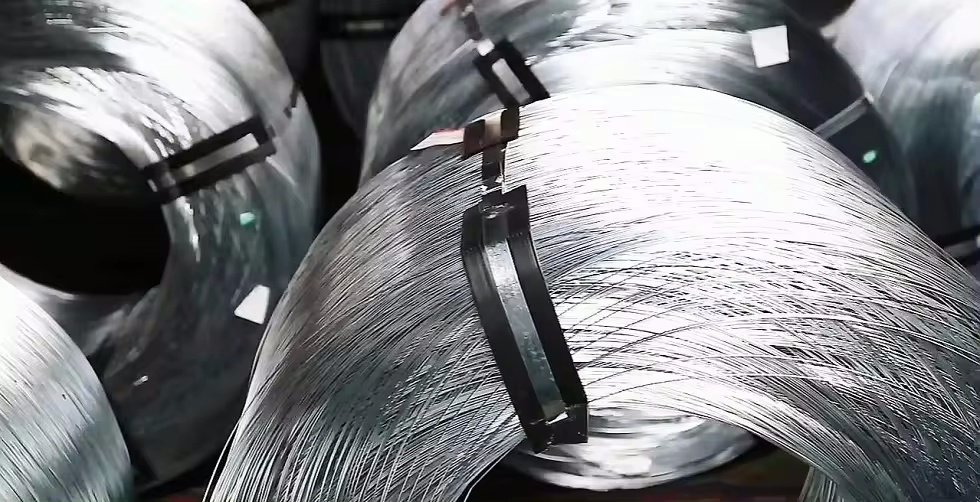
The main differences in weather resistance between PVC coated wire and galvanized wire are as follows:
1. Resistance to ultraviolet (UV) radiation
-
PVC coated wire: The plastic coating can be formulated with UV stabilizers. This helps to effectively absorb or reflect UV rays, reducing the damage caused by UV radiation to the wire. As a result, it has better UV resistance, and the color and performance of the coating are less likely to degrade over time. In outdoor environments with long-term sunlight exposure, PVC coated wire can maintain a relatively stable state.
-
Galvanized wire: Zinc is relatively weak in resisting UV radiation. Prolonged exposure to sunlight can cause the zinc layer to oxidize and lose its luster, gradually reducing its protective effect. Over time, the wire may start to rust and deteriorate due to the degradation of the zinc layer caused by UV rays.
2. Resistance to moisture and corrosion
-
PVC coated wire: The plastic coating acts as a physical barrier that isolates the metal wire from moisture and corrosive substances in the environment. It prevents oxygen, water vapor, and various chemicals from coming into direct contact with the wire, providing excellent corrosion resistance. Even in humid or rainy conditions, or in environments with high levels of airborne pollutants and corrosive agents, PVC coated wire can maintain its integrity and performance.
-
Galvanized wire: The zinc coating on galvanized wire forms a sacrificial layer that protects the underlying metal from corrosion. When the zinc layer is exposed to moisture and oxygen, it reacts to form a zinc oxide layer, which provides a certain degree of protection. However, in extremely corrosive environments or when the zinc layer is damaged or worn away, the wire is more susceptible to corrosion. For example, in coastal areas with high salt content in the air or in industrial environments with acidic or alkaline substances, the corrosion resistance of galvanized wire may be compromised.
3. Adaptability to temperature changes
-
PVC coated wire: The plastic coating has good flexibility and thermal stability within a certain temperature range. It can expand and contract with changes in temperature without cracking or peeling off easily. This allows PVC coated wire to maintain its protective function in environments with fluctuating temperatures, such as from extreme cold in winter to high heat in summer. However, at very high temperatures close to or exceeding the melting point of the plastic, the coating may soften or deform, but such extreme conditions are relatively rare in normal outdoor applications.
-
Galvanized wire: The thermal expansion coefficient of zinc is relatively close to that of the metal wire itself. So, it generally does not experience significant stress or deformation due to temperature changes. However, in extremely cold temperatures, the zinc layer may become brittle and more prone to cracking. In high-temperature environments, the oxidation rate of zinc increases, which can accelerate the corrosion process and reduce the weather resistance of the wire.

Additional Resources
- Galvanized and PVC Coaded 3D Panel Fence Wire Mesh
- Galvanized and PVC Coated Welded Wire Mesh Panels
- 3.0mm Galvanized PVC Coated Mesh Rolls Cyclone Wire
- PVC Coated Ungalvanized Steel Wire Rope
More information


Contact
Phone/WhatsApp:
E-mail:
Address:
Huangtai Industrial Park, Xiaozhan Town,
Jinnan District, Tianjin, 300353, China
Follow us

Inquiry